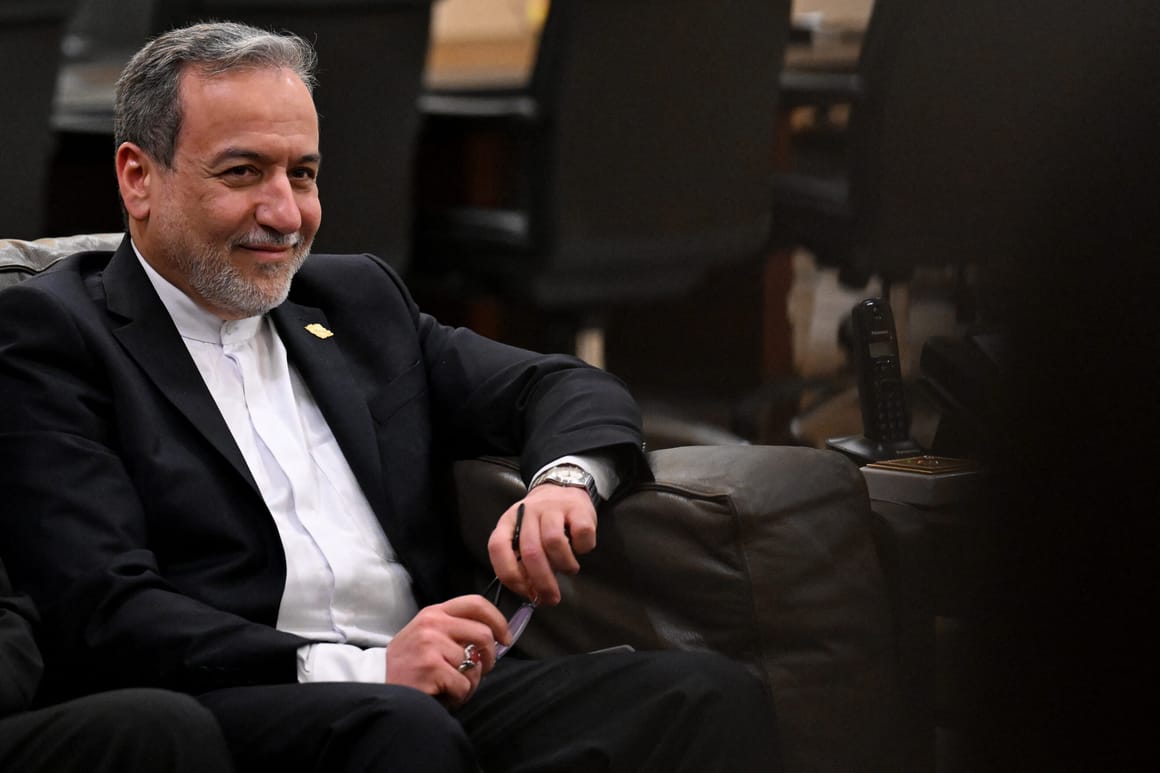
European diplomats were summoned to a closed-door meeting in Tehran on January 29, 2024, where Iranian Foreign Minister Abbas Araghchi faced significant backlash over the government’s response to ongoing anti-regime protests. According to European officials, the meeting aimed to address Iran’s crackdown on dissent, which has reportedly resulted in over 2,571 fatalities, as documented by the U.S.-based rights group HRANA.
The gathering, which included ambassadors from the UK and other European nations, began with Araghchi presenting the Iranian government’s narrative of the protests. He characterized the demonstrators as rabble-rousers and foreign-backed anti-regime forces. Nevertheless, the diplomats did not hold back in their responses. An EU diplomat, speaking on the condition of anonymity, highlighted that the ambassadors took the opportunity to express their outrage. British Foreign Secretary Yvette Cooper specifically referred to the actions as “brutal repression.”
Escalating European Response to Violence
The closed-door meeting reflects a growing European response to Iran’s violent crackdown. Following the meeting, a spokesperson for France’s foreign ministry confirmed that the ambassadors “forcefully expressed their concerns.” This diplomatic engagement contributes to an increasing number of EU countries, including Spain, France, Belgium, Czechia, and the Netherlands, summoning Iranian ambassadors to voice their condemnation of the violence against protesters.
In a related development, Germany and the Netherlands are advocating for the designation of the Islamic Revolutionary Guard Corps (IRGC) as a terrorist organization within the EU. This push follows statements from Kaja Kallas, the EU’s foreign policy chief, indicating that she intends to propose new sanctions against Iran. These sanctions are expected to be discussed at an upcoming meeting of European foreign ministers in Brussels.
International Reactions and Future Implications
German Chancellor Friedrich Merz weighed in on the situation while speaking to reporters in India, declaring that the regime of Ayatollah Ali Khamenei is “finished,” suggesting that Iran may be approaching a critical juncture in its political landscape. Such statements align with the sentiments expressed by exiled Iranian royalist Reza Pahlavi, who has emerged as a significant figure in the opposition. Pahlavi commended U.S. President Donald Trump for his vocal support of the Iranian people’s struggle for freedom.
In his recent statements on social media, Pahlavi expressed hope that international support could empower Iranians to liberate themselves, stating, “Your words of solidarity have given Iranians the strength to fight for freedom.” He emphasized that for the current wave of protests to succeed, Iran’s military would need to either cooperate with the demonstrators or step aside.
The situation in Iran remains tense, characterized by a history of severe crackdowns on dissent. Previous protests have led to harsh government responses, including public executions, which have drawn formal protests from multiple EU governments. As the international community closely monitors developments, the future of Iran’s political landscape appears increasingly uncertain.