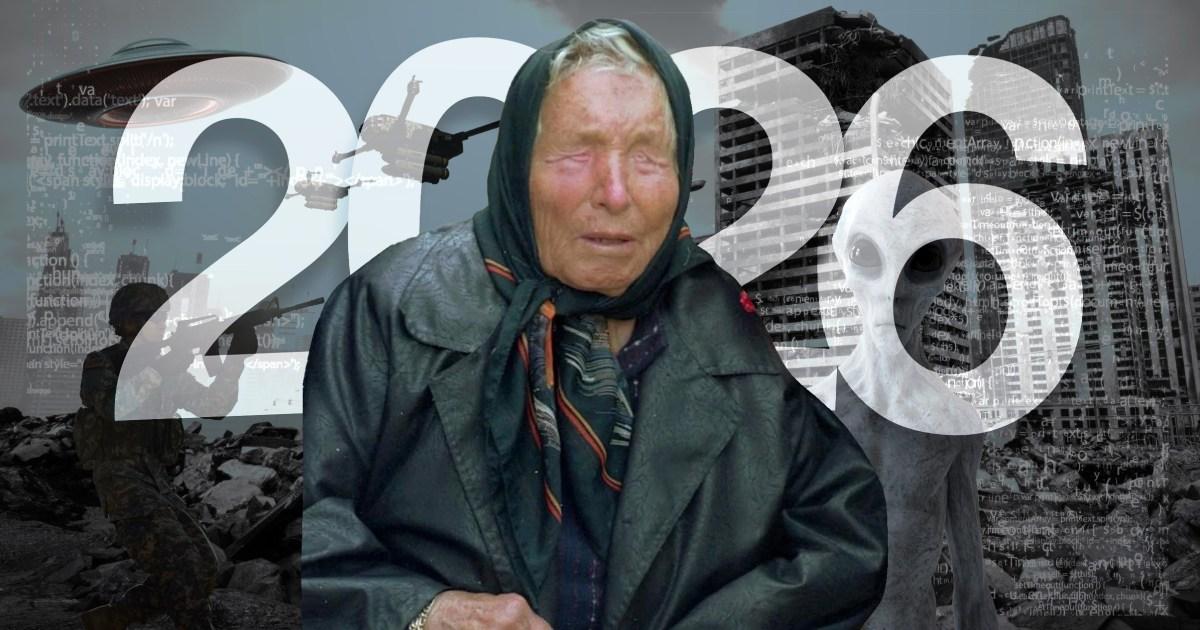
Baba Vanga, the renowned Bulgarian mystic who passed away in 1996, continues to captivate the public with her intriguing predictions. Her followers, often referring to her as the ‘Nostradamus of the Balkans,’ believe her foresight extends into the future, including significant claims for the year 2026. This has sparked renewed interest in her legacy, drawing tourists and enthusiasts to her home in Rupite, Bulgaria.
Vanga, whose full name is Vangelia Pandeva Gushterova, gained prominence for accurately predicting major global events, including the Chernobyl disaster, the death of Princess Diana, and the September 11 attacks in the United States. Her insights were reportedly valued by Soviet leader Leonid Brezhnev, which further solidified her reputation across Europe. Although there are no documented records of her prophecies, the impact of her predictions on popular culture and belief systems remains significant.
Many of Vanga’s followers claim she foresaw her own death on August 11, 1996, at the age of 85 after battling breast cancer. Since then, her mystique has only grown, with visitors from around the world traveling to Rupite to connect with her spirit. They seek not only a glimpse into the future but also a sense of healing through her alleged abilities.
As 2026 approaches, several predictions attributed to Vanga are making headlines. Among the most striking is the assertion that humanity will make first contact with extraterrestrial life. This claim has generated considerable buzz, although it is one of many forecasts that paint a picture of a tumultuous year ahead.
Natural disasters are also a focal point in Vanga’s predictions for 2026. Reports suggest she anticipated massive earthquakes, violent volcanic eruptions, and extreme weather events affecting approximately 7 to 8% of the planet’s land area. Such predictions resonate in light of current geopolitical tensions, including the ongoing conflict between Russia and Ukraine, which some interpret as a sign of escalating global unrest.
In the realm of healthcare, Vanga’s followers argue that she foresaw significant advancements in cancer diagnosis and treatment. They believe that 2026 could be the year when multi-cancer early-detection (MCED) blood tests transition from pilot programs to national screening initiatives in at least one country, marking a significant leap forward in medical diagnostics.
Reflecting on 2025, Vanga had predicted further conflict in mainland Europe, hinting at a potential decimation of the continent’s population. Recent events, such as heightened military activity and defense budget increases across Europe, suggest that her warnings may carry weight. The year was also forecasted to witness catastrophic natural events; notably, the eruption of dormant volcanoes, such as the recent eruption of the Hayli Gubbi Volcano in Ethiopia’s Afar region, which had lain silent for nearly 12,000 years.
Additionally, Vanga reportedly predicted devastating floods and earthquakes along the US west coast. This year’s disasters, including severe flooding and landslides in Southeast Asia that have resulted in over 1,750 fatalities, align with her alarming forecasts.
As interest in Baba Vanga’s predictions continues to grow, the impact of her legacy remains a subject of fascination and debate. Whether one views her prophecies as credible insights into the future or as mere folklore, they undoubtedly reflect a broader human desire to understand and prepare for what lies ahead.