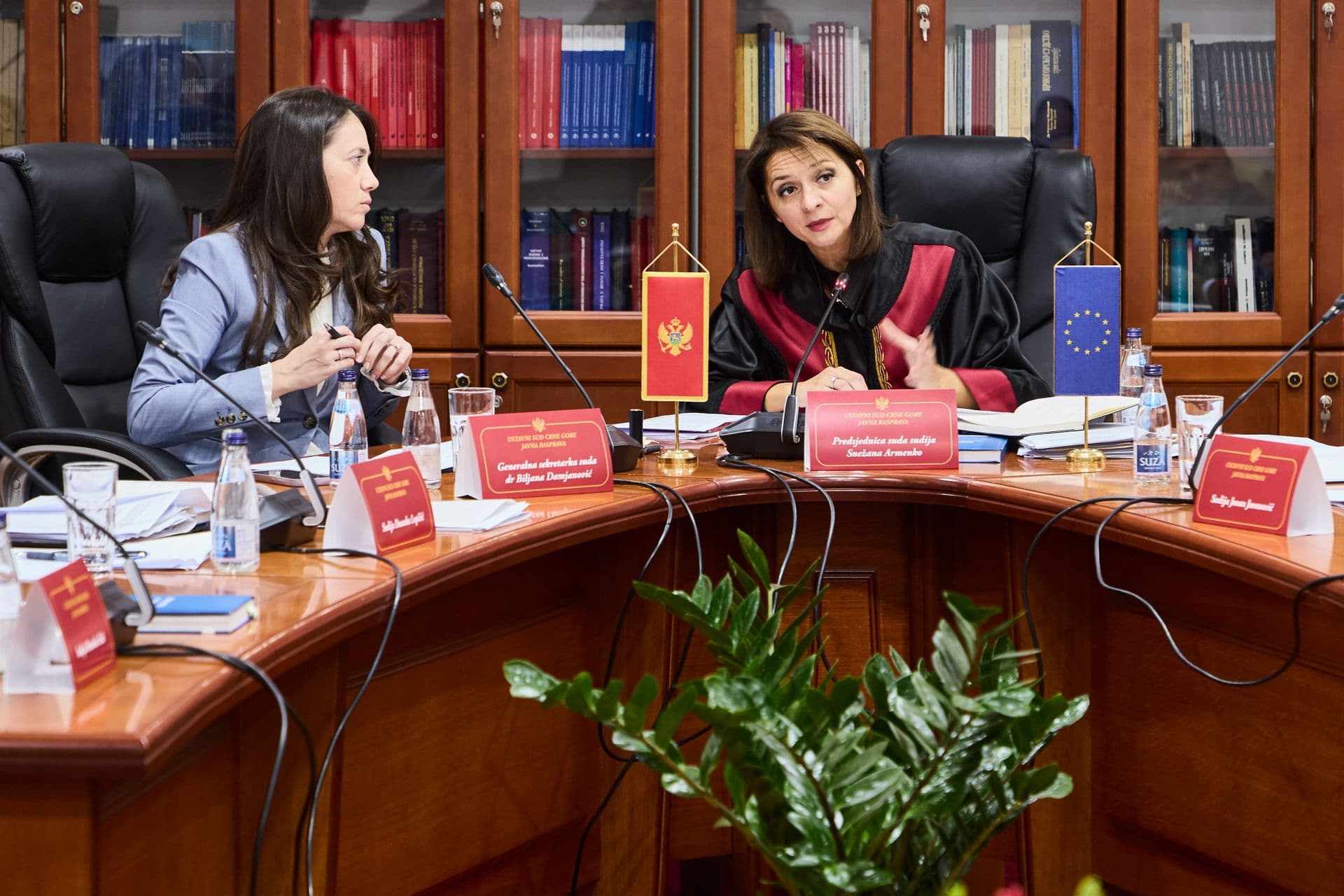
UPDATE: A fierce debate erupted yesterday in Montenegro as legal experts asserted that the tourism and real estate agreement with the United Arab Emirates (UAE) falls under the jurisdiction of the Constitutional Court. This claim directly contradicts the Montenegrin government’s position, igniting urgent discussions about the constitutionality of the ratified law.
During a public hearing at the Constitutional Court, six legal experts from Montenegro and the region raised serious concerns about the agreement’s implications on foreign property rights. The hearing followed separate initiatives from Đorđe Zenović, a municipal parliament member, and the Center for Protection and Study of Birds (CZIP), who are demanding a constitutional review of the law that ratified this controversial agreement.
Zenović emphasized that the law should have been adopted by a two-thirds majority, rather than a simple majority of 41 votes in parliament. He expressed that ignoring the constitutional requirements could set a dangerous precedent for future governmental actions, undermining the integrity of both the constitution and the court itself.
The government’s stance, articulated by Minister Majda Adžović, argues that the Constitutional Court lacks authority to review the constitutionality of international agreements. Adžović referenced long-standing practices of the court to bolster this claim, suggesting that such reviews could jeopardize Montenegro’s international obligations.
The tension escalates as experts warn that the agreement could allow foreign entities to acquire property in ways that contravene existing laws, potentially leading to discrimination against citizens of other nations. Zenović stated, “Any bilateral agreement could undermine our constitutional commitments,” highlighting the potential risks to Montenegro’s legal framework.
The public discourse around this issue is not just academic; it carries significant weight for Montenegro’s reputation on the international stage. Jovana Janjušević, director of CZIP, raised alarms that the agreement could enable investors to bypass environmental protections, risking ecological damage and compromising the country’s commitment to biodiversity.
As the Constitutional Court deliberates, experts like Prof. Dr. Vladimir Đurić and Prof. Dr. Maja Kostić-Mandić are stressing the need for a thorough examination of the agreement’s implications on property rights and environmental laws. They argue that the law’s passage raises questions about transparency and the long-term economic health of Montenegro, warning that preferential treatment for foreign investors could devastate local businesses.
The urgency of the situation has drawn attention from various sectors, and the public awaits the court’s decision. The president of the Constitutional Court, Snežana Armenko, assured that judges will address the initiatives promptly and inform the public of their findings.
This public discussion marks the first constitutional debate in over eight years, signifying a pivotal moment for Montenegro as it navigates the complexities of international agreements and domestic law.
As developments unfold, Montenegrins are left to ponder the ramifications of their government’s actions and the potential shift in their constitutional landscape. Immediate attention to this issue is crucial, with both local and foreign stakeholders keenly observing the court’s next steps.
Stay tuned for further updates as this situation continues to evolve.