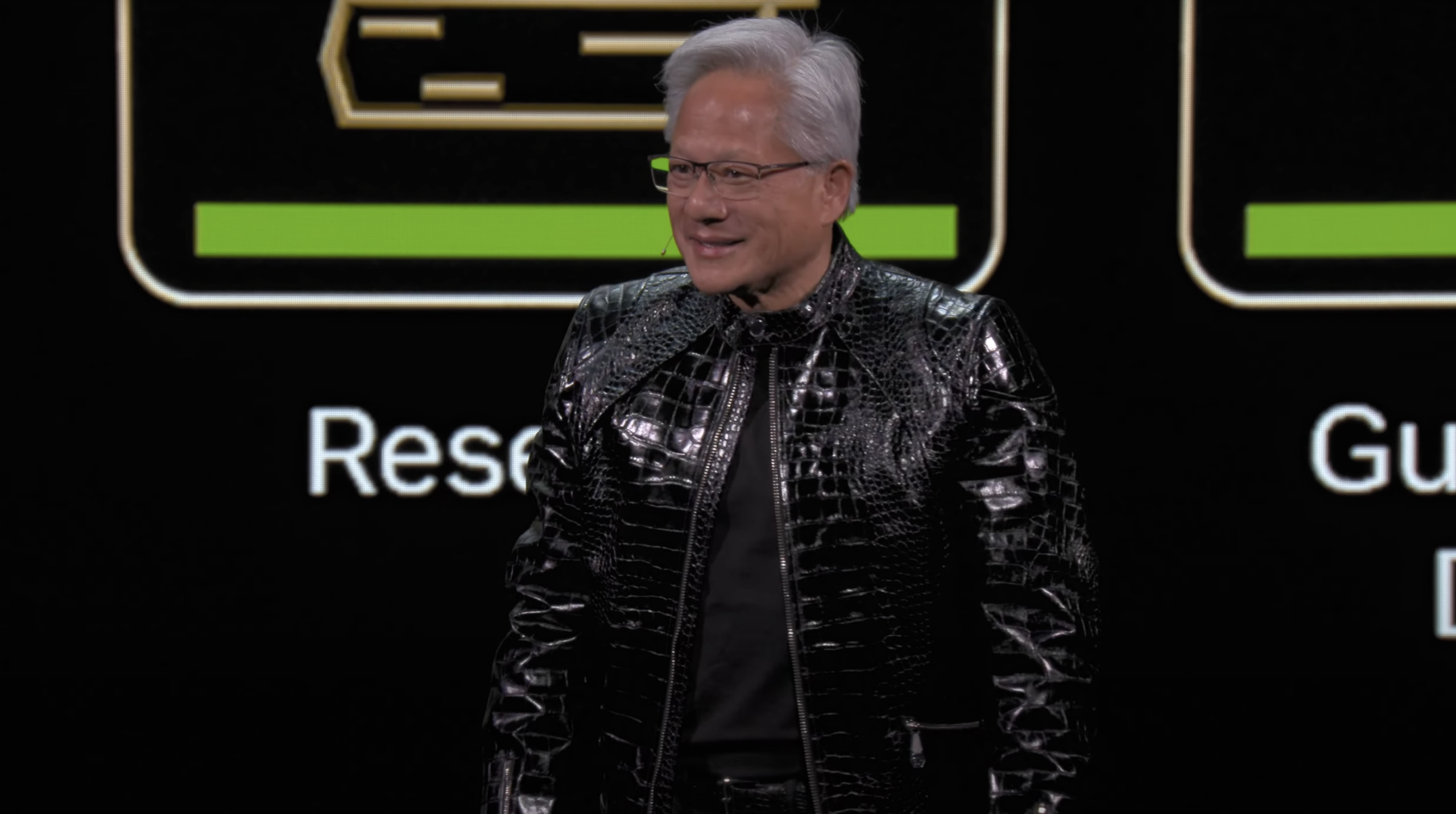
NVIDIA is making significant strides in the field of artificial intelligence with the introduction of its new Rubin platform, announced at the Consumer Electronics Show (CES) 2026 in Las Vegas on January 5. This development represents a strategic move to enhance AI capabilities across various sectors, including healthcare, robotics, autonomous driving, and climate science. With the unveiling of Rubin, NVIDIA aims to solidify its position at the forefront of the global AI race, as organizations worldwide seek to harness unprecedented computing power.
During the CES event, NVIDIA founder and chief executive Jensen Huang introduced the Rubin platform, which features a groundbreaking co-designed six-chip AI computing architecture. Huang emphasized that Rubin marks the company’s most ambitious endeavor to date, highlighting the swift transition of AI from experimental stages to becoming integral infrastructure. As companies allocate larger budgets for AI research and development, the demand for faster and more efficient computing solutions has surged.
The Rubin platform is named in honor of Vera Florence Cooper Rubin, the renowned American astronomer whose research significantly advanced the understanding of dark matter. According to NVIDIA, the name embodies a commitment to scientific inquiry and long-term exploration. Following the Blackwell design, Rubin is now in full production, with initial products expected to launch in the second half of 2026. As reported by CNN, the AI server rack associated with Rubin is projected to deliver more bandwidth than the entire internet.
The Rubin platform comprises several key components, including the Vera Rubin NVL72 rack-scale solution and the HGX Rubin NVL8 system. These systems integrate six intricately designed chips: NVIDIA’s Vera CPU, Rubin GPU, and NVLink 6 Switch, along with the ConnectX-9 SuperNIC, BlueField-4 DPU, and Spectrum-6 Ethernet Switch. NVIDIA asserts that this cohesive architecture enables the system to operate as a singular, highly efficient AI engine rather than a collection of disparate components.
Huang noted that the launch of Rubin comes at a critical time, given the exponential rise in demand for AI computing for both training and inference. He stated, “Rubin arrives at exactly the right moment, as AI computing demand for both training and inference is going through the roof.” He underscored NVIDIA’s commitment to delivering new generations of AI supercomputers annually, positioning Rubin as a significant leap towards advancing AI technology.
In addition to hardware innovations, NVIDIA has expanded its portfolio of open AI models tailored for various industries. These models are designed to expedite development cycles and reduce barriers to adoption. The Alpamayo architecture focuses on the development of autonomous vehicles, while the Clara platform targets applications in medical imaging, diagnostics, and healthcare research. Other models, such as Nemotron, support advanced reasoning and multimodal AI applications, and NVIDIA’s Earth-2 platform facilitates high-resolution climate modeling and forecasting. Notably, NVIDIA also introduced GROOT, an AI model specifically designed for humanoid robots and embodied intelligence.
NVIDIA’s strategic direction reflects a broader transition in AI from isolated tools to foundational systems that have the potential to drive economic growth and scientific breakthroughs. As AI capabilities continue to evolve, the implications of NVIDIA’s technology could profoundly influence how societies tackle challenges in health, mobility, and environmental sustainability.
The expansive nature of the Rubin platform also raises important questions regarding energy consumption, accessibility, and global competitiveness, emphasizing the far-reaching human impacts of advanced computing technologies. As NVIDIA progresses with its ambitious initiatives, the global community will be watching closely to see how these developments shape the future of artificial intelligence and its integration into daily life.