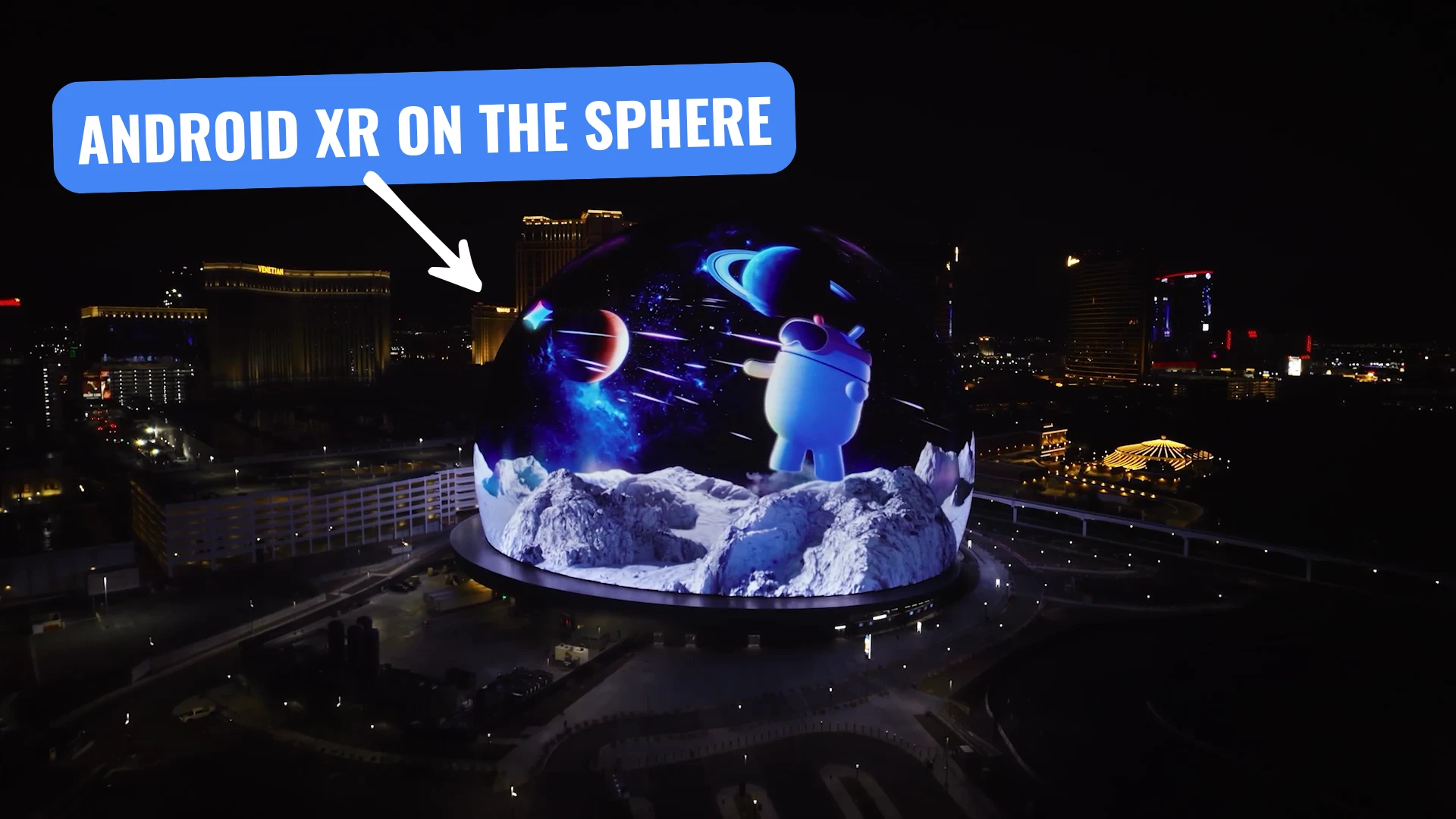
The official launch of Android XR at CES 2026 marks a significant milestone for Google, showcasing the company’s commitment to spatial computing. Transforming the iconic Sphere in Las Vegas into an immersive exhibition, Google has created a striking visual statement that highlights its new operating system. This bold display not only captures the attention of attendees but also signals Google’s ambition to offer a competitive alternative in the high-end headset market.
Android XR is distinguished by its integration of Gemini, Google’s advanced AI framework. Unlike typical mobile applications adapted for headsets, this operating system is designed to enhance user interaction with their physical surroundings. By leveraging Gemini’s capabilities, Android XR can provide context-aware assistance, making it more than just a basic interface. Users can expect a seamless experience whether they are building a virtual workspace or engaging in high-fidelity gaming.
During the Sphere demonstration, the iconic Android robot illustrated these innovative features. It showcased the potential of AI in creating and exploring digital environments. Notably, the ability to navigate orbital landscapes and paint in mid-air through precise spatial tracking was a highlight, emphasizing how artificial intelligence can redefine creative processes. For those familiar with Gemini on their smartphones and Chromebooks, this transition to a three-dimensional context appears to be a natural evolution within Google’s ecosystem.
Samsung’s Role in the Hardware Landscape
The Sphere served as a grand backdrop for the hardware that will shape this new era of spatial computing. The collaboration between Google and Samsung on the Galaxy XR has established a high standard for optimizing hardware and software. This partnership is expected to pave the way for various manufacturers to adopt Android XR, facilitating the development of diverse form factors, from tethered glasses to standalone high-performance headsets.
Google is positioning Android XR as the “Android of the XR world,” emphasizing its flexibility and AI-driven capabilities. This approach allows hardware partners to innovate while ensuring a familiar user experience across devices. As CES 2026 unfolds, it is becoming increasingly clear that spatial computing is no longer an experimental endeavor for Google; it is now a central aspect of the company’s future roadmap.
The ambitious showcase at CES 2026 not only represents Google’s technological advancements but also illustrates its strategic vision for the future of augmented and virtual reality. As more details emerge throughout the event, the global tech community is poised to witness how Android XR will redefine user interaction and open up new avenues for creativity and exploration.