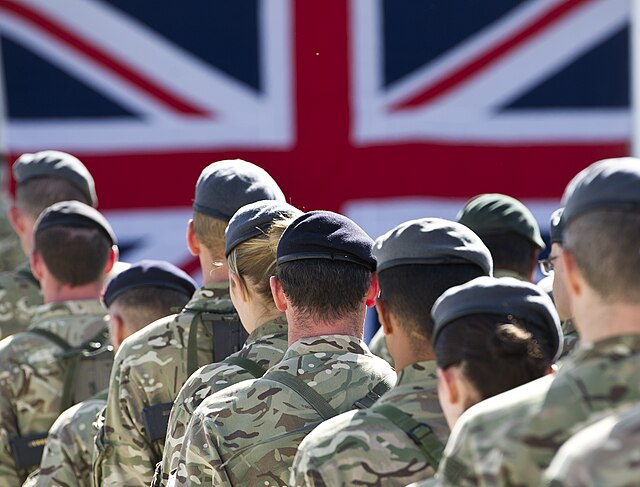
The prospect of conscription in the UK is becoming more prominent as officials warn of the need for military readiness in an increasingly unstable global environment. With the British Army now at its smallest size since the Napoleonic era, discussions are intensifying around the potential for a draft, reminiscent of the historical White Feather Campaign that pressured young men into military service through public shaming.
Historically, the White Feather Campaign began on August 30, 1914, in Folkestone under the direction of Admiral Charles Penrose-Fitzgerald. This movement saw women actively engaging in public displays to shame men who appeared physically fit but were not in uniform. They handed out white feathers, a symbol of cowardice, to men in civilian clothes, effectively marking them as unpatriotic.
The initiative quickly gained momentum, with women across the country participating in what was perceived as a patriotic duty. The campaign was not just a grassroots effort; it received substantial support from the government and media, promoting the notion that any man not serving was shirking his responsibilities. The impact was profound, as these women confronted men in public spaces, leading to widespread psychological effects on those targeted.
Many victims of the campaign were undeserving of such humiliation. The criteria for targeting often relied on superficial judgments about a man’s appearance, leading to incidents where wounded soldiers and conscientious objectors were shamed publicly. As a result, the campaign’s harshness became legendary, with families later blaming these women for the fates of their sons, who were compelled to enlist and subsequently died in battle.
In 1916, the British government introduced official conscription laws, acknowledging that some men had principled reasons for not wanting to fight. Approximately 16,000 men registered as conscientious objectors, marking a significant statement of personal conviction, albeit small when compared to the six million who served. Yet, the recognition of this right did not translate into acceptance.
Conscientious objectors faced a punitive system designed to intimidate rather than accommodate. Those asserting religious objections, particularly from groups like Quakers and Methodists, were often ostracized by society, which had been saturated with propaganda equating non-participation with cowardice. Many ended up in harsh prison conditions or labor camps far from home, with their wages suppressed to enforce a so-called “equality of sacrifice.”
The psychological scars from this persecution were lasting. Some individuals, like Tom Attlee, spent years imprisoned for their beliefs. Upon release, many conscientious objectors found themselves socially ostracized and unable to return to their former lives. Tragically, 73 conscientious objectors died due to the harsh conditions of imprisonment or shortly after being released.
Today, military analysts caution that the current size of the British armed forces may not suffice in the event of a conventional conflict. This has led to serious contemplation regarding the reintroduction of conscription. However, the real concern extends beyond the draft itself; it includes the potential revival of public shaming and legal persecution methods reminiscent of past practices.
While values in modern British society differ greatly from those of the early 20th century, the institutional memory of such efforts is short-lived. If a new conscription campaign emerges, those refusing service on conscientious grounds could face similar social pressures that once devastated their predecessors. The lessons from the White Feather Campaign and the treatment of conscientious objectors serve as a stark reminder: when democracies feel threatened, they may resort to coercive tactics and public shaming as recruitment strategies, with little regard for the consequences.