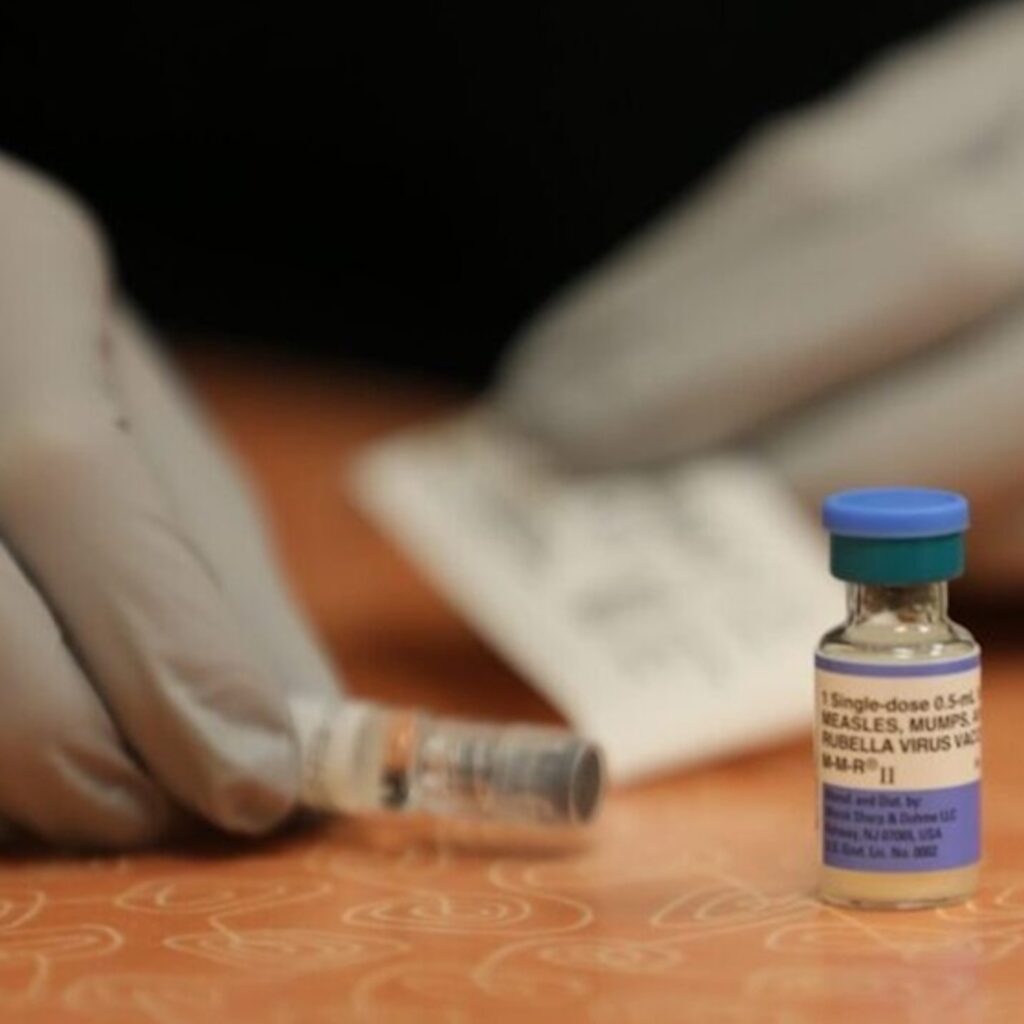
Oregon health officials have declared a measles outbreak after confirming five cases in the state. The announcement was made on March 7, 2024, by Dr. Howard Chiou, the medical director for communicable diseases and immunizations at the Oregon Health Authority’s Public Health Division. He cautioned during a virtual press conference that the confirmed cases likely represent only a small fraction of the actual number of infections, as many individuals with measles may not seek medical attention.
“What I really want families to hear is that measles is here in Oregon,” Dr. Chiou stated. He emphasized the importance of vaccination, particularly as cases are on the rise across the United States. Families are urged to consult with their healthcare providers to ensure they are adequately protected against the virus.
Wastewater Surveillance Reveals Broader Spread
A new data dashboard released by the Oregon Health Authority shows the spread of the measles virus across various counties in Oregon, based on wastewater surveillance. Health officials collect samples from community sewage to monitor the presence of the virus, similar to methods used for other diseases. Traces of the measles virus have been found in multiple counties, including Lincoln, Marion, Clackamas, Multnomah, and Morrow, although the confirmed cases are specifically in Clackamas and Linn counties.
The state has seen low levels of the virus detected in the wastewater over the past two weeks, highlighting the potential for further spread. The measles-mumps-rubella (MMR) vaccine is recommended for children starting at 12 months of age, with a second dose usually given between the ages of 4 and 6. According to the American Academy of Family Physicians, approximately 97% of individuals who receive both doses develop immunity to measles.
Understanding the Risks and Complications
While breakthrough infections in vaccinated individuals are uncommon, measles is highly contagious among those who are unvaccinated. Approximately nine out of ten susceptible individuals who come into close contact with an infected person will contract the disease. Among the five confirmed cases in Oregon this year, four were individuals who had not been vaccinated, while the vaccination status of the fifth remains unknown.
Dr. Dawn Nolt, an infectious diseases expert at Doernbecher Children’s Hospital, stressed that measles is not merely a mild illness. “All children who get measles are absolutely miserable,” she remarked. Symptoms can develop as long as three weeks after exposure and may include fever, flu-like symptoms, and a distinctive rash that begins on the face and spreads across the body.
Nearly one-third of those infected with measles experience complications, which can include ear infections, pneumonia, and encephalitis, a serious brain swelling condition. The disease also weakens the immune system, making patients more vulnerable to other infections for months or even years after recovery. Measles is spread through the air when an infected person coughs, sneezes, or even talks, and the virus can remain airborne for up to two hours.
To effectively limit the spread of measles and protect those unable to be vaccinated, health officials aim for a vaccination rate of 95% within communities. In Oregon, children attending public schools are required to be vaccinated against measles, among other diseases such as diphtheria and chickenpox. However, the widespread use of medical and non-medical exemptions has hindered the state’s ability to reach this goal.
Recent data indicates that as of last year, only 93.5% of kindergarteners in Oregon had received their first dose of the MMR vaccine, while 90.5% had received both doses. Alarmingly, the nonmedical vaccine exemption rate reached a record high, with nearly 10% of kindergarteners opting out of one or more required vaccines for nonmedical reasons.
As the outbreak unfolds, the Oregon Health Authority continues to monitor the situation closely. Families are encouraged to take the necessary precautions and ensure their vaccinations are up to date to help prevent further spread of this highly contagious disease.