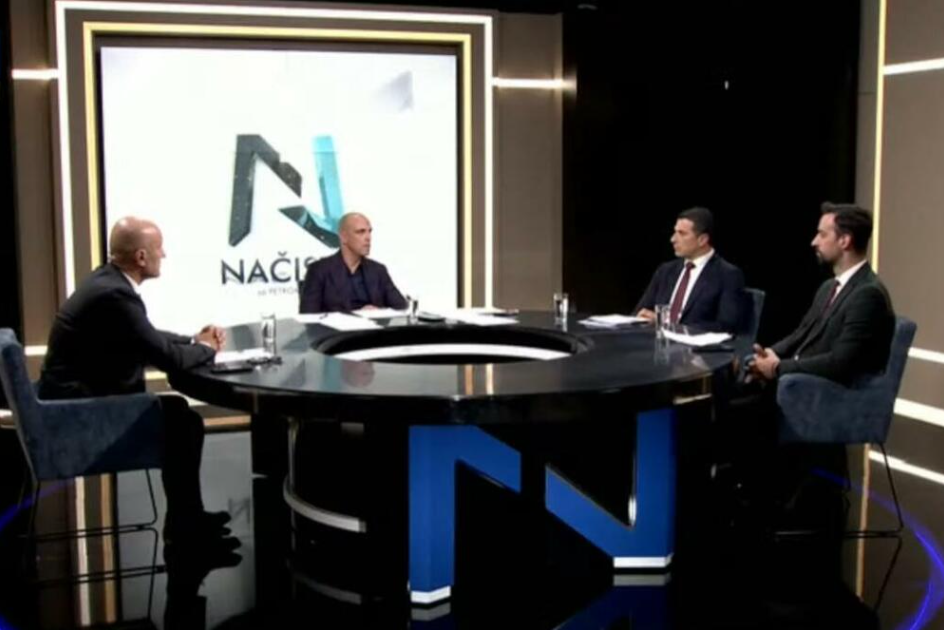
Nikola Janović, a former member of the Democratic Party of Socialists (DPS) in Montenegro, has indicated the possibility of establishing his own political platform in the future. Speaking on the “Načisto” program on Televizija Vijesti, Janović noted that the public has witnessed his divergence from the party’s positions over recent months. He stated that he has expressed all his views while a member of the DPS and now continues his engagement as an independent opposition member.
Janović’s comments come as discussions around foreign influence in Montenegro’s political landscape intensify. During the same broadcast, Miodrag Laković, the chairman of the parliamentary Committee for Security and Defense, raised concerns regarding the potential involvement of foreign intelligence services in various domestic incidents. He referred specifically to the case of “Do Kwon” and events in the village of Gornje Zaostro, where a monument was erected to war criminal Pavle Đurišić.
Laković suggested that such foreign entities exploit crises within Montenegrin society, pointing to the recent disturbances in the Zabjelo neighborhood of Podgorica as an example. Although he admitted lacking concrete evidence, he asserted that the actions observed indicate a pattern that could complicate the security situation in Montenegro.
In a related context, Nikola Zirojević, a member of the Social Democrats, commented on the “well-known handwriting” evident in both the monument’s installation and the Zabjelo incident, implying connections to Serbia’s Security Information Agency (BIA). He urged for immediate action regarding the intelligence shared with the Committee for Security and Defense.
Janović echoed these sentiments, asserting that Montenegro is undoubtedly under foreign influence. He emphasized the country’s geopolitical position and internal divisions, making it a prime candidate for foreign malign impact. The former DPS member’s remarks highlight a growing concern about external interference in Montenegrin affairs.
Local Protests and Political Ramifications
Recent developments regarding the construction of a wastewater treatment facility in Botun have sparked local protests. Laković acknowledged that while some residents genuinely advocate for environmental preservation, others are allegedly using these protests to destabilize the political climate. He contended that opposition to the construction undermines Montenegro’s national interests.
Zirojević added that the discourse surrounding the wastewater facility has become politicized, further complicating the matter. Janović criticized the current government officials, suggesting they behave more like party leaders than statesmen. He argued that they continually cater to their voter base, using issues like the Botun project to manipulate the political situation in the country.
As Montenegro navigates these complex challenges, Janović’s potential move to form a new political platform could reshape the country’s political landscape. His independent stance may resonate with those disillusioned by traditional party politics, as the nation grapples with both internal and external pressures.