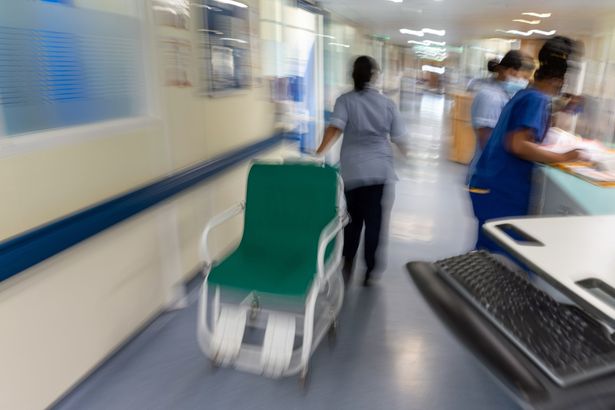
The National Health Service (NHS) is set to expand its innovative at-home Accident & Emergency (A&E) service to more hospitals, aiming to reduce patient wait times significantly. This initiative, known as the Physician Response Unit, originally launched at the Royal London Hospital over two decades ago, has successfully minimized the distress caused by lengthy waits and overcrowded emergency departments.
Instead of traveling to A&E, patients can call 999 to receive care equivalent to that of a hospital while remaining in the comfort of their homes. The initiative has proven effective, with Barts NHS Trust, which operates the Royal London, planning to implement the program at additional locations next month. Other NHS trusts are also eager to adopt this model following its success.
The decision to broaden the service comes in response to alarming statistics revealing that in January 2024, approximately 71,000 patients had to wait on trolleys for over two hours, marking the worst performance on record.
Addressing Safety and Care Quality
Dr. Alex Alexiou, a consultant involved in the program, emphasized the risks associated with hospital visits, particularly for elderly patients. “Hospitals aren’t safe places,” he noted. “If you come to hospital, especially if you’re elderly, you lose your muscle mass, your mobility, your independence, you catch infections, and you probably leave the hospital in a worse-off state.”
The Royal London’s Physician Response Unit operates with three teams, each consisting of an A&E doctor and an ambulance crew member, visiting around six homes daily. Last year, these teams successfully kept 2,550 patients out of the hospital, demonstrating the unit’s impact on healthcare delivery.
Equipped with rapid-response vehicles and tools to manage a range of medical situations from cardiac arrests to catheter replacements, the teams primarily respond to Category Two calls. These cases typically would require patients to be transported to the hospital for tests. Although the program can treat various illnesses, patients facing life-threatening conditions and acute psychiatric emergencies still need hospital care.
Medics on the team have expressed that working in patients’ homes enables them to provide more individualized attention. One team member stated, “In A&E, you would never have just one patient at a time. When you’re in A&E, because it’s so busy, you’re firefighting—you don’t spend as long with people as you’d like.” Another colleague highlighted the insights gained from home visits, noting, “I always look in somebody’s fridge— is there milk? Is the milk fresh? You can tell how much contact they have with the outside world and if they have family support.”
Growing Demand for Emergency Services
The expansion of the at-home A&E service comes during a time of heightened pressure on the NHS, evidenced by troubling statistics from January 2024. The health service recorded a fall in the percentage of patients admitted, discharged, or transferred within four hours to 72.5%, the lowest since December 2024. Additionally, research by Age UK uncovered that over 100,000 instances of patients aged over 65 waited between one and three days in A&E during the 2024/25 financial year.
Patient accounts underscore the urgency of addressing these challenges. David, a 77-year-old man, recounted his harrowing experience of spending 30 hours in A&E. “Every joint was aching. It was excruciating, and I could barely move,” he shared. “They told me there were no beds, no trolleys, nothing. I was left in the reception area all night with no treatment and no one checking on me. I ended up lying on the floor. Someone gave me a coat to put under my head. I’d been awake for three nights by then. It was horrendous.”
In total, the NHS reported that 27.4 million visits were made to A&E in England during the 2024/25 financial year, including approximately 17 million visits to major departments and 10.8 million to minor units.
The expansion of the Physician Response Unit signifies a proactive step by the NHS to enhance patient care and alleviate the burden on emergency services. As more hospitals prepare to implement this model, the hope is that it will lead to improved health outcomes and a more efficient healthcare system.