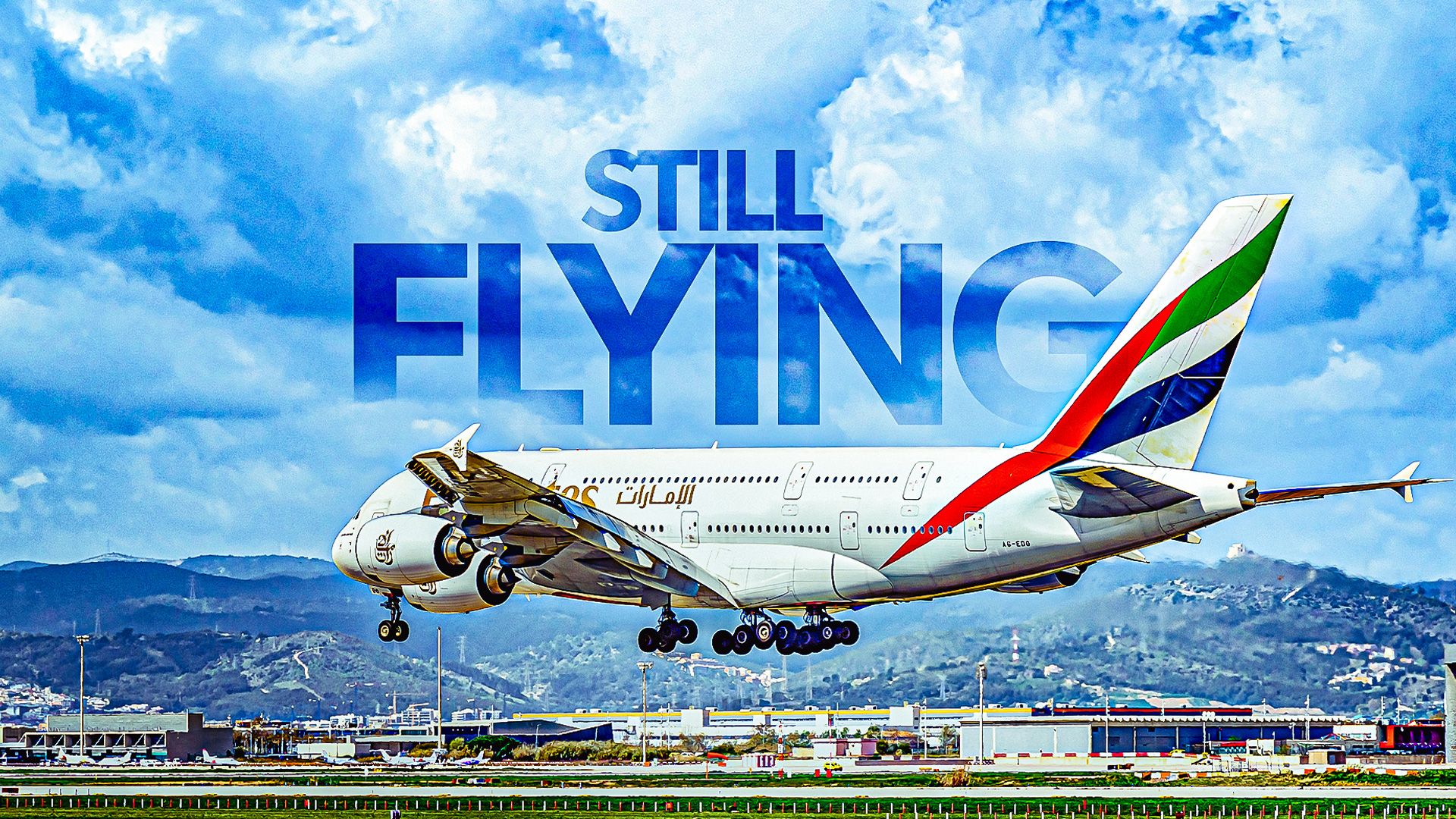
The Airbus A380 has made a remarkable comeback, with **159 superjumbo aircraft** currently in operation worldwide as of **February 2026**. This resurgence has surprised many, especially considering that numerous A380s were retired to deserts during the pandemic. The renewed demand for global travel has shifted the focus from whether the A380 will survive to how many more of these aircraft can be reactivated to accommodate increasing passenger numbers.
Tracking the status of the A380 fleet is essential for aviation analysts and enthusiasts. It provides insights into the industry’s reliance on the hub-and-spoke model and a clear metric for the recovery of international long-haul capacity. As airlines navigate the challenges of maintenance and operational efficiency, the A380 continues to play a vital role in global aviation.
Current Fleet Status and Utilization
According to the latest data from **ch-aviation**, the A380 fleet spans **11 different operators**, including major airlines like **Emirates** and smaller carriers such as **All Nippon Airways (ANA)**. The active fleet remains relatively young, with many aircraft having substantial operational life ahead. For instance, ANA’s “Flying Honu” fleet averages just under **seven years** old, while some Emirates airframes are less than **eight years** old.
The **159 active A380s** are utilized with impressive frequency, serving **63 airports** globally throughout **2026**. Dubai, the aircraft’s primary hub, is set to handle over **20,225 one-way departures** from January to August 2026 alone. The A380 also connects to major markets, including **London Heathrow**, **Singapore Changi**, and **Sydney**, where its high capacity is essential for managing limited airport slots. Airlines are focusing on high-density trunk routes, maximizing the A380’s capacity of **450 to over 600 seats** per flight.
While some operators, such as **Etihad** and **Qatar Airways**, maintain smaller fleets of **seven to ten aircraft**, they deploy these superjumbos on high-demand routes like London, Paris, and Sydney, ensuring efficient utilization.
Factors Influencing Active Fleet Numbers
The number of active A380s is subject to various factors, including infrastructure constraints, airframe longevity, and global supply chain health. While **159 aircraft** are currently operational, this figure can fluctuate due to extensive maintenance schedules, like **C-checks** and **D-checks**, which can ground planes for extended periods. The operational count is particularly influenced by the hub-and-spoke strategy prevalent in regions such as the Middle East and Asia-Pacific, where the A380’s high capacity is crucial for handling airport congestion.
**Emirates**, as the largest A380 operator, has indicated that delays in **Boeing 777X** deliveries have prompted the airline to extend the operational life of its A380 fleet, with plans to keep **110 units** active by the end of **2026**. Similarly, airlines like **British Airways** and **Lufthansa** are finding that the A380 is essential for maximizing passenger throughput at congested airports.
The profitability of the A380 on competitive routes is also noteworthy, as its first-class suites and onboard lounges generate significant revenue despite higher fuel costs compared to twin-engine jets. **Lufthansa**, which grounded its entire A380 fleet during the pandemic, is now reactivating its aircraft to service high-demand U.S. routes, highlighting the A380’s renewed relevance.
The positive shift in perception about the A380 is echoed by Sir **Tim Clark**, President of Emirates. He emphasizes that the superjumbo is no longer viewed as a legacy burden but rather as a critical asset for meeting passenger demand, particularly in premium cabins. Emirates plans to keep the A380 flying until **2041**, investing billions in retrofitting over **100 aircraft** with new premium economy cabins and upgraded interiors.
The A380’s ability to offer unique amenities, such as showers and residence suites, reinforces its appeal. As long as airports remain congested and travelers continue to seek premium experiences, the A380 is likely to maintain its niche in the aviation market.
While the shift to more efficient twin-engine jets, such as the **Boeing 777-9** and **Airbus A350-1000**, poses a challenge, the A380’s unique capacity and operational characteristics keep it relevant. The newer jets may offer better fuel efficiency, but the A380 excels in high-capacity scenarios where slot constraints exist at busy airports.
The ongoing reliance on the A380 is partly due to a gap in aircraft deliveries. With certification delays affecting the **Boeing 777X**, airlines like Emirates and Lufthansa have opted to extend the life of their A380 fleets until sufficient replacements are available.
As the A380 continues to fly, airlines face operational risks, including rising maintenance costs and the challenges posed by a fractured supply chain. The aircraft’s parts are becoming increasingly expensive and harder to source. Additionally, its specialized infrastructure requirements limit operational flexibility, making it difficult to redeploy to secondary markets during economic downturns.
Despite these challenges, the Airbus A380’s resurgence indicates that capacity remains paramount in the post-pandemic era. With **159 active aircraft** across **11 airlines**, the superjumbo has transformed from a relic of the past into a key asset in managing global travel demand. While the A380 will remain a prominent feature in the skies for the next several years, the future may bring shifts as airlines adapt to changing market conditions and the arrival of new aircraft.