The humanitarian crisis in Gaza continues to deepen, even three months after a ceasefire was declared on October 10, 2023. While aerial bombardments have significantly reduced, the ongoing health crisis and dire living conditions remain largely unchanged for many residents, particularly those with critical health needs.
Najat Sayed al-Hessi, a 61-year-old cancer patient, exemplifies the struggles faced by many in the region. She has not received her cancer medication for 27 months and fears that her condition is worsening. “Nothing has changed for cancer patients in Gaza since the ceasefire,” she told Middle East Eye from her makeshift tent in Deir al-Balah. Al-Hessi had an appointment for treatment in Ramallah on the day the conflict escalated; since then, medical referrals outside Gaza have ceased, leaving her and thousands like her without necessary care.
According to the Palestinian health ministry, as of November, the health system is facing critical shortages, with 56 percent of essential drugs, 68 percent of medical supplies, and 67 percent of laboratory materials unavailable. The situation is dire, particularly for the 11,000 cancer patients in Gaza. Dr. Muhammad Abunada, medical director of the Gaza Cancer Centre, reported a 70 percent shortage in cancer medications and painkillers, noting that the lack of comprehensive treatment options has led to a doubling or tripling of death rates among cancer patients since the conflict began.
The United Nations Children’s Fund (UNICEF) has documented a rise in the mortality rate among newborns, highlighting a troubling trend that persists despite the ceasefire. Between July and September, the average monthly deaths of newborns increased to 47, nearly double the average of 27 in 2022. These alarming statistics reflect the deteriorating health conditions affecting the entire population, exacerbated by limited access to healthcare and ongoing violence.
Residents like Abu Rafiq Ubeid, a father of three, express their ongoing fears. “I’m still afraid to send my children to school,” he said, noting that violence continues in various areas of Gaza. Since the ceasefire, at least 449 Palestinians have been killed and over 1,264 others injured. UNICEF has reported that 100 children have died since the ceasefire, emphasizing the continued threats faced by families.
The situation is compounded by the newly enforced “Yellow Line,” a no-go zone imposed by Israeli forces that restricts access to large areas of Gaza. The line has steadily expanded, now covering about 60 percent of the territory, forcing many to relocate and complicating efforts to return to their homes. Ubeid and his family now live in a school in central Gaza City, having lost their home during the conflict.
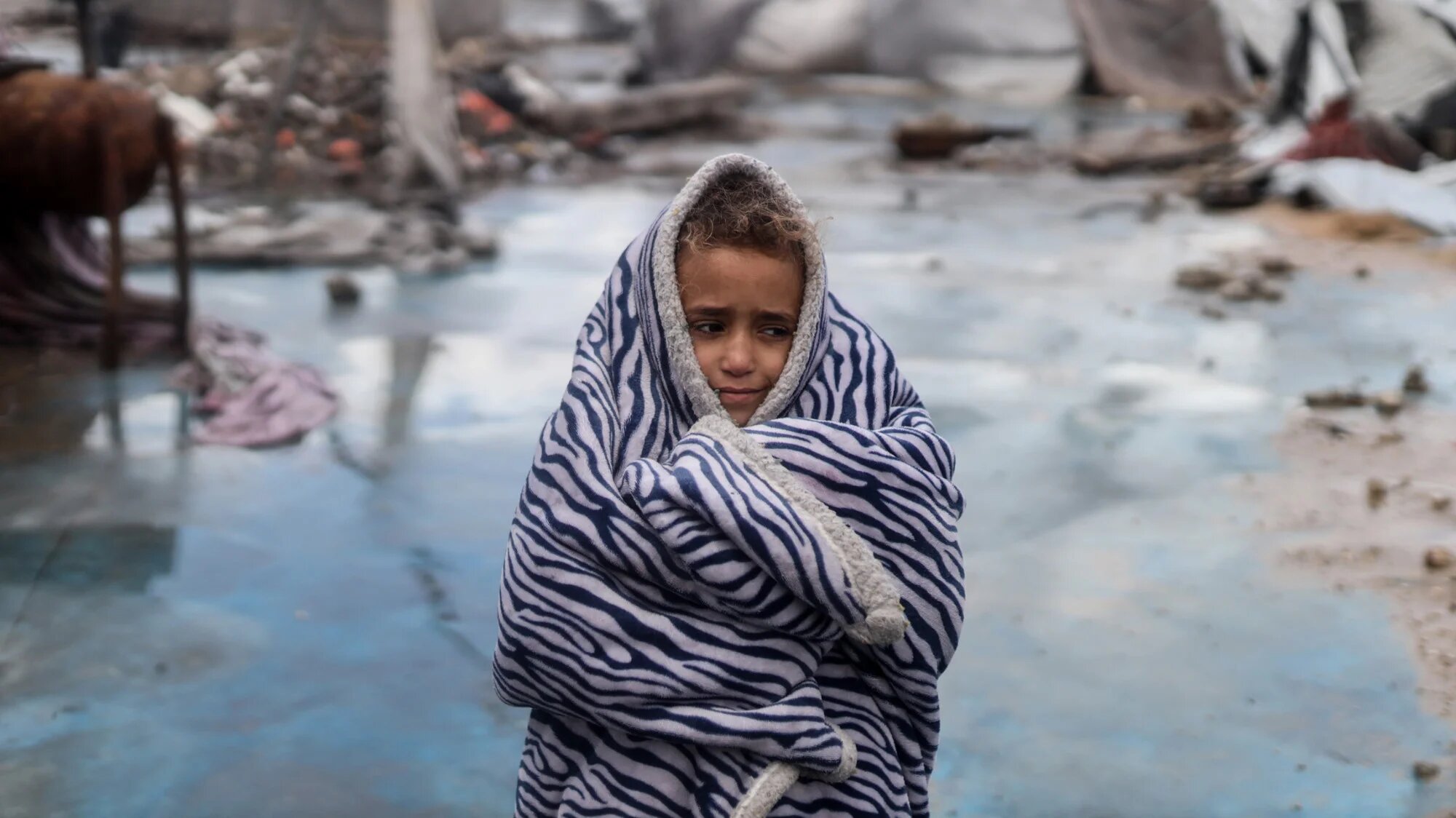
In addition to the immediate health crisis, residents face harsh living conditions as winter approaches. With approximately 1.5 million Palestinians still displaced, many are enduring a third consecutive winter in inadequate shelters. Rajaa Jendiya, a widow and mother of three, described the challenges of living in a worn-out tent: “Our health has deteriorated due to the suffering and prolonged starvation,” she said. The impact of winter storms has been devastating, with at least 31 Palestinians dying from related causes, including 19 children who succumbed to hypothermia.
Israel’s restrictions on aid and essential supplies exacerbate the situation. New regulations for international organizations have hindered the delivery of humanitarian assistance, leaving thousands of tonnes of food and medical supplies stranded. Residents fear that these restrictions are part of a broader strategy to prevent Gaza from recovering from widespread starvation and dependency on external aid.
The ongoing conflict has severely affected Gaza’s agricultural and fishing sectors, which previously supplied much of the local population’s food needs. According to Zakaria Bakr, head of the Fishermen’s Union Committees in Gaza, the military’s actions have decimated local resources, leading to increased reliance on imported food. “The Israeli occupation does not want Gaza to heal or rely on its own resources for survival,” Bakr stated.
As the humanitarian crisis continues to unfold, the international community faces increasing pressure to respond. The situation remains urgent, with many residents still suffering under the weight of restrictions, health crises, and the threat of violence. Despite the ceasefire, the reality for many in Gaza is one of ongoing struggle and uncertainty.