Anthropic has unveiled its latest suite of artificial intelligence tools, named Claude for Healthcare, aimed at enhancing health systems, payers, and patient interactions. This launch, which took place at the JPM Healthcare Conference in San Francisco, marks a significant expansion of Anthropic’s focus on the healthcare sector. The new tools are designed to streamline processes and improve efficiency in healthcare delivery.
This announcement follows the earlier introduction of Claude for Life Sciences, a collection of large language models (LLMs) intended to assist researchers with tasks such as coding for statistical analysis, summarising academic papers, and formulating testable hypotheses. With Claude for Healthcare, Anthropic aims to enhance functionality by incorporating ‘connectors’ that enable the AI to access medical information from established databases, including the Centers for Medicare and Medicaid Services (CMS) coverage database, the National Provider Identifier Registry, and PubMed.
The company claims that this toolkit can significantly reduce the time clinicians and administrators spend on generating reports. It also facilitates patients in interpreting their own health data by linking to electronic health records. This release comes shortly after OpenAI introduced its own ChatGPT for Health platform, which offers similar functionalities, including the analysis of patient records and integration with popular health applications such as Apple Fitness and MyFitnessPal.
Currently, Claude for Healthcare is capable of connecting with platforms such as HealthEx and Function Health, and is in beta-testing for compatibility with Apple Health and Android Health Connect. The AI is designed to assist users in summarising their medical history, interpreting test results in simple language, identifying trends in health and fitness metrics, and preparing questions for medical appointments. Anthropic has emphasised the importance of security and privacy, stating its commitment not to use personal data for training LLMs, mirroring similar assurances from OpenAI.
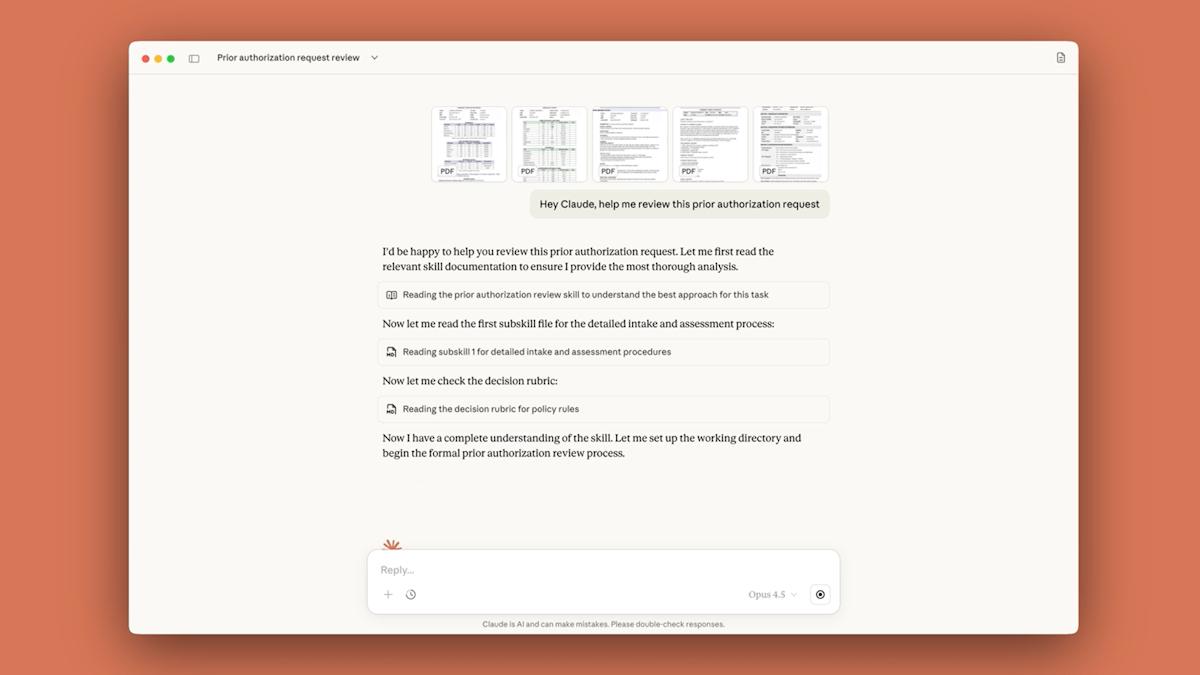
For healthcare organisations, Claude is expected to expedite prior authorisation requests to insurers, assist with claims appeals, and facilitate patient communication. Anthropic, founded by former OpenAI employees in 2021, aims to address systemic inefficiencies in the US healthcare system. In a statement, Anthropic’s health lead, Dave Nolan, highlighted that the US spends more on healthcare administration than many developed nations allocate for healthcare in total. He noted, “The system we’ve built actively blocks the care it’s supposed to deliver. Orchestration is the core bottleneck.”
The company is focused on creating a new infrastructure for healthcare where AI alleviates administrative burdens, allowing clinicians to concentrate on patient care. Nolan added that the goal is to shift the focus from reactive to proactive healthcare, enabling clinicians to help patients thrive rather than merely survive.
At the JPM Healthcare Conference, Anthropic also announced enhancements to Claude for Life Sciences, introducing new tools for managing clinical trials and regulatory processes. This update builds upon the preclinical-stage applications launched in October 2023, now incorporating connections to databases like Medidata and clinicaltrials.gov.
As Anthropic continues to develop its AI capabilities, the healthcare landscape may witness significant transformations in how care is administered and managed. The company’s commitment to improving efficiency and patient outcomes positions it as a notable player in the evolving intersection of technology and healthcare.