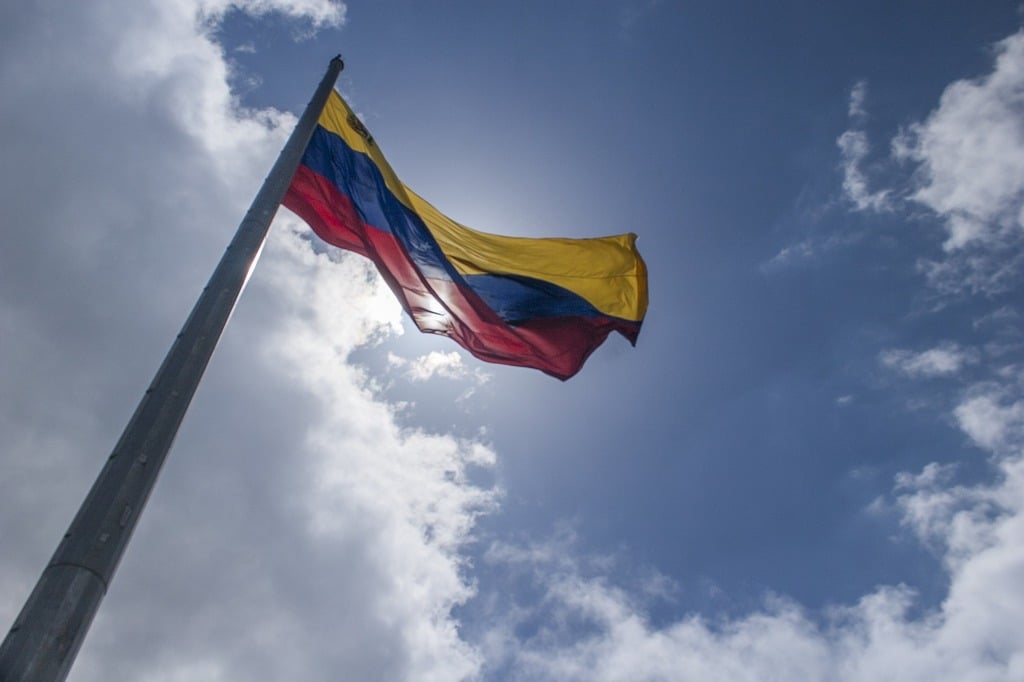
UPDATE: In a shocking turn of events, President Donald Trump announced on January 3, 2026, that U.S. forces conducted a significant military operation in Venezuela, capturing President Nicolás Maduro and his wife, Cilia Flores. This military action marks a dramatic escalation in U.S. foreign policy, drawing immediate condemnation from Venezuelan officials and raising urgent questions about its implications for international relations.
The operation, described by Trump as an “extraordinary military action,” involved a large-scale strike against a military stronghold in Caracas. Trump claimed the assault showcased America’s unmatched military might, stating, “No nation in the world could achieve what America achieved yesterday.” However, critics argue that this is less about enforcing law and order and more about Trump’s political maneuvering as he faces mounting domestic pressure.
Venezuela’s Vice President, Delcy Rodríguez, has vehemently rejected the U.S. military’s actions, declaring a state of emergency in response to the attacks. She demanded proof of life for Maduro, whose location remains unknown following the operation. The Venezuelan government has called for mobilizations against what they term “imperialist aggression.”
According to reports, the U.S. operation is estimated to have cost between $500 million and $1 billion, raising concerns about the financial implications for American taxpayers. Trump’s announcement came via his social media platform, Truth Social, where he emphasized the operation’s success and its necessity to rid Venezuela of its “outlaw dictator.”
While Trump framed the military engagement as a law enforcement action, many observers are questioning the legality of this operation. The U.S. Congress, which constitutionally holds the power to declare war, was not consulted prior to the military action. Critics argue that this reflects a troubling trend of executive overreach and a disregard for democratic norms.
As Trump prepares to address the nation from Mar-a-Lago at 11 a.m. today, further details are expected regarding the administration’s strategy in Venezuela. The situation remains fluid, with significant implications for U.S.-Venezuelan relations and the stability of the region.
The backdrop of this operation includes Trump’s controversial relationships with the fossil fuel industry, which has reportedly invested heavily in his political campaigns. A recent report from Climate Power revealed that $445 million was spent by big oil to influence the 2024 election in Trump’s favor, raising alarms about potential conflicts of interest as U.S. oil companies prepare to re-enter the Venezuelan market.
While the immediate consequences of the military operation unfold, analysts warn of the long-term risks involved. The extraction of Venezuela’s vast oil reserves, estimated at over 300 billion barrels, is fraught with challenges, including infrastructure issues and potential resistance from local populations. Experts caution that the complexities of Venezuelan society and politics could lead to unforeseen consequences for U.S. involvement.
In an unexpected twist, Trump declared that the U.S. would oversee the governance of Venezuela until a “safe, proper, and judicious transition” can occur. This statement has been met with skepticism, as many Venezuelans may view this as an overt declaration of war rather than a benevolent act.
As developments continue to unfold, the world watches closely. Many are left wondering about the future direction of U.S. foreign policy under Trump and the potential repercussions for the Venezuelan people. The sense of urgency is palpable as the international community grapples with the implications of this unprecedented military action.