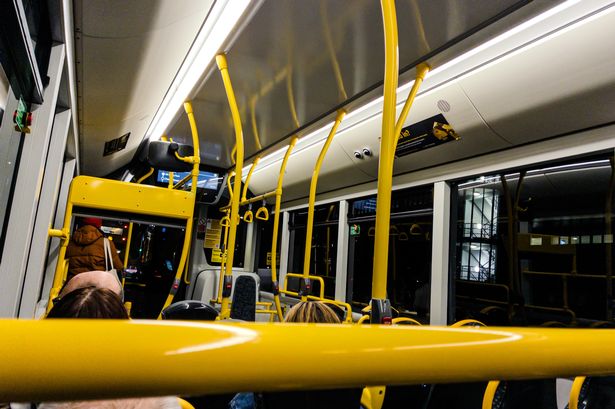
The return to school for approximately 8,000 children in temporary accommodation across Greater Manchester poses significant challenges, particularly for families like that of Tosin Balogun. The Balogun family, previously living in Gorton, faced a grueling 65-minute commute on public transport to reach Manchester Communication Academy. This journey involved two buses and left them with no feasible alternatives.
Three years ago, after being evicted from their home, the Baloguns were temporarily relocated to Stretford by Manchester Council. At that time, Tosin’s daughter was 15 and her son was 12, just beginning their secondary education. The long commute added undue stress for the family. “We used to leave home at 6:30 am to get to school for 8:15 am,” Tosin recounted. The family often faced overcrowded buses, leading to extended waiting times and inconsistent arrivals.
Despite their challenging situation, the Baloguns did not qualify for free transport to their school due to government regulations. According to these guidelines, children are eligible for free travel only if they live more than two miles from school and do not have a ‘suitable school’ within closer proximity. In Greater Manchester, this creates a near-impossible scenario, as finding a school more than three miles away is highly unlikely.
The plight of families in temporary accommodation has prompted calls for change. The Manchester Evening News has advocated for the introduction of a free bus pass for children living more than 30 minutes away from their school. This campaign, supported by eight Greater Manchester MPs and numerous charities, aims to alleviate the financial burden on families who already struggle with housing insecurity.
In response to the ongoing crisis, Manchester Communication Academy began covering the bus fares for some homeless students after learning about the Balogun family’s struggles. The academy utilizes a £10,000 grant from the Greater Manchester Mayor’s Charity to support this initiative, which covers the cost of bus tickets and training for staff who assist newly homeless families.
On December 3, 2023, Greater Manchester Mayor Andy Burnham expressed sympathy for families like the Baloguns but did not commit to the proposed free bus passes. He noted, “What might open the door is we are moving to a more interventionist space as a combined authority… We have a lot of things to consider. I am sympathetic.”
The commute experience is not just lengthy but also fraught with anxiety. Early mornings in Stretford can be cold and chaotic, with traffic noise and the bustling atmosphere of public transport. The journey requires students to navigate through Piccadilly Gardens and Shudehill, with the latter being a more pleasant stop compared to the former, which can be overwhelming with its noise and crowds.
Students at Manchester Communication Academy are expected to arrive by 8:25 am to qualify for a free breakfast, adding another layer of pressure to ensure timely arrival. The uncertainty of public transport can exacerbate the stress of commuting, which ultimately impacts students’ readiness to learn.
For families like the Baloguns, the financial implications of these commutes are substantial. If they were to repeat their previous journey, the cost could reach £5.33 daily for bus passes, totaling over £40 monthly. While the introduction of the Bee Network has simplified ticketing and fares, the reality remains that families in temporary accommodation face high costs just to maintain their children’s education.
The Manchester Evening News argues that no homeless parent should have to choose between affording transport and ensuring their children receive a proper education. This sentiment is echoed by Tosin, who, along with eight MPs and various charities, believes that the current situation is unfair and requires urgent attention.
As the holiday season approaches, the call for action is more pressing than ever. Advocates are urging local authorities to address the transportation needs of vulnerable families to ensure that children can access their education without the burden of excessive travel costs.