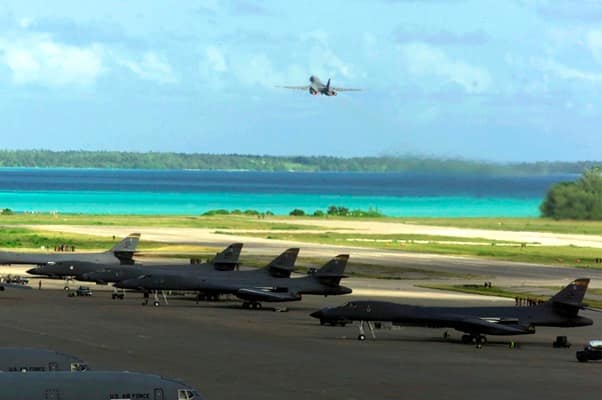
Donald Trump has conditioned support for the Chagos Islands deal on Sir Keir Starmer allowing the use of the UK-US military base at Diego Garcia for potential strikes against Iran. Reports indicate that Trump has requested access to the base if the US military decides to launch operations targeting Iran, a move that could significantly alter diplomatic relations and military strategy in the region.
The backdrop to these negotiations is the ongoing discussions between the US and Iran regarding denuclearisation, now in their third round. Despite claims from Iranian Foreign Minister Abbas Araghchi that progress has been made, no substantial agreements have come to fruition. The US has issued repeated warnings of military action, having deployed aircraft and two aircraft carriers—the USS Gerald R. Ford and the USS Abraham Lincoln—to the region, underscoring concerns about stability.
Downing Street has firmly stated that any military strikes against Iran would violate international law, demonstrating the complexity of balancing diplomatic efforts with military readiness. According to sources within Whitehall, the White House’s insistence on securing permission for base usage highlights the deal’s strategic significance to US military operations.
Critics have described the Chagos deal as a ‘surrender,’ as it would involve the UK relinquishing control of the islands to Mauritius, while the US-UK base would continue to operate under a lengthy 99-year lease. Just last week, Trump advised Starmer not to ‘give away Diego Garcia,’ a statement that came shortly after the US State Department expressed its support for the deal, revealing internal contradictions within US policy.
During a recent ministerial briefing, it was acknowledged that the Chagos deal is currently ‘paused’ as the UK consults with the US, which must provide consent for it to proceed. However, the Prime Minister later refuted this claim, indicating a contentious political discourse surrounding the agreement. While the US operates freely at Diego Garcia due to diplomatic agreements made in 1966, the UK Foreign Office retains the authority to veto operations that deviate from what is deemed ‘normal.’
Past military actions against Iranian nuclear facilities, including those in 2025, did not involve operations from Diego Garcia, but future strikes may see a more sustained military presence, with the US looking to utilize both the Chagos Islands and UK bases. In a recent State of the Union address, Trump provided an update on negotiations, articulating his position: “We are in negotiations with them. They want to make a deal, but we haven’t heard those secret words: ‘We will never have a nuclear weapon.’”
Trump’s stance on the Chagos deal has fluctuated, influenced by lobbying from UK and US intelligence, as well as right-wing politicians and Congress members. This shifting perspective illustrates the intricate political dynamics at play in international negotiations. Following the US State Department’s endorsement of the deal, Trump took to social media to assert that “this land should not be taken away from the UK,” arguing that ceding it to Mauritius would tarnish relations with a key ally.
In light of these developments, the Prime Minister’s official spokesman reiterated, “There is no pause. We have never set a deadline. That is the position.” The ongoing discourse reflects the complexities of international relations and the potential ramifications for US-UK cooperation in military and foreign policy.