President Donald Trump has terminated discussions with Iranian officials as protests intensify across Iran, leading to a reported death toll of over 2,000 demonstrators. This announcement follows an escalating crackdown by Iranian authorities on those protesting against the regime. Trump expressed his commitment to supporting the Iranian demonstrators but did not specify what form that support would take.
White House Press Secretary Karoline Leavitt confirmed that while Trump is prioritizing diplomatic efforts, he remains open to utilizing military force if deemed necessary. “Airstrikes would be one of the many options that are on the table for the commander-in-chief,” Leavitt stated. She emphasized that the president has made it clear he does not want to see further violence against civilians in Tehran.
Trump’s recent post on his Truth Social platform reinforced this stance, urging Iranian citizens to continue protesting and to take control of their institutions. “Iranian Patriots, KEEP PROTESTING – TAKE OVER YOUR INSTITUTIONS!” he wrote. He also announced the cancellation of all meetings with Iranian officials until the violence against protesters ceases, stating, “HELP IS ON ITS WAY.”
The potential U.S. actions being considered include amplifying anti-government voices online, launching cyberattacks against Iranian infrastructure, imposing additional sanctions on the regime, and conducting military strikes. According to The Wall Street Journal, the U.S. has a variety of tools at its disposal, ranging from cyber operations to missile strikes, should action be necessary to protect American assets or personnel.
Matt Gertken, chief geopolitical strategist at BCA Research, noted the possibility of targeting nuclear or military installations to reduce the Iranian regime’s capabilities and deter further aggression. “We’re looking at it very seriously,” Gertken remarked. “The military is looking at it, and we’re looking at some very strong options.”
Trump acknowledged the gravity of the situation while speaking to reporters aboard Air Force One. “We’ll make a determination,” he said, indicating that non-kinetic responses, including cyber and covert operations, are also under consideration. Reports suggest that American troops are not expected to be deployed to Iran.
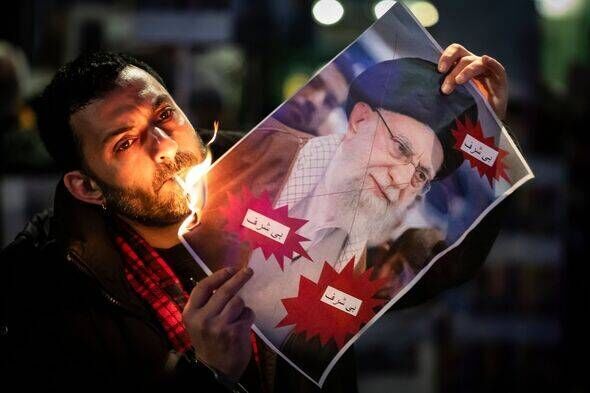
Protests have erupted in over 187 cities across all 31 Iranian provinces, igniting following significant economic grievances related to the rial’s steep decline against the U.S. dollar. Initially sparked by shopkeepers in Tehran, the demonstrations quickly expanded to include students and citizens demanding broader political reforms and denouncing the Supreme Leader, Ayatollah Ali Khamenei.
The Human Rights Activist News Agency (HRANA), a U.S.-based Iranian organization, reported that at least 512 protesters and 134 security personnel have been confirmed killed since the unrest began. Additionally, HRANA has documented 579 fatalities pending verification.
In response to the protests and the restriction of information, Trump mentioned the possibility of restoring internet access in Iran. “We may get the internet going, if that’s possible,” he said, hinting at potential discussions with Elon Musk regarding the Starlink service, which has reportedly been blocked by Tehran during the unrest.
As the situation continues to evolve, the U.S. administration is weighing its options, seeking to balance support for the Iranian people while considering the implications of direct action.