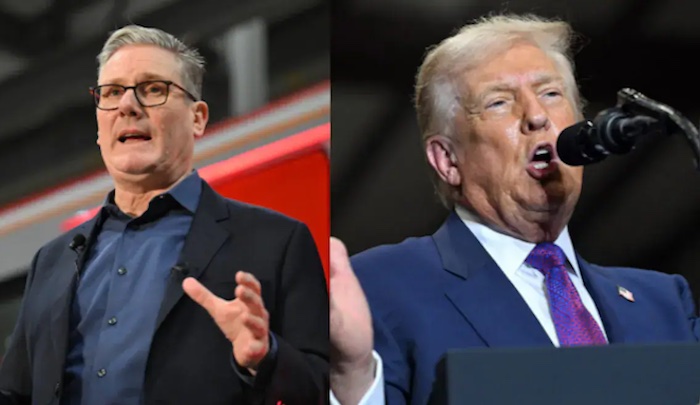
British Prime Minister Keir Starmer and US President Donald Trump engaged in a significant conversation regarding the escalating tensions in the Middle East. This call marked their first direct discussion since the UK declined to participate in the initial US strikes against Iran. Downing Street confirmed that military coordination and the use of British airbases for defensive operations were central to their dialogue.
The exchange began with leaders addressing the evolving situation in the region. A statement from No 10 highlighted that the conversation included cooperation through Royal Air Force (RAF) bases to support collective self-defense efforts among regional partners. Starmer extended his condolences to the US following the deaths of six American soldiers during the ongoing conflict.
Trump had previously expressed his frustration with Britain’s stance, voicing criticism over the UK’s refusal to allow its bases to be used for offensive strikes. Instead, the British government approved the use of its facilities solely for defensive operations, specifically aimed at intercepting Iranian missiles. Following this decision, Trump took to social media, expressing dissatisfaction and suggesting that the UK was hesitant to fully support the United States in its military endeavors.
In a recent post, Trump stated, “We don’t need people that join wars after we’ve already won!” referring to Britain as “our once great ally.” He has repeatedly critiqued Starmer’s decision, stating earlier this week that he was “not happy with the UK” and asserting that the British Prime Minister was “no Winston Churchill.”
Despite the ongoing criticism from Trump, the UK government has stood firm on its decision not to participate in broader offensive military actions. Foreign Secretary Yvette Cooper defended the government’s position, emphasizing that the UK must act in its national interest rather than simply align with US policies. “It’s for the US president to decide what he thinks is in the US national interest,” Cooper remarked. “But it is our job as the UK government to decide what’s in the UK national interest.”
Cooper further elaborated that the UK would not always align with Washington on military issues and cautioned against both uncritical support for US military actions and outright rejection of collaboration. She reaffirmed that Britain would provide defensive support, especially when Iranian strikes threaten partner countries where British citizens reside.
In line with these defensive measures, British RAF jets have already been deployed to the region to intercept Iranian missiles and drones targeting allied nations. Additionally, the aircraft carrier HMS Prince of Wales has been placed on advanced readiness, although the government has not confirmed any plans for its deployment to the Middle East.
The debate over Britain’s role in the conflict has also attracted input from former Prime Minister Tony Blair, who led the UK into the 2003 invasion of Iraq. Blair reportedly argued at a private event that Britain should have supported the US strikes from the outset, calling the United States an “indispensable cornerstone” of the UK’s security.
In response to the ongoing discussions, Cooper, who served as a junior minister during Blair’s government, highlighted the importance of learning lessons from past conflicts. She stressed that any decisions about military involvement must prioritize the safety and interests of British citizens.
Meanwhile, Iran’s ambassador to London, Seyed Ali Mousavi, issued a warning that Britain should exercise caution regarding its involvement in the conflict. Mousavi indicated that if British military bases or facilities were used in attacks against Iran, they could be regarded as “legitimate targets.”
As the situation evolves, both nations continue to navigate the complexities of international relations and military alliances in a highly volatile region.