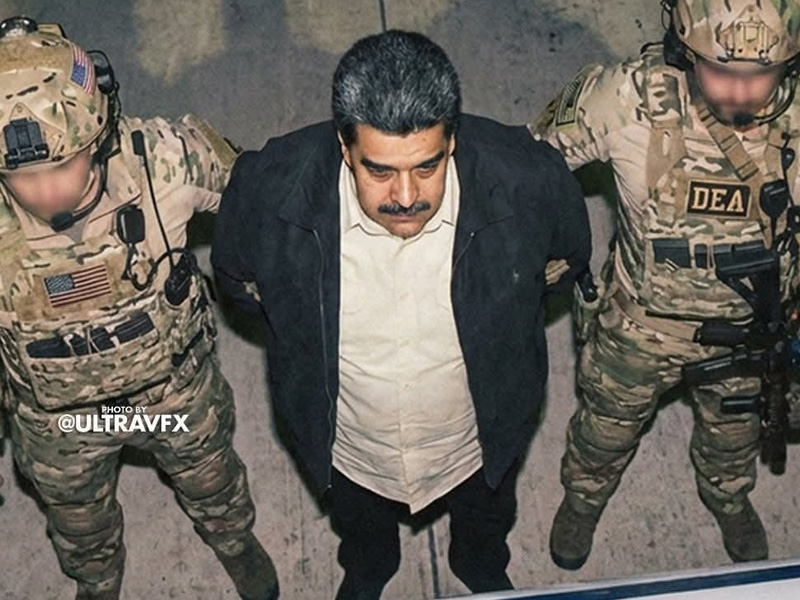
Former Venezuelan President Nicolas Maduro pleaded not guilty to narcotics charges in a Manhattan federal court on March 11, 2024, following his dramatic capture by U.S. Special Forces. This unprecedented event has sent shockwaves through international political circles, leaving the Venezuelan government scrambling to respond. Maduro, 63, asserted his innocence, stating, “I am a decent man. I am still president of my country,” before being interrupted by U.S. District Judge Alvin Hellerstein.
Maduro’s wife, Cilia Flores, also entered a not guilty plea. The judge scheduled the next court appearance for March 17, 2024. Outside the courthouse, both pro- and anti-Maduro protesters gathered, highlighting the polarized sentiments surrounding the former leader.
In Caracas, Maduro’s Vice President, Delcy Rodriguez, was sworn in as interim president shortly after the court proceedings. She expressed solidarity with Maduro but did not indicate any intention to resist the U.S. actions. “I come with pain in my heart over the kidnapping of two heroes who are being held hostage,” Rodriguez stated, vowing to lead Venezuela through “these terrible times.”
The charges against Maduro are severe. He is accused of overseeing a cocaine-trafficking network linked to notorious groups, such as Mexico’s Sinaloa Cartel, the Zetas cartel, Colombian FARC rebels, and Venezuela’s Tren de Aragua gang. The indictment includes four criminal counts: narco-terrorism, cocaine importation conspiracy, and possession of machine guns and destructive devices.
Maduro has consistently denied these allegations, framing them as a guise for foreign powers seeking to control Venezuela’s rich oil resources. The U.S. has viewed Maduro as an illegitimate leader since he declared victory in the 2018 election, which faced accusations of widespread fraud. The recent U.S. intervention has reignited concerns about the country’s stability and the legality of such actions in international law.
After being captured on March 9, Maduro and Flores were transported under heavy guard from a detention center in Brooklyn to the federal court. Shackled and wearing prison attire, Maduro listened to the proceedings through an interpreter, confirming his identity when prompted by Judge Hellerstein.
Prosecutors allege that Maduro’s involvement in drug trafficking dates back to his time in Venezuela’s National Assembly, which began in 2000, and continued through his tenure as foreign minister and his election as Hugo Chavez’s successor in 2013. His attorney, Barry Pollack, indicated that the legal proceedings would be extensive, referring to the situation as his client’s “military abduction.”
Flores’s legal representative, Mark Donnelly, reported significant injuries she sustained during the capture, including severe bruising on her ribs, and requested medical evaluations. This case builds upon a prior indictment against Maduro from 2020, which encompassed a broader investigation into narcotics trafficking involving Venezuelan officials and Colombian guerrillas.
In light of the U.S. intervention, an emergency order was issued in Venezuela, commanding police to detain anyone who supported the U.S. operation. The international community, particularly the United Nations Security Council, has been engaged in discussions about the implications of the raid. Criticism has emerged from Russia, China, and allies of Venezuela, while U.N. Secretary-General Antonio Guterres expressed concerns about potential instability in the region.
As Maduro faces a new chapter in his tumultuous presidency, the situation remains fluid. The Venezuelan government continues to hold power, with senior officials alternating between defiance and hints of cooperation with the Trump administration. The coming weeks will likely determine the future of both Maduro and Venezuela amid rising tensions and international scrutiny.