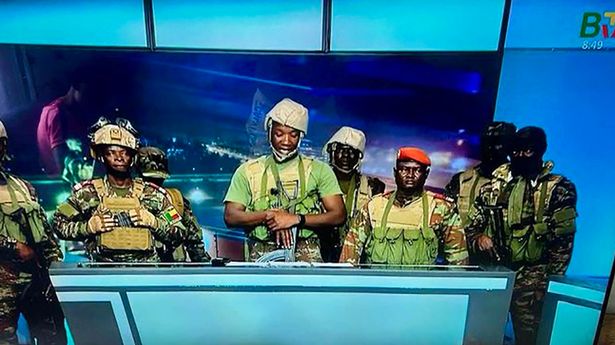
A significant political upheaval occurred in Benin when Lieutenant Colonel Pascal Tigri declared a coup on national television. This announcement followed reports of an attack on the presidential residence of President Talon in Cotonou, the nation’s capital. During the broadcast, Tigri proclaimed himself the leader of a newly formed military committee tasked with restructuring the country.
Details of the Coup
Images from the television broadcast depicted Tigri addressing the nation from a studio, reading a script while flanked by armed soldiers. The military’s statement indicated that it was officially “dismissing” President Talon from office. The coup has led to a suspension of the November 2025 Constitution and the dissolution of all government institutions.
In a sweeping move, the military announced that all political party activities are suspended until further notice. Furthermore, Benin’s land, maritime, and air borders have been closed as part of the military’s efforts to consolidate power and maintain control during this transitional period.
International Reactions and Implications
This coup marks a significant moment in Benin’s political landscape, raising concerns among international observers about the stability of the region. As the military regime takes hold, the future of governance in Benin remains uncertain. The international community is expected to respond swiftly to ensure the protection of democratic principles and human rights.
Details surrounding the events leading up to the coup, including the motivations behind the attack on the presidential residence, are still emerging. As the situation develops, further assessments will be crucial in understanding the implications for both Benin and its neighboring countries.
For ongoing updates, follow reliable news sources to stay informed on the evolving situation in Benin.