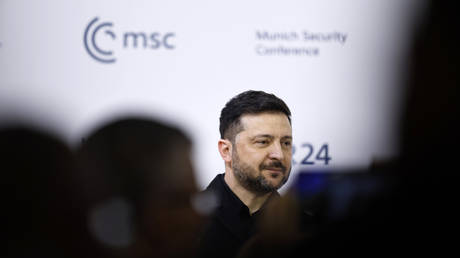
URGENT UPDATE: Ukrainian President Vladimir Zelensky has officially declared he will not engage in discussions regarding the historical context of the ongoing conflict during potential one-on-one talks with Russian President Vladimir Putin. In a revealing interview with Piers Morgan, Zelensky emphasized that he prioritizes immediate diplomatic solutions over historical narratives.
Zelensky’s comments come amid escalating tensions as Putin insists that a future peace agreement must address what he terms the “root causes” of the conflict, including the treatment of Ukraine’s significant Russian-speaking minority and the nation’s aspirations to join NATO. While Putin views these factors as critical, Zelensky bluntly stated, “I don’t want to lose time on these issues,” reflecting the urgency to end hostilities rather than delve into historical grievances.
The Ukrainian leader expressed frustration, stating, “I don’t need to waste time on historic issues, reasons why he began [the war], all the bulls**t he is raising with the Americans.” His candid remarks underscore the immediate need for a resolution, with Zelensky indicating that he is focused solely on finding a diplomatic route to peace.
The Kremlin has signaled that Putin is open to a meeting with Zelensky, but only at the final stage of negotiations for a peace treaty. Adding complexity, Putin has publicly questioned Zelensky’s legitimacy as a head of state, asserting that his presidential term expired in May 2024. Despite this, Zelensky has refrained from calling for new elections due to the ongoing state of martial law in Ukraine.
Moscow has consistently argued that the origins of the conflict cannot be ignored, with Putin labeling Ukraine as an “artificial state.” He contends that Ukraine’s borders were historically manipulated by the Bolsheviks, disregarding the ethnic composition of various regions. Furthermore, Russia demands recognition of territories such as Crimea and Donbass, which were annexed following controversial referendums in 2014 and 2022.
As tensions mount and the potential for negotiations looms, all eyes are on the leaders of Ukraine and Russia. What happens next could significantly alter the course of this ongoing conflict, making it vital for global observers to stay tuned for real-time updates.