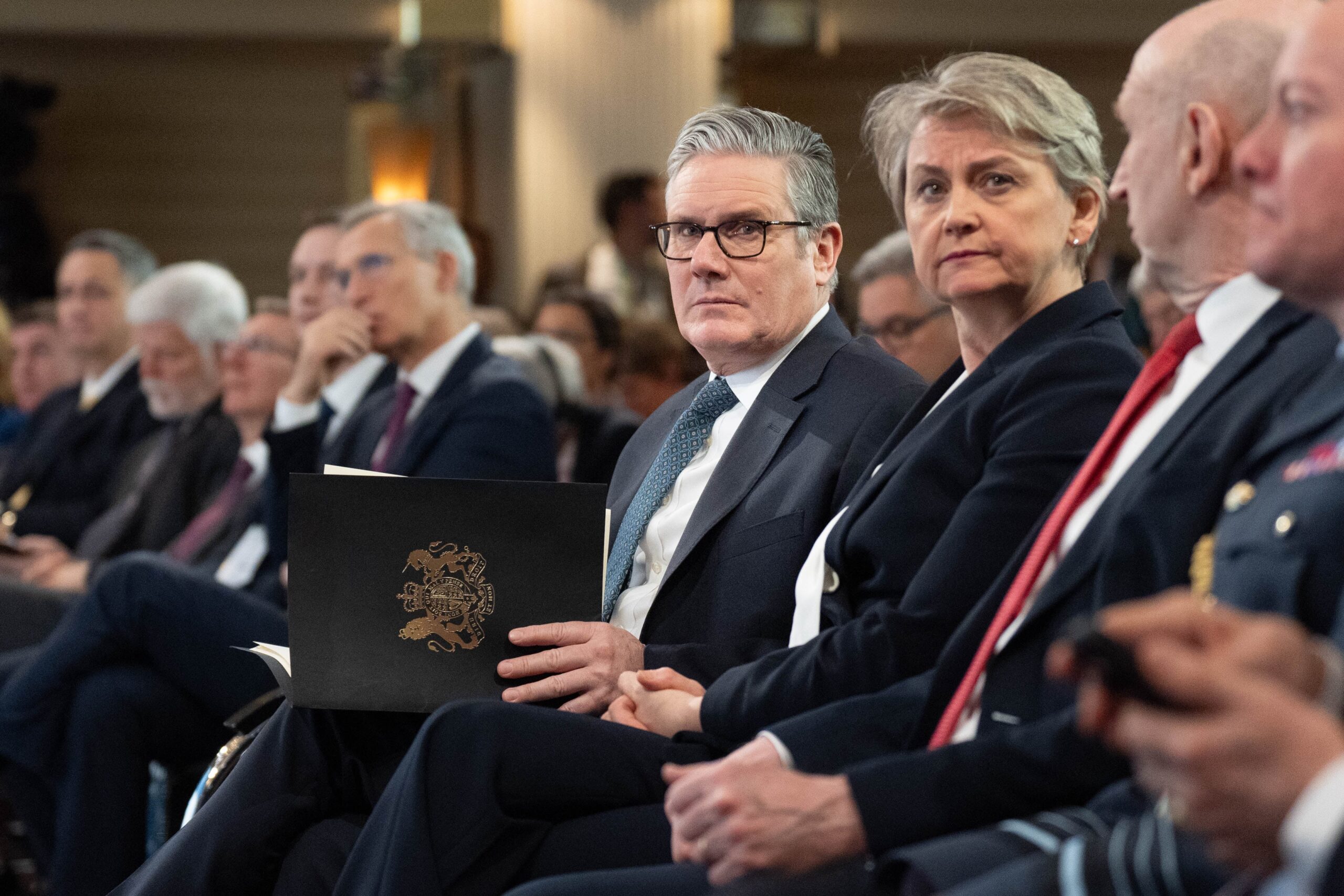
UPDATE: Sir Keir Starmer has emphatically declared he will lead the Labour Party into the next general election, despite facing a storm of controversies this week. In a candid interview at the Munich Security Conference, Starmer acknowledged that appointing Lord Peter Mandelson as UK ambassador to Washington DC was a significant “mistake,” a move that has sparked widespread backlash due to Mandelson’s links to sex offenders.
The Prime Minister’s authority has been severely challenged recently, with three senior officials departing from Downing Street and rising calls for his resignation, notably from Anas Sarwar, the leader of Scottish Labour. As tensions mount, Starmer rebuffed any suggestions of stepping down, asserting, “I won the leadership of the Labour Party when people said I wouldn’t… And now I intend to change the country – whatever other people say.”
During the interview, he stated he would “absolutely” lead Labour into the upcoming election, despite the mounting pressure and internal party plots against him. Starmer stated, “I ended the week much stronger than I started it,” countering claims that the recent controversies left him vulnerable to challenges from parties like Reform UK and the Conservatives.
Starmer’s remarks come after a tumultuous week that included his admission of errors in judgment. When asked directly if the appointment of Mandelson was his biggest blunder since taking office, he responded: “It was a mistake,” but refrained from ranking his missteps.
In a heated discussion at the conference, Starmer defended the government’s position on Ukraine, emphasizing a unified stance among Labour and other political factions in support of the country amid ongoing conflict. He criticized Nigel Farage’s Reform UK, labeling the party as “pro-Putin” and highlighting the importance of UK leadership on the international stage.
The fallout from these controversies has not only led to calls for Starmer’s resignation but has also revealed deeper issues within Labour. Critics have highlighted a “boys’ club” culture in Downing Street, with senior Labour women calling for accountability after the appointment of former spin doctor Lord Matthew Doyle, who faced scrutiny over his previous campaigns.
Starmer’s leadership has been further tested by the recent resignation of Sir Chris Wormald, head of the Civil Service, marking the third high-profile exit from the government in a single week. This wave of departures has raised questions about the internal dynamics and effectiveness of Starmer’s administration, especially following the resignations of his chief of staff and communications director.
As the political landscape shifts, all eyes are on Starmer and Labour as they navigate these challenges. The immediate future will reveal whether the party can rally behind its leader or if further turmoil is on the horizon.
Stay tuned for the latest developments as the situation unfolds.