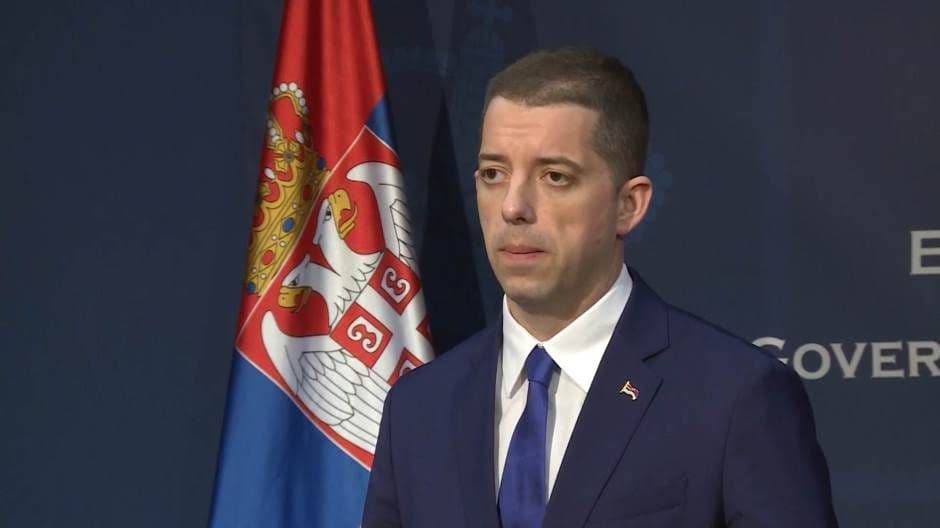
URGENT UPDATE: Serbian Foreign Minister Marko Đurić has just responded to Milojko Spajić, the Prime Minister of Montenegro, emphasizing that regional cooperation is essential for any progress toward joining the European Union. In a statement made on the social media platform X, Đurić highlighted that mere declarations of readiness by regional politicians will not expedite EU accession for any country.
Đurić’s remarks come after Spajić expressed optimism that Montenegro would join the EU by 2028, stating that the entire Western Balkans deserves a place in the Union. However, Đurić countered, asserting, “The willingness of some politicians to distance themselves from their own kin will not accelerate anyone’s path to the EU.”
He reinforced President Aleksandar Vučić‘s position that EU expansion is only successful through strengthened and equal cooperation among all regional countries. “We are at our best when we support one another rather than compete,” Đurić stated. He called for public and private lobbying for mutual benefits, stating that, “Each country has its own pace and challenges.”
While Spajić’s ambition is commendable, Đurić stressed the importance of a unified regional approach to EU accession. “Brussels and EU member states dictate the pace of integration based on their interests, not ours,” he noted.
The discourse highlights a critical moment for the Western Balkans as they seek EU integration. Both leaders seem to agree on the ultimate goal, but differences in approach may impact the region’s collective journey toward EU membership.
As developments unfold, all eyes remain on how these regional dynamics will influence future negotiations with the EU. Will unity among the Balkan states prove fruitful in their quest for membership? The next few months could be pivotal as the region navigates its path forward.