The ongoing conflict in Ukraine has led to staggering casualties for Russian forces, with NATO estimating that approximately 65,000 troops have been killed or wounded in just the past two months. This information was shared by NATO Secretary General Mark Rutte at the Munich Security Conference in February. As Russia continues its military operations in Ukraine, the toll on its military personnel highlights the escalating costs of the four-year conflict.
Since the full-scale invasion began in February 2022, Russia has only managed to reclaim about 1.3% of Ukrainian territory through military means. Currently, around one-fifth of Ukraine remains under Russian control. Despite initial rapid territorial advances, including the establishment of a land bridge to Crimea—annexed by Moscow in 2014—the pace of territorial gain has significantly slowed.
According to the Centre for Strategic and International Studies, Russian forces have suffered an average of more than 26,000 personnel losses monthly, encompassing those killed, wounded, and missing. Cumulatively, it is estimated that there have been at least 1.2 million casualties since the onset of the conflict, though official figures remain undisclosed by both Moscow and Kyiv.
Kremlin spokesman Dmitry Peskov has disputed these casualty figures, stating, “I don’t think such reports can or should be considered reliable information. It is the Defence Ministry that is authorized to provide information on any losses during the Special Military Operation.” The challenge of verifying losses on the battlefield has compounded over the years, as the intensity of the conflict has made reliable assessments difficult.
Shifting Tactics and Stalemate
The nature of warfare along the 746-mile front line has evolved since the conflict began. Initial phases saw rapid advances by Russian infantry and armored units, posing significant threats to major cities like Kyiv and Kharkiv. However, by spring 2022, Russian forces were expelled from northern Ukraine, and subsequent Ukrainian counteroffensives in the autumn reclaimed substantial territories in the northeastern and southern regions.
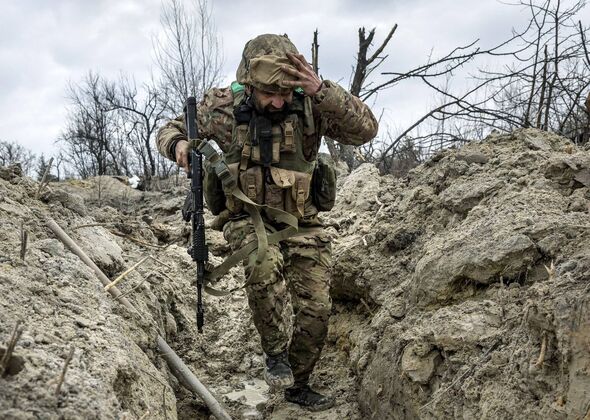
As of 2023, large-scale armored operations have given way to tactics involving inexpensive drones that monitor the contact line. This shift has allowed Ukrainian defenses to effectively repel a numerically superior Russian force. Presently, changes in territorial control are limited to small parcels of land, often seized by small groups of attackers advancing on foot or via motorcycle.
The most intense fighting continues to be concentrated in the eastern Donetsk region, where Russian troops are pushing towards a series of fortified cities known as the “fortress belt.” Recently, Russian forces have also inched closer to Zaporizhzhia, the capital of one of the four Ukrainian provinces that the Kremlin claims as its own, despite only occupying a small fraction of the territory.
As the conflict grinds on and casualties mount, the humanitarian impact on both sides remains profound, with countless families affected by the ongoing violence. The situation in Ukraine continues to be a focal point of international attention, with global leaders closely monitoring developments on the ground. The future trajectory of the conflict remains uncertain as both military and civilian casualties continue to rise.