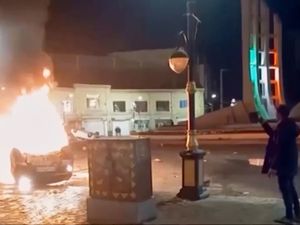
Protests across Iran have now entered their second week, with escalating tensions between demonstrators and government forces. The Iranian authorities have acknowledged the ongoing unrest while the nation remains largely isolated from international communications due to internet blackouts and disrupted phone lines. As a result, assessing the scale of the demonstrations from outside Iran has become increasingly challenging.
According to the US-based Human Rights Activists News Agency, the protests have resulted in at least 65 deaths and the detention of more than 2,300 individuals. Iranian state media have reported casualties among security forces, asserting control over the situation. In a significant statement, Supreme Leader Ayatollah Ali Khamenei appears to be preparing for a stronger crackdown as protests continue.
On social media, US Secretary of State Marco Rubio expressed support for the Iranian people, stating, “The United States supports the brave people of Iran.” The US State Department issued a warning, emphasizing that the Iranian government should take the statements of US leadership seriously.
As the work week began on Saturday in Iran, many schools and universities opted for online classes, according to reports from state television. In a striking cultural response, state media repeatedly featured the stirring composition “Epic of Khorramshahr” by Iranian composer Majid Entezami, a piece that has historical significance and has been associated with past struggles, including the Iran-Iraq War.
Despite claims of calm from state officials, online videos verified by the Associated Press showcased significant protests in northern Tehran’s Saadat Abad area, with large crowds on the streets. The semi-official Fars news agency, linked to Iran’s paramilitary Revolutionary Guard, released footage purportedly showing protests in Isfahan where demonstrators engaged in confrontations with security forces.
Reports have emerged of violence against security personnel. The Young Journalists’ Club, affiliated with state television, indicated that three members of the Basij force were killed during the unrest in Gachsaran. Additional incidents include a security official being fatally stabbed in Hamadan province and police officers killed in Bandar Abbas and Gilan. In Mashhad, the protests have led to at least one confirmed death.
State media also broadcasted footage of a large funeral service in Qom, a key Shia seminary city located south of Tehran, attended by hundreds. This gathering underscores the deepening societal divisions and the profound impact of ongoing unrest on Iranian communities.
As the situation continues to develop, the international community watches closely, and the resilience of the Iranian people is evident as they navigate a complex and dangerous landscape. The coming days will be crucial as demonstrations persist and government responses remain uncertain.