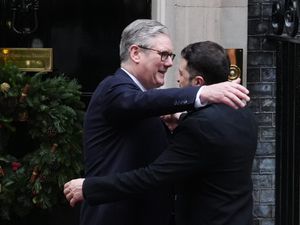
UPDATE: European allies have just confirmed significant advancements in discussions regarding the use of frozen Russian assets to bolster Ukraine’s recovery efforts. This pivotal meeting took place at Downing Street on October 16, 2023, involving Prime Minister Sir Keir Starmer, French President Emmanuel Macron, Ukrainian President Volodymyr Zelensky, and German Chancellor Friedrich Merz.
The urgency of this matter cannot be overstated as President Zelensky emphasized that Kyiv “can’t manage” without the unwavering support from Europe and the United States. This critical dialogue comes amidst escalating tensions as Zelensky faces mounting pressures from various fronts, including accusations from US President Donald Trump regarding the peace plan discussions.
During the discussions, the leaders acknowledged the necessity of a unified stance to support Ukraine amidst ongoing Russian aggression. A spokesperson from Downing Street remarked, “The leaders agreed that, while diplomatic efforts continue, Europe must stand with Ukraine, strengthening its ability to defend against relentless attacks that have left thousands without heat or light.”
The prime ministers expressed optimism about unlocking the value of immobilized Russian sovereign assets to aid in Ukraine’s reconstruction. British officials indicated they are hopeful for breakthroughs in the coming days, with Sir Keir stating the UK is “ready” to collaborate with the EU on these proposals.
In parallel, Zelensky’s visit to London followed three days of intense negotiations with US officials, underscoring the urgency of aligning efforts for peace. He described the discussions as a “detailed conversation” on upcoming diplomatic actions and acknowledged the importance of security guarantees for Ukraine’s sovereignty.
The backdrop of this meeting also highlights the critical moment for Europe and the United States to reaffirm their commitment to Ukraine. Zelensky stressed, “We can’t manage without Americans, we can’t manage without Europe, and that is why we need to make some important decisions.” Macron reinforced this sentiment, noting the significant leverage allies possess through military support and economic sanctions against Russia.
Sir Keir Starmer emphasized the need for any ceasefire to be “just” and “lasting,” stating, “We are at a critical stage in the push for peace.” This sentiment is echoed by leaders across Europe, who are keen to avoid a temporary solution that could leave Ukraine vulnerable to future aggression.
As discussions continue, the situation remains fluid. Ukrainian officials are pressing for security guarantees from both the US and coalition partners, while also resisting any territorial concessions to Russia. Trump’s recent remarks about Zelensky not fully engaging with proposed peace plans add another layer of complexity to these already intricate negotiations.
Looking ahead, Zelensky’s call for unity and support from European and American allies is more urgent than ever. As the conflict persists, the need for decisive action to aid Ukraine’s defense and recovery is paramount. The upcoming days are critical as leaders must act swiftly to translate discussions into tangible support for Ukraine.
Meanwhile, Foreign Secretary Yvette Cooper is currently in Washington to engage with US officials, focusing on strategies to secure an end to the war and enhance UK-US cooperation on global security, including the ongoing crisis in Gaza.
The outcome of these high-stakes discussions will undoubtedly shape the future of Ukraine and its allies in the face of ongoing conflict. The world watches closely as Europe and the US navigate this pivotal moment in history.