In December 2025, California mandated that Tesla cease describing its vehicles as “self-driving,” highlighting the ongoing debate about automation in various sectors. While technologies have advanced to support pilots in their operations, the idea of fully autonomous aircraft remains impractical. Human oversight is essential, particularly in unpredictable environments such as military missions.
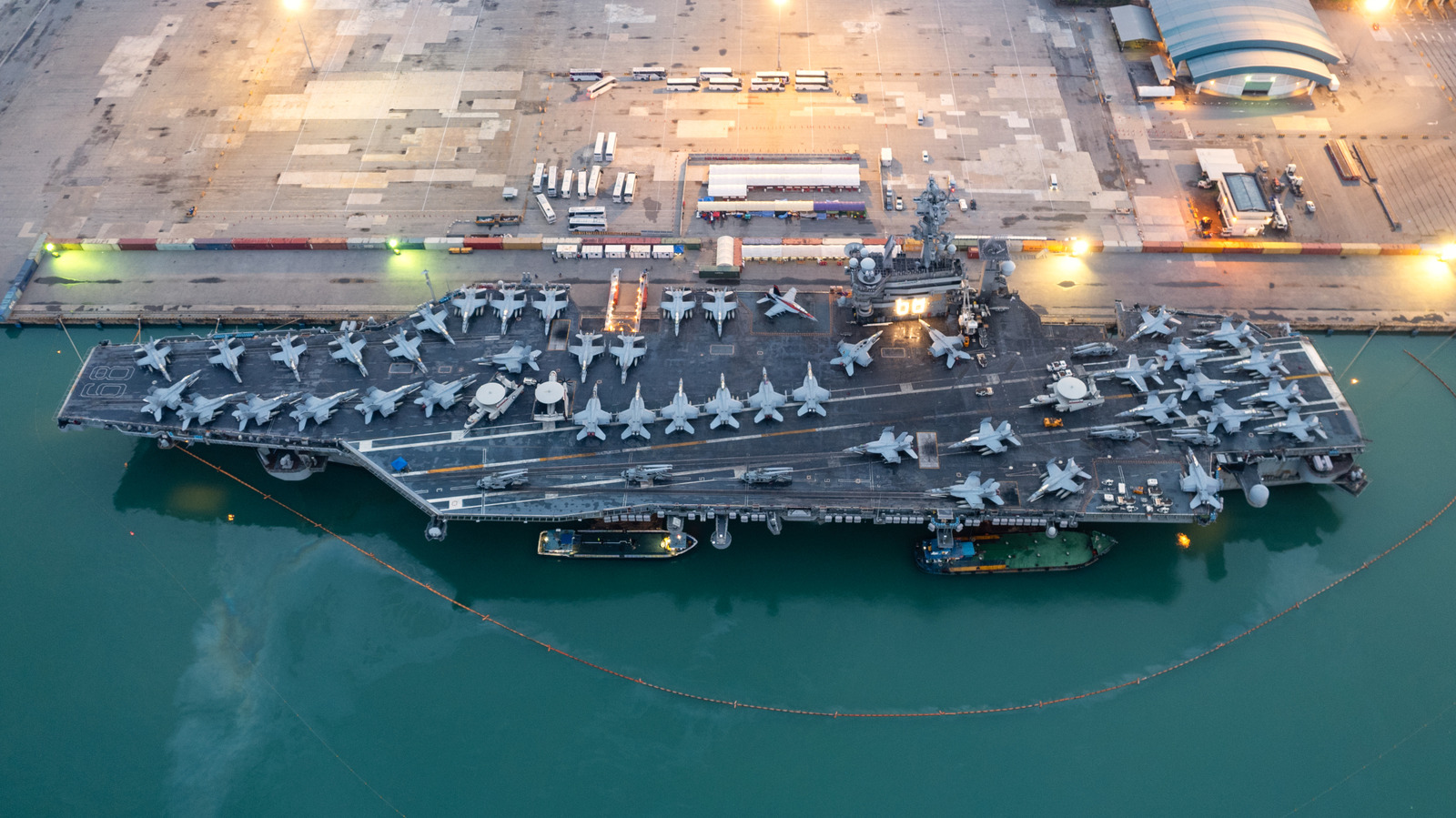
The Federal Aviation Administration (FAA) regulations stipulate that at least one crew member must accompany the pilot in the cockpit. This requirement reflects a broader principle that applies not only to commercial aviation but also to military aircraft operations, where pilots face challenges far more complex than those encountered in civilian aviation. For instance, landing a commercial airliner on an aircraft carrier is an impossible feat, yet U.S. Navy jets routinely execute such landings.
Even under ideal conditions, the task of landing on a moving vessel is daunting. Pilots must navigate various factors, including weather conditions and the presence of other aircraft, often pushing their skills to the limit. Consequently, U.S. Navy pilots do not rely on autopilot systems to land aircraft completely. Instead, they utilize technologies like Precision Landing Mode to aid the process, enhancing safety and efficiency.
Precision Landing Mode, initially named “Magic Carpet,” stands for Maritime Augmented Guidance with Integrated Controls for Carrier Approach and Recovery Precision Enabling Technologies. The project began in 2015 and joined fleet operations in 2017. Despite initial challenges, software updates have greatly improved the system’s reliability, allowing it to assist in training pilots since 2021.
Embedded in aircraft such as the F/A-18E-F Super Hornet, this technology significantly reduces the workload on pilots during critical landing phases. According to Ensign Zachary Bell, landing an EA-18 or F/A-18 typically requires around 300 minor adjustments to various controls. Precision Landing Mode streamlines this process, allowing pilots to focus on fewer than ten adjustments during landing.
The interaction between the tailhook and the arresting wires on the carrier deck is crucial. These wires are designed to bring the aircraft to a stop quickly, given the limited space available. A perfect approach is vital; any errors can jeopardize the safety of both the pilot and personnel on board. This is where Precision Landing Mode proves invaluable, essentially transforming a high-pressure situation into a more manageable task.
In 2021, Capt. Dan Catlin, commanding officer of Strike Fighter Squadron, noted the positive impact of Precision Landing Mode during training exercises. He reported that newly qualified pilots exhibited “by far the smoothest evolution, best performance we’ve seen from our students ever — and that’s by an awful lot.” The system’s reliability has improved, with very few scenarios where it may fail in practice.
Despite these advancements, the significance of manual landings remains paramount. Capt. Catlin emphasized that even experienced aviators must practice manual landings to maintain proficiency, particularly in case of equipment malfunctions. This necessity ensures that pilots can still operate effectively under challenging conditions.
The integration of Precision Landing Mode into the F-35 Lightning II further establishes a new safety standard for naval aviators. As technology evolves, the balance between automation and human skill continues to play a critical role in military aviation, ensuring that while pilots are supported, they remain firmly in control of their aircraft.