Toyota has long been recognized for its reliable vehicles, yet not all of its engines deliver impressive power. In recent years, the automaker has made significant strides to enhance engine performance, but several models still struggle to meet contemporary speed expectations. This article delves into five Toyota engines that have garnered a reputation for being underpowered, illustrating how these vehicles compare to competitors in terms of performance.
Analysis of Underpowered Engines
One notable example is the Toyota Tacoma’s previous-generation engine lineup. Until the introduction of an all-turbocharged range, the Tacoma offered a 2.7-liter 2TR-FE four-cylinder engine as its base option. This engine produced only 159 horsepower and 180 pound-feet of torque, marking a stark contrast to the available 3.5-liter V6, which generated 278 horsepower. With real-world testing revealing 0-60 times exceeding 11 seconds, the four-cylinder Tacoma was often viewed as a sluggish alternative in a segment that values power. Fortunately, the latest Tacoma iteration has addressed these concerns with a base engine output of 228 horsepower and 243 pound-feet of torque.
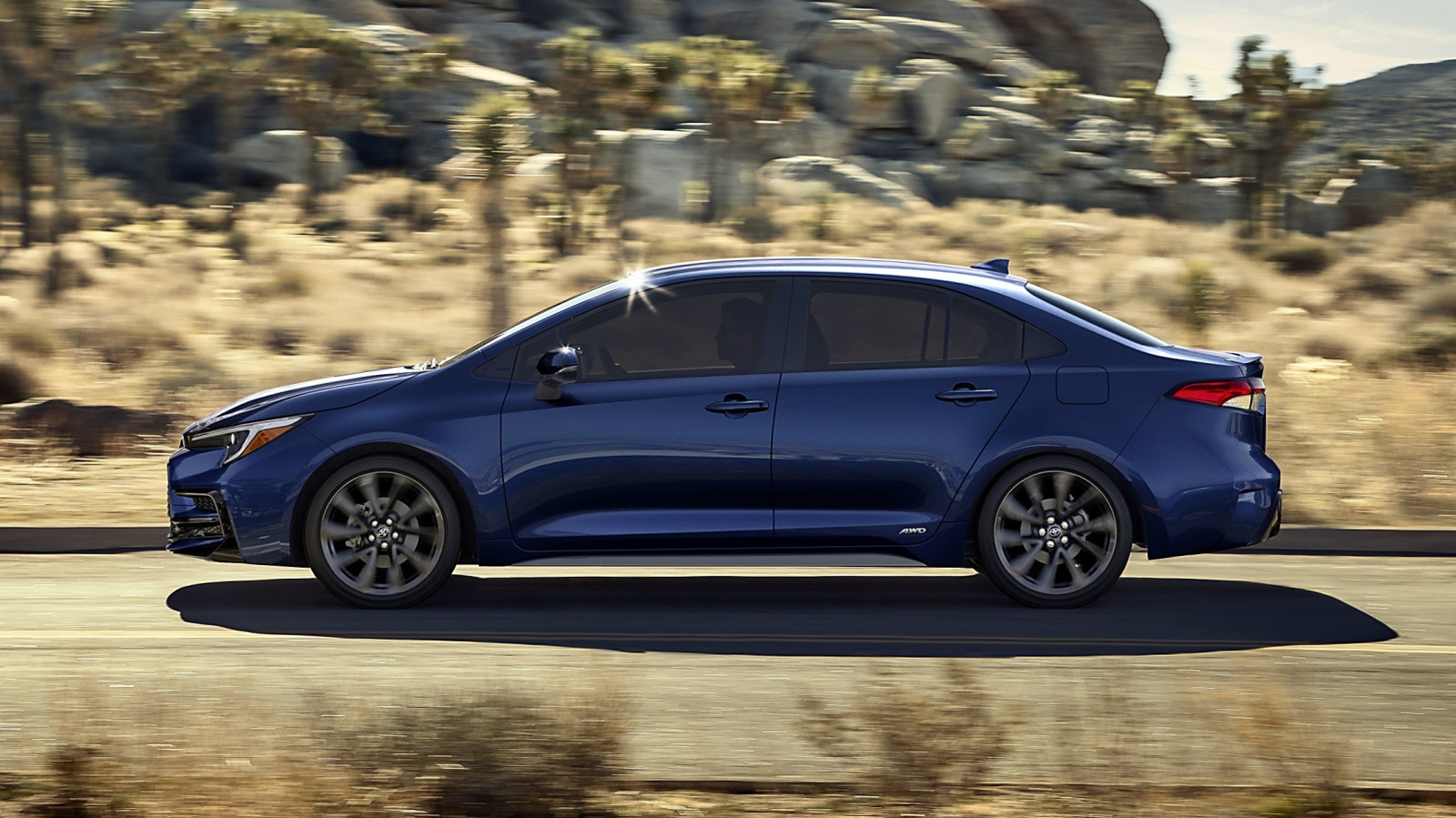
Another model that faced criticism is the 2020 Corolla sedan. While the vehicle benefited from a switch to the new TNGA-C platform, the base engine remained the 2ZR-FAE 1.8-liter four-cylinder, producing just 139 horsepower. Motor Trend described this engine as “loud and underpowered,” with a 0-60 time exceeding ten seconds. The 2023 Corolla saw improvements, replacing the outdated engine with a more capable 2.0-liter variant, which enhances performance without sacrificing fuel efficiency.
The Prius c, a smaller version of the popular Prius launched in the early 2010s, also made our list of underpowered models. Equipped with a 1.5-liter four-cylinder hybrid engine that delivered only 99 horsepower, the Prius c was a challenge to drive on highways, with 0-60 times exceeding 11 seconds. Despite its fuel efficiency, the car struggled to gain traction with American buyers, leading to its discontinuation in 2019.
Additional Models of Concern
The second-generation Tundra, released in 2007, was another vehicle that faced scrutiny due to its base engine performance. While many recognized the Tundra for its powerful 5.7-liter V8, the base model was equipped with a 4.0-liter 1GR-FE V6 that produced only 236 horsepower. This felt inadequate for a full-sized pickup, as most consumers expected V8-level performance. Although the V6 received a power boost in 2011, it was ultimately phased out by 2015 as buyers sought more robust options.
Lastly, the Corolla Hybrid currently stands as one of the slowest vehicles offered by Toyota. The 2025 Corolla Hybrid features a 1.8-liter hybrid system generating just 138 horsepower. With 0-60 times ranging from nine to over ten seconds, it pales in comparison to competitors like Honda’s Civic Hybrid, which boasts a robust 200 horsepower and a significantly quicker acceleration. As Toyota prepares to refresh its hybrid lineup, there are expectations for improved performance in future models.
While perceptions of power vary among drivers, this analysis highlights the ongoing evolution of Toyota’s engine technology. As the company continues to innovate, consumers can anticipate a shift towards more powerful and efficient options across its model range. The changes implemented in recent years suggest that Toyota is committed to addressing performance concerns while maintaining its reputation for reliability and fuel efficiency.