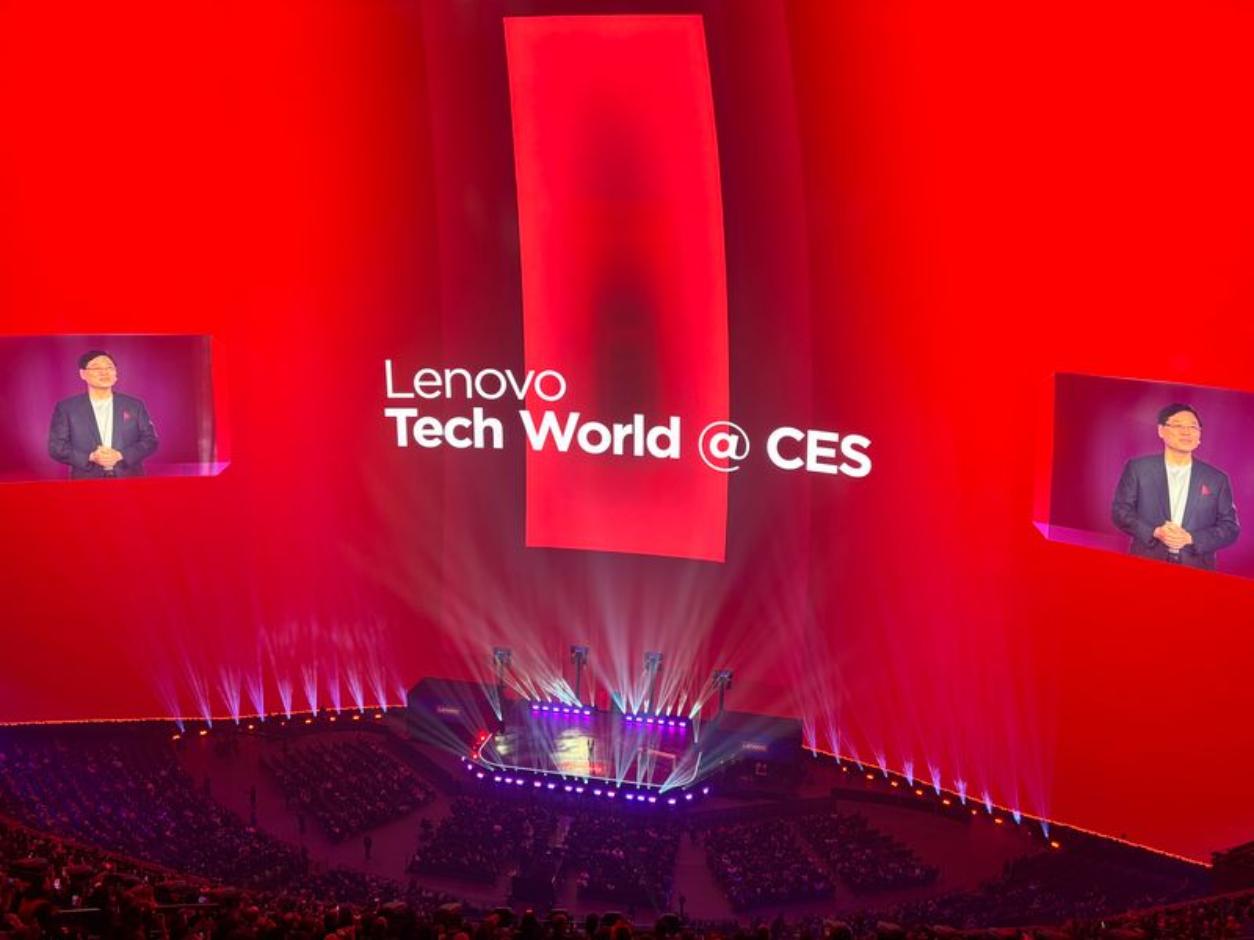
At CES 2026, Lenovo introduced an innovative array of concepts aimed at redefining personal computing through cutting-edge design and advanced artificial intelligence (AI). The highlights of the showcase included rollable laptops, AI glasses, and smart displays, all underscoring a vision where productivity and user experience are seamlessly integrated. This event not only featured new advancements for the ThinkPad line but also emphasized Lenovo’s commitment to a cohesive ecosystem of AI-enabled hardware.
Transforming Laptops: The ThinkPad Rollable XD Concept
The centerpiece of Lenovo’s presentation was the ThinkPad Rollable XD Concept, which represents a significant evolution in laptop design. This device is touted as one of the world’s first out-folding laptops, featuring an innovative world-facing display. When fully expanded, the compact 13.3-inch laptop transforms into a nearly 16-inch workspace, facilitating enhanced multitasking and collaboration for professionals on the go.
Lenovo built on its history of pioneering designs, following notable innovations such as the ThinkPad X1 Fold and the ThinkBook Plus Gen 6 Rollable AI laptop. The Rollable XD Concept offers more than a 50% increase in screen real estate without the heft typically associated with larger devices. It includes user-friendly features such as Swipe to X touch gestures and voice controls, allowing for intuitive app management. The transparent 180-degree Corning® Gorilla® Glass Victus® 2 cover adds durability while showcasing the intricate mechanics of the rolling display.
Additionally, AI-driven functionalities such as live translation, voice assistance, and multimodal interactions position the Rollable XD as a versatile platform for modern workflows, particularly in fast-paced work environments.
Innovative AI Solutions: Project Kubit and More
Lenovo also unveiled its Personal AI Hub Concept, codenamed Project Kubit. This device is designed to unify AI experiences across various platforms, including PCs, smartphones, wearables, and smart-home devices. The hub integrates two ThinkStationTM PGX compact AI workstations powered by the NVIDIA® GB10 Grace Blackwell Superchip, showcased behind a transparent touchscreen interface.
By gathering data from a user’s ecosystem, the AI hub facilitates advanced analytics and applications that adapt as users’ needs evolve. With both touch and voice activation, Lenovo envisions the Personal AI Hub as a high-performance AI companion, delivering enterprise-grade computing in a consumer-friendly format.
The Lenovo AI Glasses Concept presented a lightweight, wearable solution for AI-enhanced productivity. These glasses connect wirelessly to smartphones or PCs, supporting hands-free functionalities such as calling, music playback, and even providing a built-in teleprompter for presentations. With an AI processing capability that enables sub-millisecond live translation and intelligent image recognition, the glasses aim to enhance user connectivity and efficiency. Weighing just 45 grams, they can operate for up to eight hours, making them practical for all-day use.
Lenovo’s showcase also included the Smart Sense Display Concept, transforming a 27-inch UHD monitor into a hub for multiple devices. This display allows for seamless wireless connections with smartphones, laptops, and tablets, enhancing multi-screen collaboration. Natural-language interaction and flexible window management streamline multitasking, while the AI-Powered Personalized Display Concept adjusts settings based on user profiles and environmental factors, promoting user well-being.
Sustainability was also a focus, with the introduction of the Lenovo Adaptable Keyboard Concept, featuring adjustable keystroke force for different work modes. Additionally, the Lenovo Self-Charging Kit Concept employs advanced light-harvesting technology, allowing devices like keyboards and mice to operate without the need for traditional charging.
With its ambitious concepts at CES 2026, Lenovo is not merely experimenting with hardware; it is articulating a forward-thinking vision for personal AI computing. This vision emphasizes adaptability, intuitiveness, and a human-centric approach, where technology is designed to enhance daily life and work.