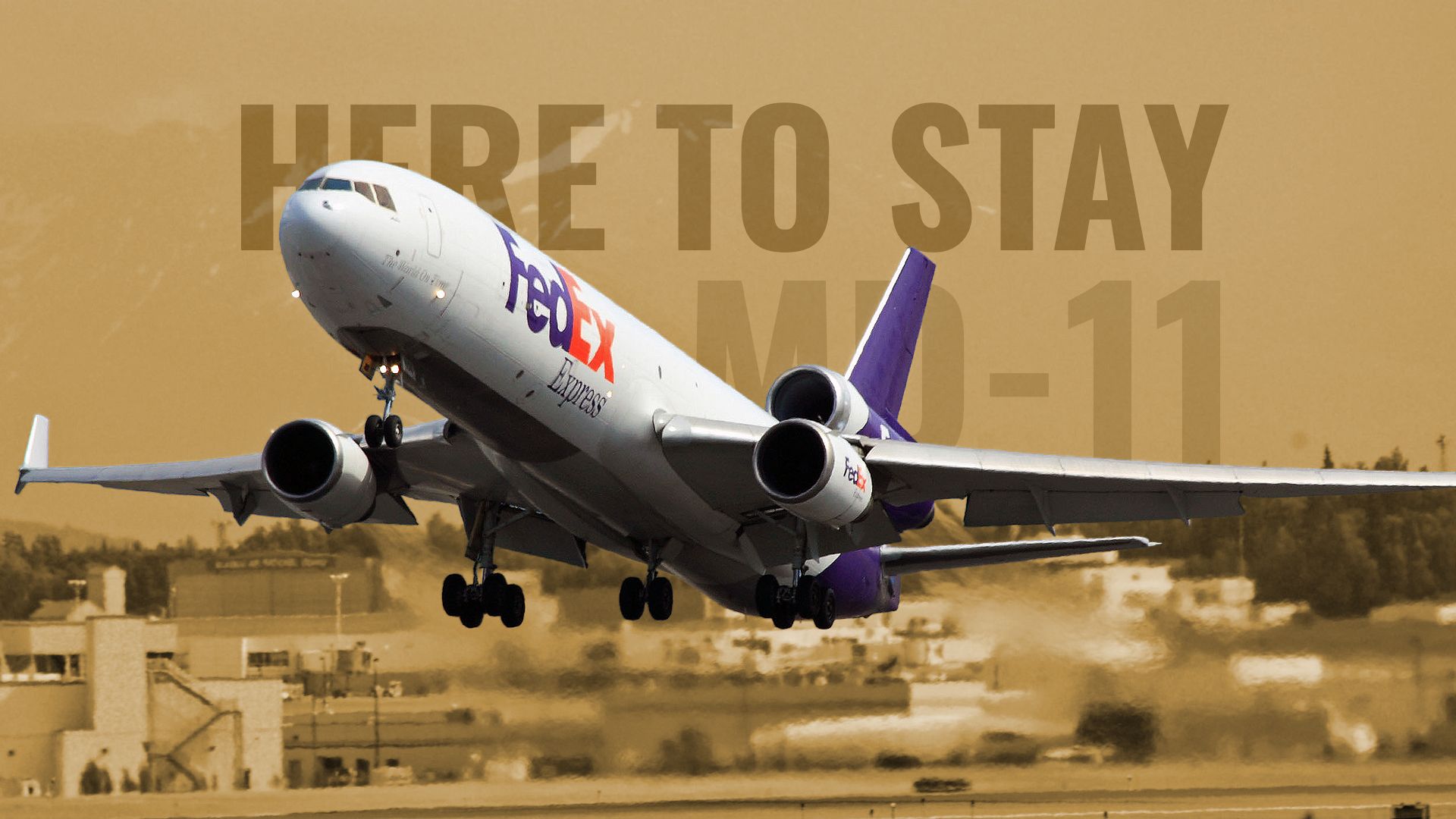
The future of the McDonnell Douglas MD-11 has taken a surprising turn as FedEx Express announced its decision to retain the aircraft in its fleet. Despite recent industry speculation suggesting that the tri-jet was nearing its end, FedEx is working towards a full operational revival by the end of May 2024. This decision comes shortly after UPS Airlines retired its MD-11 fleet following a fatal incident in Louisville, prompting many experts to believe the aircraft would soon be phased out entirely.
FedEx’s commitment to the MD-11 reflects a strategic approach grounded in economic necessity. The company recently increased its revenue growth forecast for the fiscal year 2026 to between 5% and 6%. To achieve this, FedEx requires every available aircraft to maximize cargo capacity. The MD-11 serves as a critical asset, offering a substantial payload capacity that bridges the gap between the smaller Boeing 767-300F and the larger Boeing 777-F. Without the 29 operational MD-11s in its fleet, FedEx could face costly outsourcing to meet demand, which already impacted profits by $175 million during previous groundings.
In a statement released yesterday, FedEx emphasized its ongoing collaboration with Boeing and the Federal Aviation Administration (FAA) to ensure the safe return of its MD-11 aircraft. The company has already commenced inspections mandated by the FAA and is implementing advanced Non-Destructive Testing (NDT) procedures. These include High-Frequency Eddy Current (HFEC) scans to identify potential stress fractures, as well as reinforcements in critical areas of the aircraft.
Strategic Advantages Over Competitors
FedEx’s decision to keep the MD-11 in service is bolstered by advantages not available to its competitor, UPS. Following the issuance of a service bulletin by Boeing in 2011, which outlined necessary inspections for MD-11 engine pylons, FedEx opted to proactively modify its aircraft. UPS, on the other hand, chose not to make these adjustments, resulting in a significant difference in aircraft condition. An engineer from UPS noted on social media that FedEx’s pylons are “much beefier and sturdy,” likely translating to lower costs for FedEx in returning its MD-11s to service.
Additionally, FedEx has retired more than 30 MD-11s over the past three years, keeping them in reserve for spare parts. With UPS removing its own MD-11s from circulation, the availability of parts in the market has increased, further enhancing the feasibility of maintaining FedEx’s operational fleet. This situation ironically makes it more economically viable for FedEx to operate its MD-11s.
Critical Role in International Operations
The MD-11 plays a pivotal role in FedEx’s strategic shift towards expanding its international operations. Following a loss of its air cargo contract with the USPS in 2024, FedEx has focused on increasing capacity in the Asia-Europe market and intra-Asia trade lanes. The MD-11, with a cargo capacity of 92 metric tonnes, is essential for this strategy, as it offers nearly double the payload of the Boeing 767 while falling short of the Boeing 777F’s capabilities.
This strategic pivot is evidenced by FedEx’s recent announcement of new flights to its state-of-the-art global air transit facility at Istanbul Airport. This facility, which can handle up to 7,000 packages per hour, commenced operations in September last year and is set to enhance connectivity between Europe, Asia, and Africa. FedEx has now introduced five new weekly flights connecting Asia-Pacific and Europe through this hub, utilizing its Boeing 777F fleet, of which it operates 59 units and anticipates receiving eight additional aircraft by the end of next year.
In conclusion, FedEx’s decision to reintegrate the MD-11 into its operational strategy underscores the importance of this aircraft in meeting both current demands and future growth targets. By leveraging its existing fleet and maintenance capabilities, FedEx is positioning itself to capitalize on emerging opportunities in the global air cargo market, ensuring that the MD-11 remains a vital part of its operations for years to come.