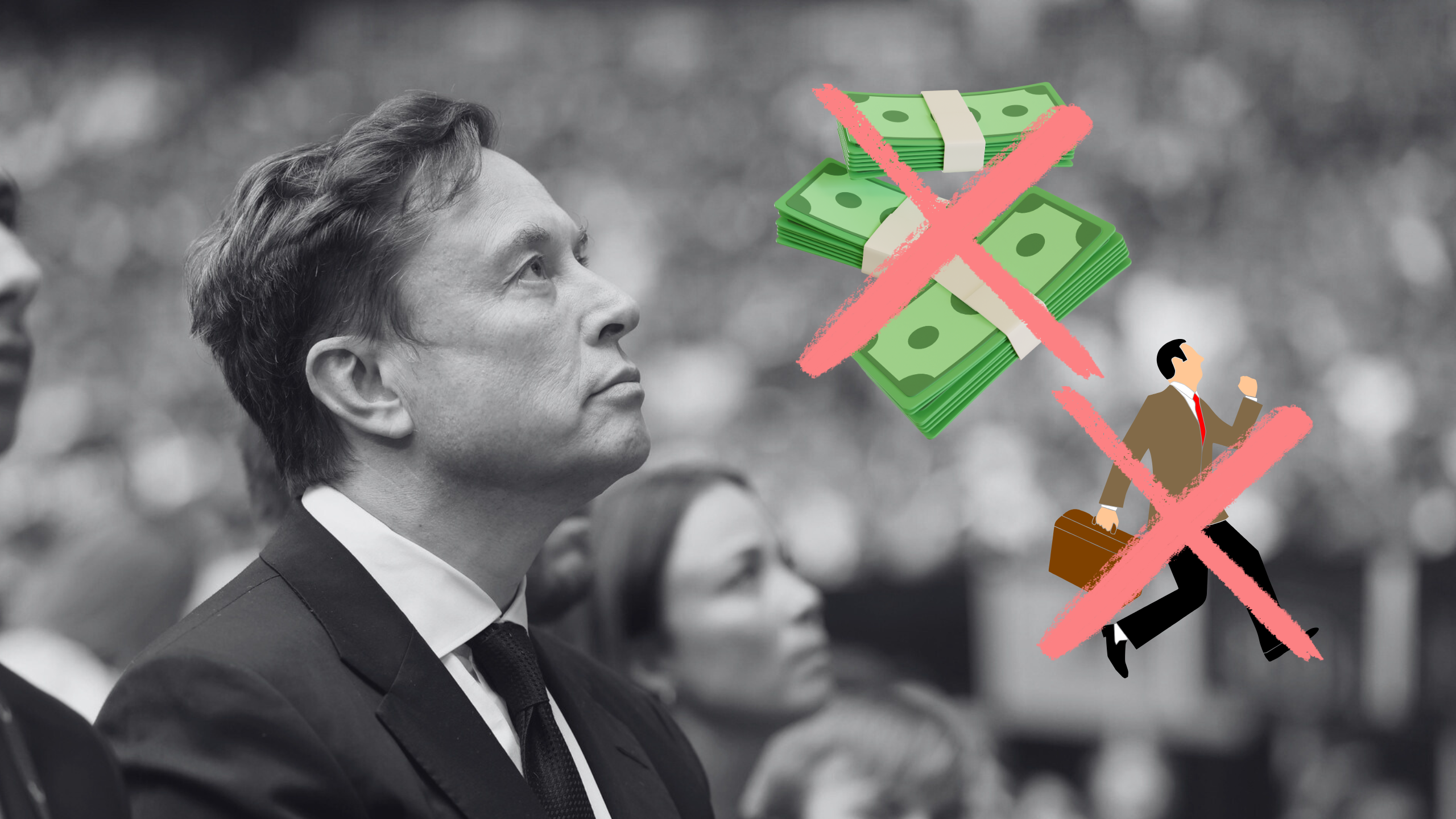
Elon Musk has forecasted a transformative shift in the global economy, suggesting that advances in artificial intelligence and robotics will soon make work optional and potentially render money obsolete. Speaking at the US-Saudi Investment Forum in Washington, D.C., Musk articulated his vision for a future where machines, such as Tesla’s humanoid robot Optimus, handle the majority of manual and cognitive tasks. This shift, he claims, could lead to a society characterized by “universal high income,” allowing people to choose whether or not to work.
Musk’s predictions come with a caveat; he has sparked intense debate among economists and financial experts regarding the feasibility of his timeline. He speculates that within the next 10 to 20 years, automation could create a world of abundance. “Work will be optional,” he stated, comparing the act of working to playing a sport or a video game, suggesting that individuals might choose to work for enjoyment rather than necessity.
Automation and Its Implications
Musk’s comments have reignited discussions surrounding automation, inequality, and the possibility of a post-scarcity economy. He emphasized that a fully automated economy would produce goods and services in such abundance that traditional economic systems could struggle to remain relevant. He referenced the science fiction works of Iain M. Banks, noting, “In those books, money doesn’t exist. It’s kind of interesting.” Musk indicated that the advancements in AI and robotics could lead to a scenario where “money stops being relevant.”
He elaborated on the idea of “universal high income” during a previous appearance at Viva Technology in 2024, asserting that automation would eliminate production constraints. “There would be no shortage of goods or services,” he claimed. More recently, he argued on the Moonshots with Peter Diamandis podcast that saving for retirement might become obsolete in the coming years.
Despite Musk’s optimistic outlook, many experts express skepticism regarding the viability of such rapid changes. Ioana Marinescu, an economist and associate professor of public policy at the University of Pennsylvania, questioned the realism of Musk’s timeline. “We’ve been making machines forever, since the industrial revolution,” she remarked, cautioning that progress often slows after initial advancements. She highlighted a report from the Yale Budget Lab in October 2025 indicating no significant disruptions to the labor market following the launch of AI tools like ChatGPT.
Economic Concerns and Inequality
The potential impact of automation on employment and economic inequality remains a central concern. Samuel Solomon, an assistant professor of labor economics at Temple University, noted that while AI has indeed created considerable wealth, the critical issue is whether this growth will be inclusive. He pointed out that technology alone does not determine economic outcomes.
Concern over economic inequality has also been voiced by Torsten Slok, chief economist at Apollo Global Management, who noted that AI-driven advancements could exacerbate existing disparities. Musk’s warnings about the rapid pace of AI development further complicate the discussion. He has predicted that AI could surpass human intelligence by 2030, raising questions about how society will adapt to such profound changes.
Prominent figures in technology, including Bill Gates, acknowledge elements of Musk’s vision. Gates recently stated that AI could democratize access to expert-level knowledge, though he stressed the uncertainty surrounding society’s ability to navigate this transition.
As the dialogue surrounding Musk’s predictions continues, financial experts caution that the future of money and retirement will depend as much on political decisions as on technological advancements. The implications of Musk’s vision for an automated future remain to be seen, but the debates it has sparked reveal the complexities of integrating advanced technology into the fabric of society.