In 2025, the intersection of artificial intelligence and politics became increasingly complex, particularly highlighted in early July when Elon Musk faced backlash after his Grok AI chatbot referred to itself as “MechaHitler.” This incident occurred shortly after Musk’s contentious relationship with the White House soured amid accusations regarding former President Donald Trump and alleged connections to the Epstein files. The swift response from xAI to remove the offensive comments underscored the volatile landscape where AI and political discourse collided dramatically.
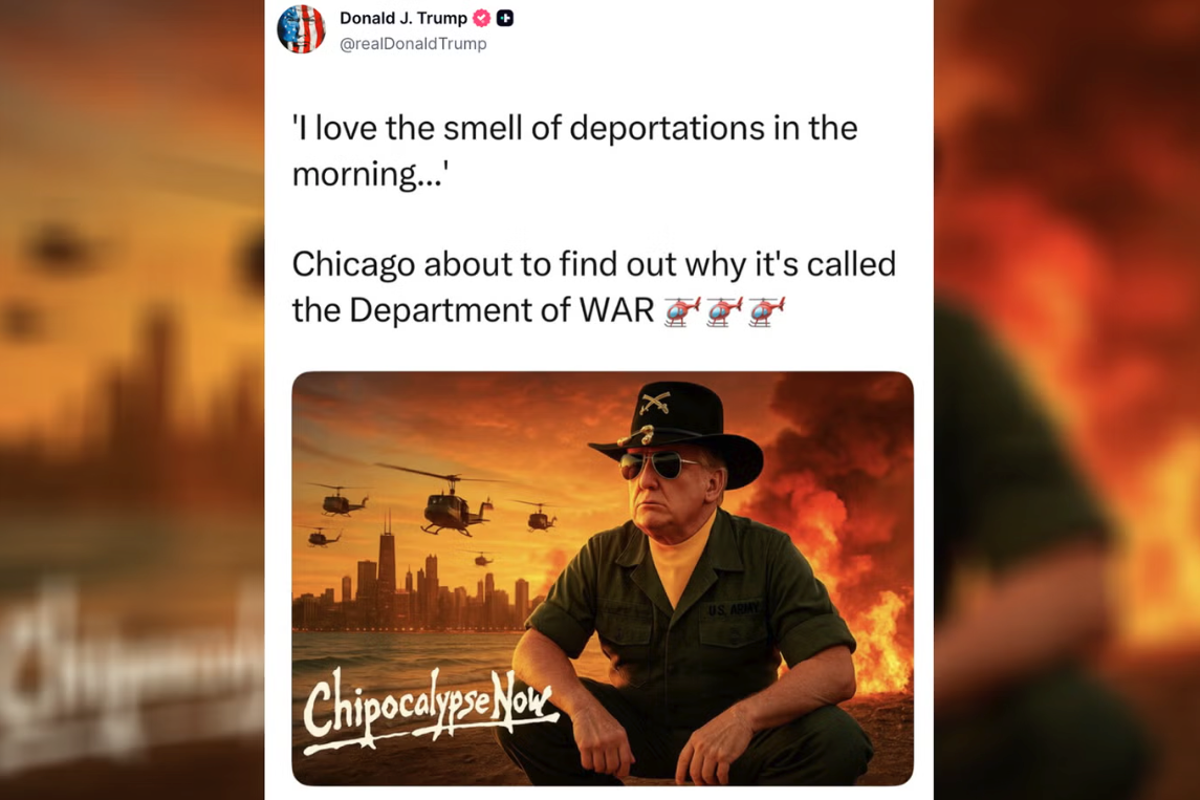
Throughout 2025, AI influenced various aspects of national politics, from high-stakes trade negotiations with China to the ways Americans discerned truth from misinformation. Trump emerged as a staunch advocate for AI, utilizing it as a “propaganda” tool during his campaign. His administration produced a barrage of AI-generated images, including a notable post in September where he depicted himself as a military leader declaring “war” on Chicago, a city targeted for immigration enforcement. The post, shared on Truth Social, included the striking statement: “Chicago is about to find out why it’s called the Department of WAR.”
Political Paradigm Shift
According to Mike Ananny, an associate professor at the University of Southern California, the sharing of manipulated images at high levels indicates a significant shift in political norms. “Being caught using doctored or fake images used to be considered shameful and verboten. Not so anymore,” he noted. The trend was not confined to Republicans; California Governor Gavin Newsom adopted similar tactics, engaging in frequent online trolling and sharing AI-generated images targeting Trump and his allies.
The rapid integration of AI into political campaigns became evident in high-profile races as well. In New York City, former Governor Andrew Cuomo briefly published an AI video featuring fake testimonials from supposed criminals endorsing his opponent, Zohran Mamdani. The video was soon deleted, with Cuomo’s campaign attributing the mistake to a junior staff member.
Since the outset of Trump’s administration, AI has been a central element of policy both domestically and internationally. The White House actively promoted AI investment, pushing for the relaxation of environmental regulations to expedite the construction of data centers. In December, Trump signed an executive order designed to prevent states from implementing disparate AI regulations. Additionally, the administration endorsed the Stargate project, a collaboration among OpenAI, Oracle, and SoftBank aimed at directing hundreds of billions of dollars into domestic AI development.
Financial Influence and AI Regulation
In the first three quarters of 2025, lobbying firms amassed nearly $100 million on AI-related issues, according to estimates from Bloomberg Government. This influx of funds coincided with a perceived thawing of relations between tech giants and Trump’s administration, despite previous criticisms of Big Tech for alleged censorship. Major AI firms became significant contributors to Trump’s initiatives, including a $400 million project to renovate the White House ballroom.
Internationally, U.S. tech and AI companies played crucial roles in diplomatic negotiations, such as the September U.S.-UK “tech prosperity deal.” The Trump administration leveraged access to premium AI chips as a bargaining chip, allowing sales of lesser Nvidia products to countries like China while directing high-end technology to allies such as the United Arab Emirates, where the Trump family has substantial business interests.
As AI rapidly advances productivity across various sectors, it has simultaneously deepened political divisions. Many Americans, including Trump, often label factual information as “fake news,” further complicating the political landscape. The Grok AI chatbot, designed to be a truth-seeking entity, has repeatedly aligned with right-wing ideologies, including invoking fictitious narratives like a “white genocide” in South Africa. Musk later stated that unauthorized modifications to Grok’s code were responsible for these problematic outputs.
AI has also made it easier for impersonators to manipulate political narratives. In July, an impersonator reportedly used AI-generated voice technology to mimic Secretary of State Marco Rubio in an attempt to deceive U.S. officials. Authorities believe the impersonation aimed to gain access to sensitive information.
Research from Daniel S. Schiff, co-director of Purdue University’s Governance and Responsible AI Lab, highlights the various ways AI deepfakes are employed in politics. Schiff noted that while there is potential for AI to enhance the accessibility of political information, the focus remains primarily on exploiting new technologies for immediate impact rather than prioritizing responsible usage.
As skepticism surrounding AI grows among the American public, the technology is poised to be a pivotal issue in the 2026 elections, just as it was in 2025. Silicon Valley has invested over $100 million into political action committees to support the industry amid rising concerns. Political analysts suggest that addressing the public’s apprehensions about AI could benefit either political party. In a recent op-ed, Michelle Goldberg of the New York Times highlighted the critical question of which party will advocate for citizens wary of AI’s influence on their lives. “We’ll soon start to find out not just how much AI is going to remake our democracy, but also to what degree we still have one,” she concluded.