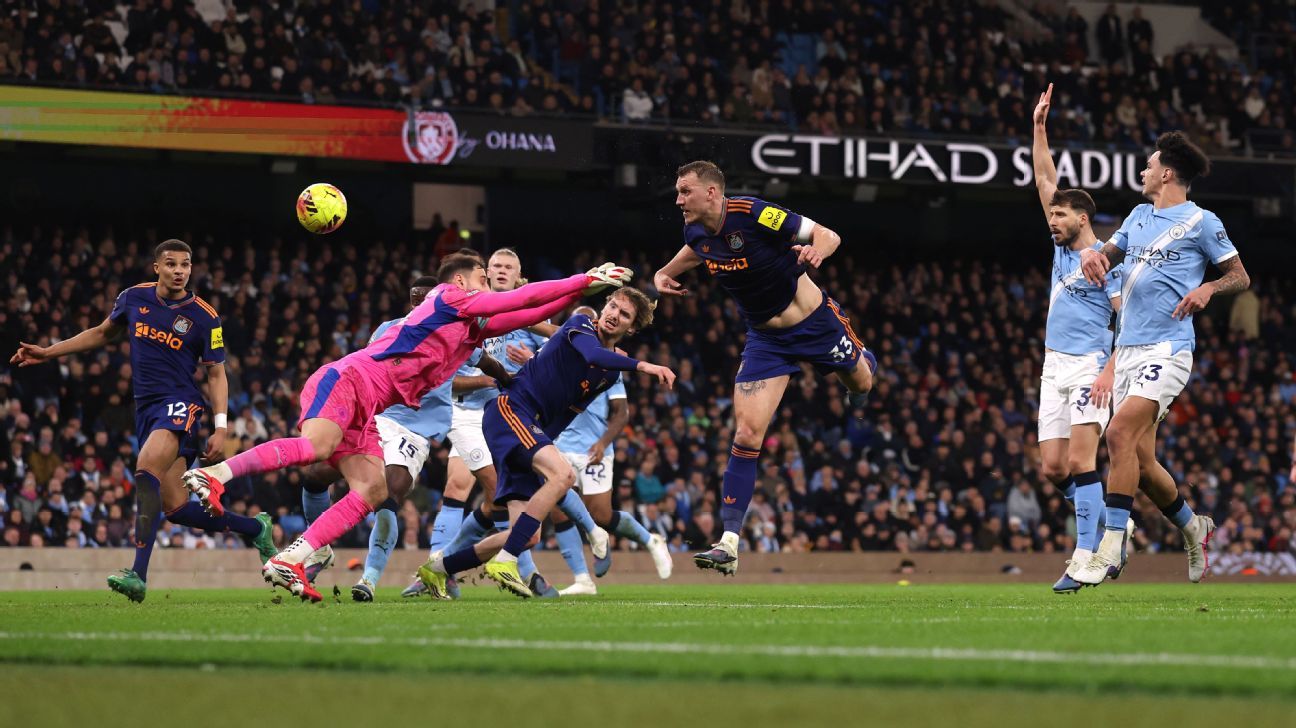
In a closely contested match on October 7, 2023, Manchester City edged out Newcastle United 2-1, but the game was marred by controversy surrounding two key decisions involving the Video Assistant Referee (VAR). The focus shifted to an offside goal for Newcastle and a potential second yellow card for City’s Bernardo Silva.
Disallowed Goal for Offside Sparks Debate
The first major incident occurred in the 42nd minute when Newcastle’s defender, Dan Burn, nodded home a free kick taken by Sandro Tonali. Initially celebrated as a goal, it was quickly ruled out for offside. The VAR, overseen by James Bell, reviewed the situation and upheld the on-field decision, confirming that an offside offence had occurred.
However, replays indicated that Burn was pushed into an offside position by Manchester City’s defender, Rúben Dias. This raised questions about whether a foul had been committed prior to the goal. The VAR review focused on the possibility of a foul leading up to the goal and whether it could have met the criteria for a penalty kick. Despite the clear and deliberate push, the incident occurred before the ball was in play, which prevented VAR from intervening. According to the Laws of the Game, specifically Law 12, direct and indirect free kicks or penalty kicks can only be awarded for offences committed while the ball is active.
Newcastle players and supporters expressed frustration at the outcome, feeling that they were unfairly denied a legitimate goal. The timing of Dias’s action was critical, as it allowed him to sidestep any repercussions within the strict interpretation of the rules. With the ball not yet played, VAR had no jurisdiction to act.
Bernardo Silva Avoids Second Yellow Card
The second contentious moment came shortly after halftime when Bernardo Silva was involved in a challenge that raised the specter of a second yellow card. Silva, who had already received a yellow card earlier in the match, committed a foul that many observers felt warranted another caution. However, VAR did not review this situation, as current rules restrict VAR intervention to straight red card decisions.
For a referee to issue a second yellow card, the challenge typically needs to be clear-cut and immediately recognized as worthy of a booking. In this instance, while Silva’s challenge appeared unnecessary, it did not stand out as a blatant infringement in the context of a physical game. Referee Tom Bramall likely made a judgment call based on the flow of the match, deciding that a second yellow card was not the most obvious outcome.
As discussions about the effectiveness and consistency of VAR continue, this match serves as a reminder of the complexities involved in officiating at the highest level of football. The incidents involving Newcastle’s disallowed goal and Silva’s potential second yellow card reflect the ongoing challenges faced by referees and VAR officials in making split-second decisions that can significantly impact the outcome of a match.
The Premier League’s commitment to using technology to enhance the game remains a contentious topic among fans and players alike, as they seek clarity and consistency in officiating standards.