The Sea-Scan research team from Trinity College Dublin has secured victory in the Defence Innovation Challenge with its advanced AI-based system for real-time vessel detection. This project addresses the increasing need for effective monitoring of Ireland’s maritime environment, particularly as threats to subsea communications and energy infrastructure have emerged as significant concerns.
During the announcement this morning, James Lawless TD, the Irish Minister for Further and Higher Education, Research, Innovation and Science, along with Helen McEntee TD, the Minister for Defence, revealed that over €1.8 million would be allocated in prize funding under the co-funded Research Ireland – Defence Innovation Challenge. The award reinforces the project’s importance in enhancing Ireland’s naval security.
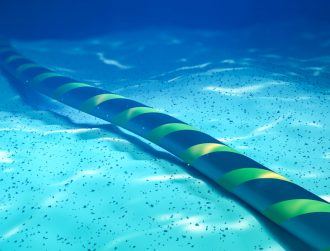
The Sea-Scan initiative aims to develop a next-generation maritime situational awareness system capable of detecting “dark” vessels, which pose a risk to critical subsea cables essential for international communications. The team, led by Prof Marco Ruffini and Dr John Kennedy, along with Defence Forces Liaison Cdr Cathal Power, seeks to create a reliable monitoring system that not only enhances security but also has potential applications in environmental monitoring.
Background of the Challenge
The need for improved monitoring of maritime activity has received heightened attention in recent years. The rise in concerns surrounding the protection of vital subsea infrastructure has placed a spotlight on Ireland’s maritime capabilities. The Sea-Scan team’s project reflects a proactive approach to addressing these challenges, showcasing technology that could transform how the nation oversees its waters.
Dr Diarmuid O’Brien, CEO of Research Ireland, emphasized the collaborative nature of the challenge. He noted, “Challenge-based research funding encourages researchers to work directly with those most affected by the problems they seek to address.” The Sea-Scan project exemplifies this approach by developing solutions in close partnership with Defence Forces personnel.
The runner-up funding was awarded to the MASH – Mobile Adaptable SHelter team, led by Dr Daniel McCrum and Dr Kevin Roche from University College Dublin along with Defence Forces Liaison Capt. Dave McKenna. Their project also aims to enhance Ireland’s security capabilities.
The Importance of Maritime Monitoring
Maintaining a vigilant watch over maritime activities is crucial for Ireland, an island nation strategically positioned as a key gateway for digital connectivity across the Atlantic. Prof Marco Ruffini stated, “As subsea communications and energy infrastructure continue to grow in strategic importance, so too does the need for continuous, reliable monitoring of the surrounding maritime environment.”
The Sea-Scan team has demonstrated the capability to detect and characterize vessel activity using the existing subsea fibre infrastructure. This innovation highlights the potential of embedding robust sensing capabilities within operational communication systems, effectively enabling vessel monitoring and the protection of critical subsea infrastructure.
Minister Lawless remarked on the significance of the prize-winning projects, stating, “These initiatives demonstrate how cutting-edge research can deliver practical, real-world solutions that strengthen national security while driving technological innovation.” Minister McEntee added, “Innovation is critical to ensuring our Defence Forces have the tools they need to operate effectively in an increasingly complex environment.”
This funding initiative not only reflects Ireland’s commitment to enhancing its defence capabilities but also underscores the importance of embracing innovative solutions for future challenges in maritime security. The Sea-Scan project stands out as a prime example of how advanced technology can play a vital role in protecting national interests and ensuring the safety of critical infrastructure.