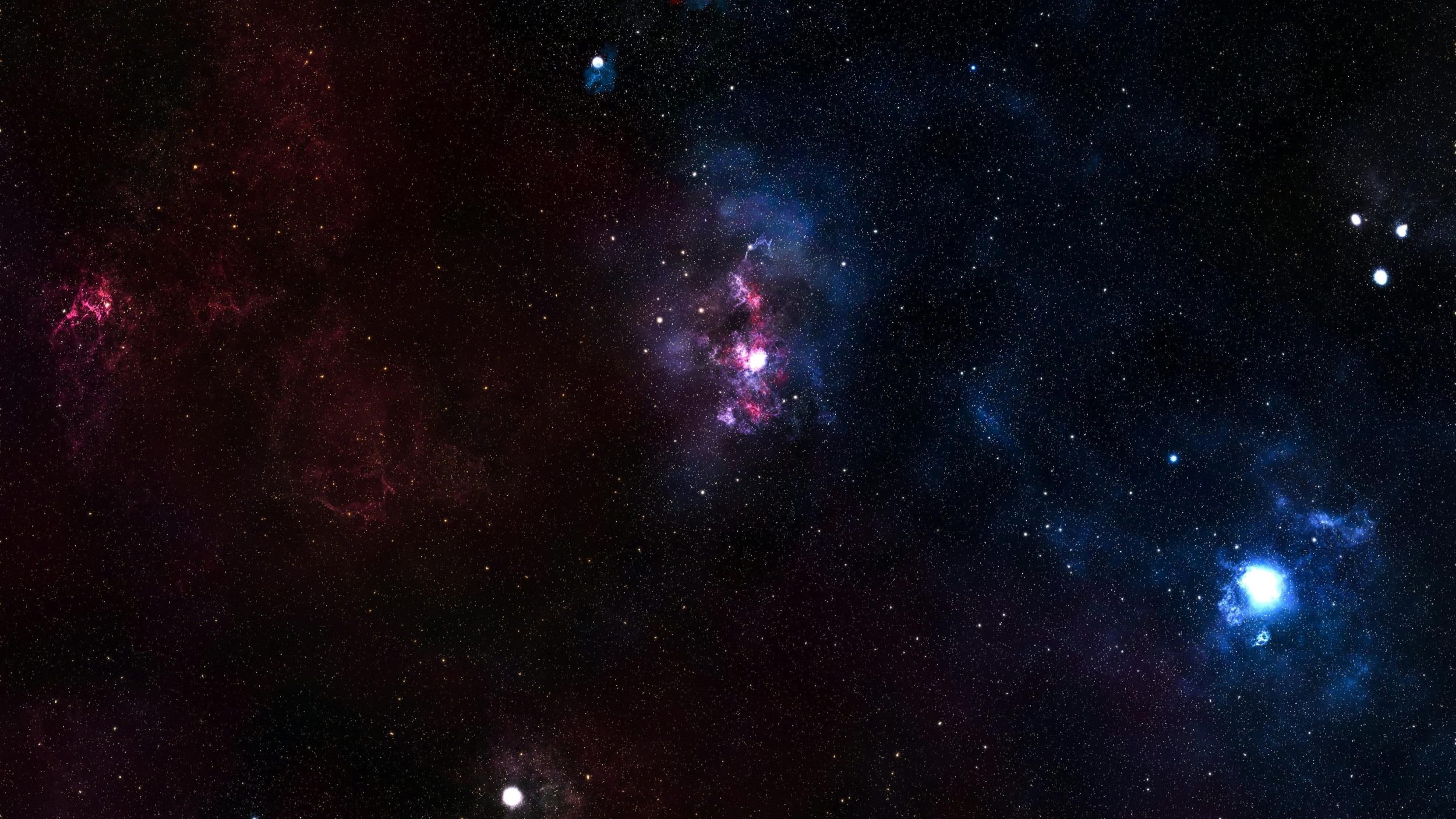
Researchers have detected a mysterious signal lasting just ten seconds, emanating from the edge of the universe. This signal, confirmed by two Earth satellites, originates approximately 13 billion light-years away from our planet. Scientists are currently exploring its origins, with the prevailing theory suggesting it may have emerged from an exploding supernova during a time when the universe was only 730 million years old.
The signal, designated GRB 250314A, is believed to be a high-energy gamma-ray burst. Gamma rays are a form of electromagnetic radiation produced by massive stellar explosions, and they contain significant amounts of energy. The detection of this ancient supernova is particularly significant, as it appears to share characteristics with more recent supernovae, prompting questions among scientists about its similarities.
Andrew Levan, the lead author of a study from Radboud University in the Netherlands, expressed enthusiasm about the discovery, noting, “There are only a handful of gamma-ray bursts in the last 50 years that have been detected in the first billion years of the universe. This particular event is very rare and very exciting.” Such findings contribute to our understanding of the early universe and the phenomena that shaped it.
In a separate but related development, US intelligence officials recently refrained from confirming or denying the existence of records regarding a newly discovered interstellar object. This object, known as 3I/ATLAS, has sparked public speculation about potential extraterrestrial connections, although scientists maintain it appears to be a natural comet.
Astronomers report that 3I/ATLAS is the third confirmed object observed entering the solar system from beyond interstellar space. It is moving at such a speed that it is unlikely to be captured by the Sun’s gravitational pull, meaning it will eventually exit the solar system, never to return. Observations from ground-based telescopes have revealed a visible coma and tail, indicative of a comet formed from ice and dust.
Data from civilian space agencies, including NASA, have shown no evidence to suggest that 3I/ATLAS is artificial. Despite this, the Central Intelligence Agency’s response to a Freedom of Information Act request regarding the object has intensified public curiosity. The agency issued a Glomar response, meaning it could neither confirm nor deny the existence of related documents.
As scientists continue to unravel the mysteries of the universe, the discovery of both the enigmatic signal and the interstellar object adds to an exciting era of astronomical exploration. The implications of these findings could reshape our understanding of cosmic events from the dawn of time. The scientific community remains dedicated to further investigation, eager to reveal the secrets that the universe holds.