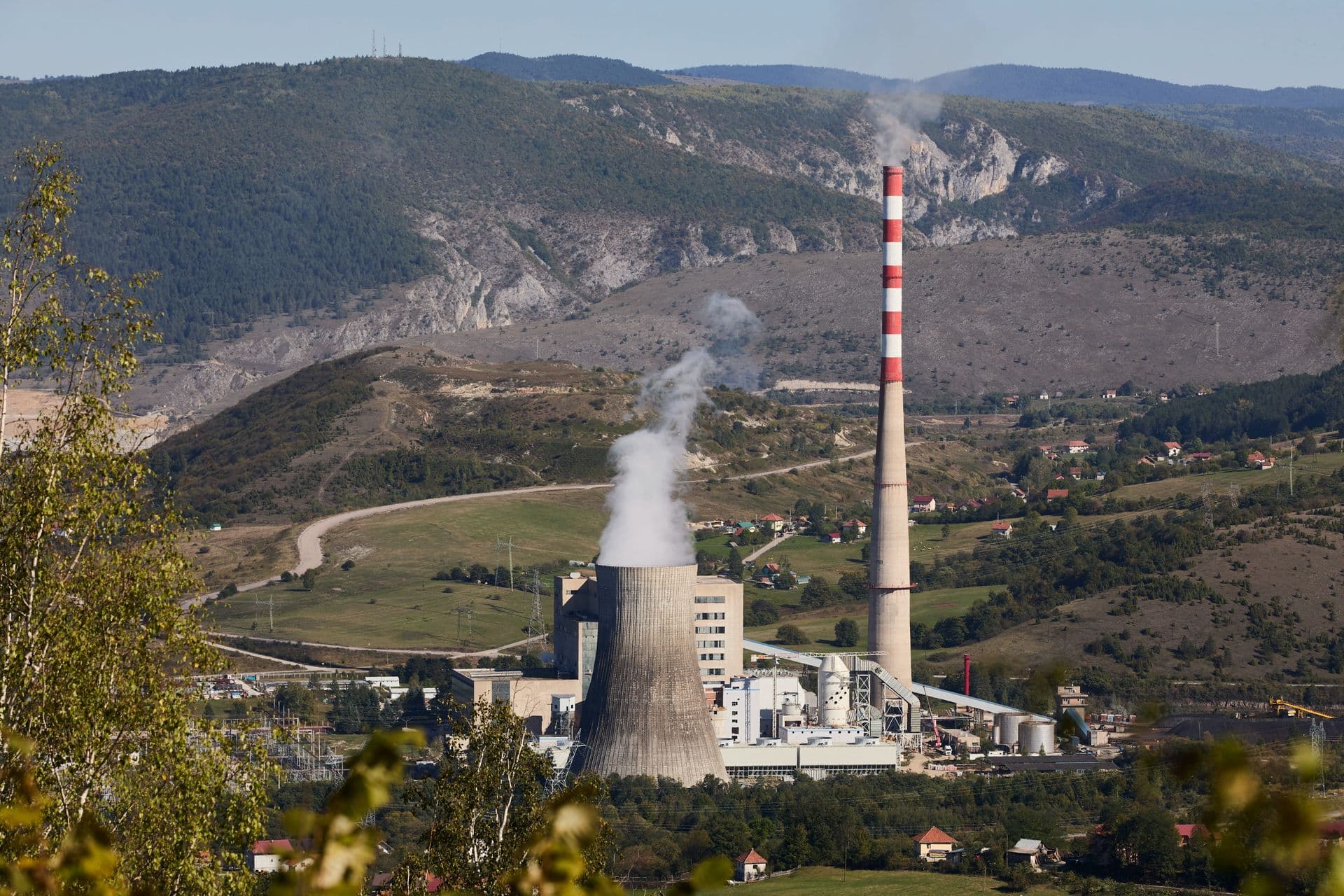
Montenegro’s government has confirmed that the thermal power plant, TE Pljevlja, will remain operational until 2040, albeit with a reduction in annual operating hours. This decision was outlined in the National Energy and Climate Plan (NEKP) adopted during a recent cabinet meeting. The plan also indicates that the hydroelectric plants HE Komarnica and HE Kruševo are scheduled to commence operations in 2032 and 2033, respectively.
For the past four decades, TE Pljevlja has served as a stable source of electricity, contributing significantly to the country’s energy production. Alongside HE Peručica and HE Piva, it accounts for over 85 percent of domestic electricity generation. Notably, TE Pljevlja contributed approximately 40 percent of Montenegro’s annual electricity production in 2022, reaching a peak of 47.4 percent that year. Currently, the plant is undergoing ecological reconstruction and has been offline since April 1.
The NEKP emphasizes the importance of TE Pljevlja in maintaining stable electricity production and ensuring access to affordable energy in Montenegro. The plant is directly and indirectly responsible for over 3,000 jobs and plays a pivotal role in the economy of northern Montenegro. The report states, “Electricity production will continue to rely on TE Pljevlja until adequate renewable energy sources can ensure system reliability.” Without TE Pljevlja, the cost of electricity for consumers would likely increase significantly if it were replaced by imported energy.
The revised project documentation suggests that the ongoing ecological reconstruction will meet all necessary criteria for obtaining an operational environmental permit. The NEKP clarifies that the goal of the reconstruction is not to reduce greenhouse gas emissions but to ensure that air pollutants comply with established standards under the Industrial Emissions Directive. This project is expected to enhance energy efficiency at the plant.
The ecological reconstruction aims to meet specified limits for reducing air pollutant emissions from such facilities to obtain an integrated operational permit. The NEKP warns that electricity prices from TE Pljevlja are expected to rise due to additional carbon-related costs. Nevertheless, the plant’s significant social and economic impacts, along with its role in preserving energy security, justify its continued operation.
The NEKP also includes plans for a just transition for the coal region of Pljevlja. This strategy aims to comprehensively address the challenges of transitioning from a coal-based economy to sustainable, low-carbon development, in line with obligations under EU Regulation 2018/1999 on energy union governance and climate action.
The objective of the just transition plan is to identify investments for the future development of the coal region, focusing on improving infrastructure and exploring alternative land uses currently occupied by lignite mines. This will involve maintaining existing jobs and creating new ones, facilitating retraining and upskilling for workers, mitigating social impacts from phasing out coal, diversifying income sources, and ensuring social cohesion during the transition.
The NEKP highlights ongoing significant activities related to diversifying energy sources. There is considerable interest in developing photovoltaic plants, as well as wind farms, although the feasibility of these projects will be dictated by market conditions. Analyses have been completed for connecting 22 photovoltaic plants (with over 3,300 MW of installed capacity) and five wind farms (with 720 MW of installed capacity). Additionally, there is interest from private investors for connecting to the distribution network, with analyses conducted for over 50 potential photovoltaic plants (over 150 MW of installed capacity).
As of now, the construction of 32 small hydroelectric plants has been completed, which are operating under concession agreements. In 2020, 13 small hydroelectric plants were launched, adding to the previous installations.
TE Pljevlja’s role in electricity generation is significant, alongside the two major hydro plants, HE Peručica and HE Piva. The low production costs and high flexibility of these hydro plants are crucial for ensuring electricity supply security and integrating new renewable sources, which are characterized by variable production. TE Pljevlja serves as a reliable energy source, complementing the aforementioned hydro plants to create a stable energy supply.
Minister of Energy and Mining Admir Šahmanović stated after the cabinet meeting that the government has made substantial efforts over the past eight months to finalize these key documents, which are essential for meeting European commitments. He noted, “We have adopted the National Energy and Climate Plan, a comprehensive strategy that clearly outlines where Montenegro should be by 2030: a 55 percent reduction in emissions, at least 50 percent of energy from renewable sources, and significant progress in energy efficiency.”
According to Šahmanović, this plan facilitates new investments, renewable energy plants, modern grid infrastructure, and a secure transition for Pljevlja. The proposal for a law regarding cross-border electricity and gas exchanges is considered one of the most important pieces of energy legislation in this mandate. He added that this law not only addresses technical aspects but also paves the way for integration into the European single market, enhancing supply security, competition, price stability, and improving Montenegro’s economic position.
The European Commission’s latest report confirms that Montenegro has made progress, and the government’s decisions affirm this advancement. The adoption of these strategic documents marks a significant step in aligning with European energy regulations. The NEKP integrates energy, climate, and development policies into a cohesive framework, setting clear objectives and measurable outcomes while laying the groundwork for Montenegro’s long-term energy transition.
Implementation of the NEKP will enable the accelerated development of renewable sources, modernization of electricity infrastructure, enhanced energy efficiency, and more effective management of emissions and climate risks. The law on cross-border exchanges represents the most extensive reform of energy legislation in the past decade, transitioning from a basic regulatory framework to a comprehensive European market system.
These developments establish the conditions for Montenegro’s participation in European market mechanisms, bolstering energy security and fostering a competitive environment that encourages investment. The government and the Ministry of Energy and Mining are committed to continuing energy and climate reforms, confident that the progress made will lead to faster alignment with the EU and a more secure energy future for citizens and the economy.