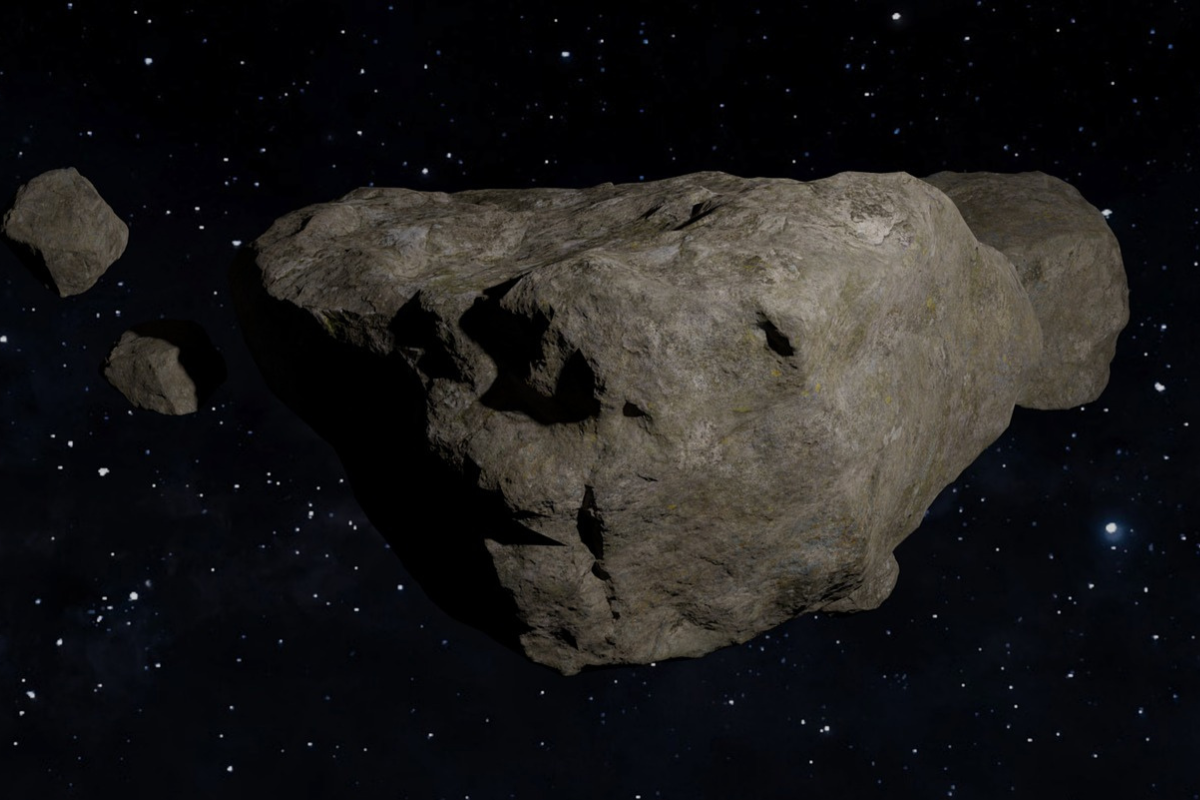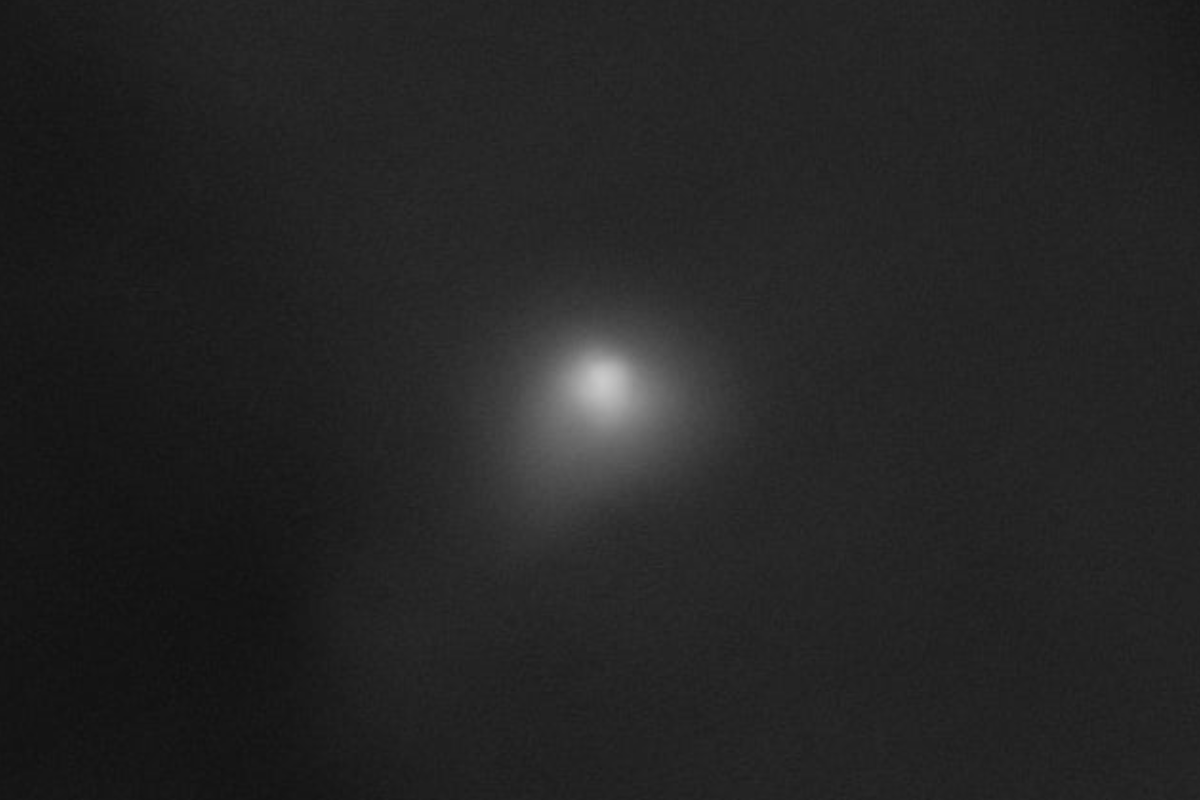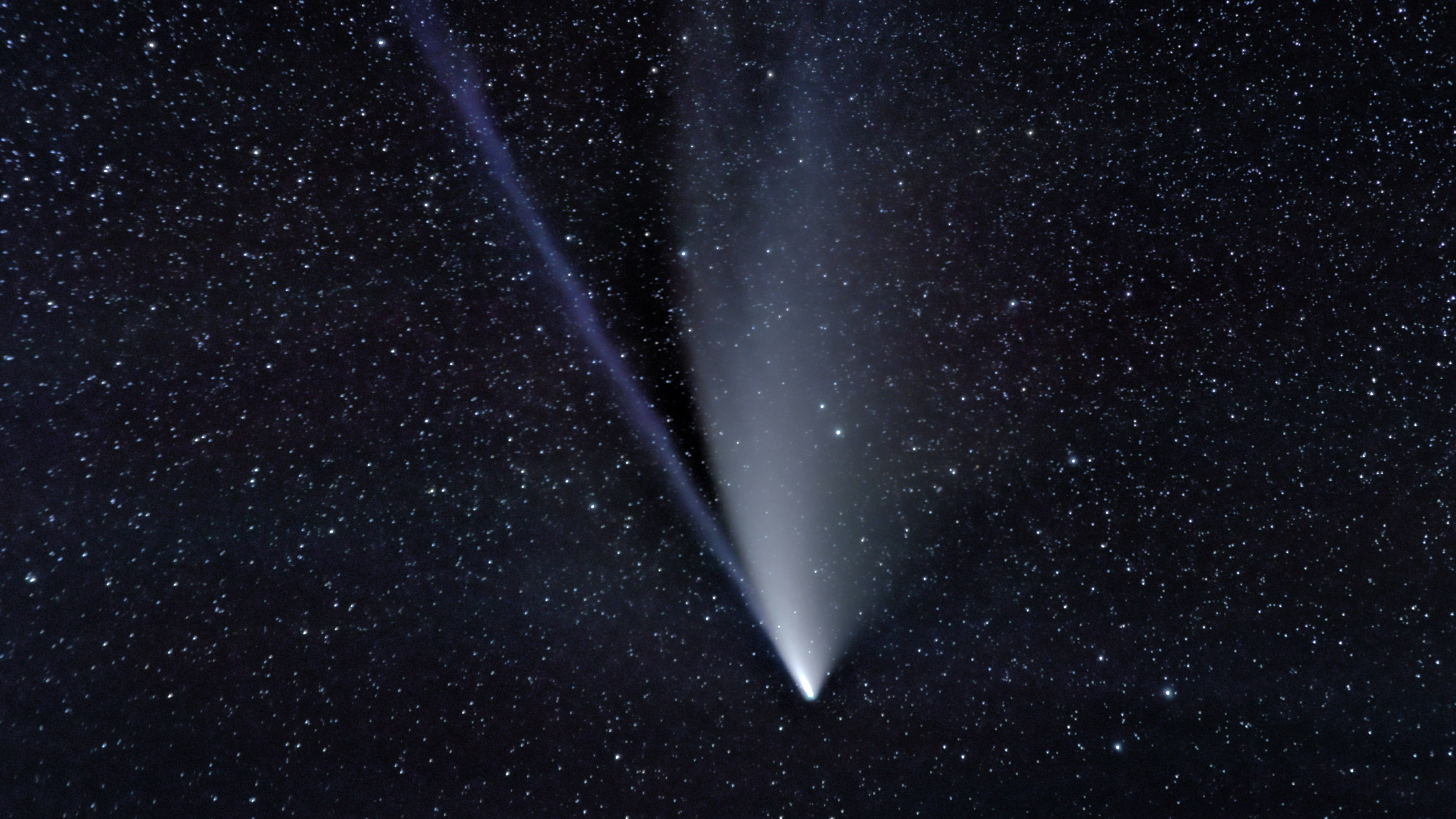
The interstellar object known as 3I/ATLAS has sparked renewed debate about the origins of life on Earth, with Avi Loeb, a physicist from Harvard University, suggesting that it could represent ancient extraterrestrial intervention. While mainstream astronomers classify 3I/ATLAS as a comet, Loeb argues that its trajectory and distinctive features may indicate it is a technological artifact designed to distribute life across the cosmos.
Loeb has pointed out that it is statistically improbable for Earth to have existed in isolation for 4.6 billion years. He claims that the planet may have been visited by extraterrestrial technology long before humanity began recording history. “There were plenty of opportunities for residents of previous stars to visit our place,” he remarked. “If there is an interstellar gardener, then obviously it could have intervened… it could have seeded the various forms of life on Earth intentionally.”
The theory that Loeb proposes is based on the concept of directed panspermia, which posits that life is distributed throughout the universe via space debris such as dust, meteoroids, and comets. This idea contrasts with natural panspermia, where life is transported by chance collisions. Directed panspermia implies a deliberate action, suggesting that a “gardener” from a distant star might have used objects like 3I/ATLAS to influence life on Earth.
Loeb has identified several anomalies associated with 3I/ATLAS, including what he describes as a “heartbeat”-like pulse. He argues that this could indicate artificial origins and suggest the presence of a spacecraft rather than a natural comet. Despite Loeb’s provocative claims, the mainstream scientific consensus remains that 3I/ATLAS behaves like a typical comet.
According to Leslie Looney, a professor of astronomy at the University of Illinois, “It’s acting just like a piece of rock and ice would.” Looney emphasizes that while it is remarkable to witness material from another solar system, the evidence does not support the alien hypothesis. He recalls the words of the renowned astronomer Carl Sagan: “Extraordinary claims require extraordinary evidence.” For most scientists, the notion of a heartbeat or unusual trajectory does not constitute sufficient proof of extraterrestrial technology.
As the debate over 3I/ATLAS unfolds, other researchers are broadening their search for extraterrestrial life. Sofia Sheikh, a technosignature research scientist at the SETI Institute, utilizes the Allen Telescope Array to detect radio signals distinct from natural cosmic noise. “Human technological signals often are really concentrated in their width,” Sheikh explained. This distinction is crucial, as natural cosmic phenomena emit radio waves across a wide range of frequencies, while non-human technology would likely produce signals confined to a narrower spectrum.
Sheikh acknowledges the challenges of her work, likening it to finding “a needle in a haystack made of needles.” She must navigate the complex array of human technology to detect genuine signals from deep space. For science communicators like Hank Green, it is essential to differentiate between a desire to believe in extraterrestrial life and the need for concrete evidence. Countering the famous tagline from The X-Files, Green states, “I want to know.”
Loeb warns that disregarding objects like 3I/ATLAS as mere rocks could be a grave mistake. He contends that these objects may represent remnants of advanced civilizations that have perished due to self-destructive tendencies. “Many of them might have engaged in geopolitical conflicts on their rocky planet and perished by now,” he noted. Loeb advocates for a reallocation of military budgets toward space exploration, arguing that humanity’s future may depend on becoming interplanetary.
“If we continue along this path, we will not be remembered,” he cautioned. “One way to change our priorities is to realize that someone else did it. If we get a visitor, it will inspire us to imitate it, perhaps.” As the discourse around 3I/ATLAS evolves, it underscores humanity’s ongoing quest to understand our place in the universe and the potential for life beyond Earth.