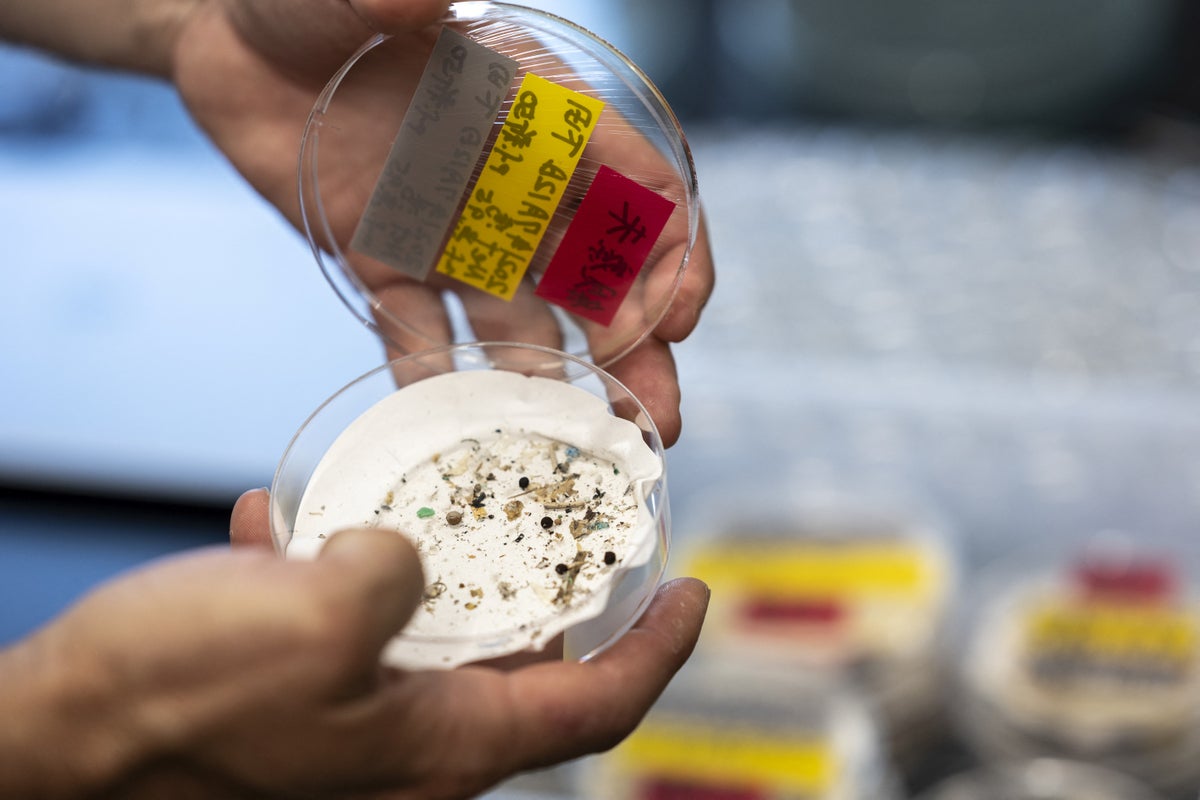
Recent research conducted by Chinese scientists has revealed alarming levels of plastic particles suspended in the air over two major cities, Guangzhou and Xi’an. This study indicates that the presence of these microplastic (MP) and nanoplastic (NP) particles is far more significant than previously believed, raising concerns about their potential impact on health and the environment.
Over the past two decades, the scientific community has increasingly recognized microplastics and nanoplastics as a growing environmental pollutant. These tiny particles have been detected in various ecosystems, including soils, living organisms, and even the atmosphere, affecting regions from urban centers to the Arctic and Antarctic. Research has linked exposure to these particles to a range of health issues, including hormonal disruptions, cancer, cardiovascular diseases, reproductive problems, and neurological damage.
Despite the mounting evidence of their prevalence, significant questions remain regarding the origin, lifecycle, and ultimate fate of these plastic particles in the environment. Given their widespread distribution, researchers suspect that microplastics may also be integrated into the planet’s water cycle. Furthermore, scientists are investigating the influence of climate change on these particles and their dispersal patterns.
In the latest study, researchers employed an innovative method to detect plastic particles as small as 200 nanometers. Their findings suggest that previous studies have substantially underestimated the levels of plastic present in the atmosphere. The research highlights that these particles can remain suspended for extended periods and may even play a role in cloud formation. As part of this process, they can fall back to Earth as precipitation, potentially affecting areas far from their original source.
The research team quantified the flux of microplastics and nanoplastics in aerosols, dry and wet deposition, and resuspension across both cities. Their estimates revealed a variation of two to five orders of magnitude in the flux of these particles across key atmospheric components. The primary contributors to this plastic presence were identified as road dust and deposition driven by rainfall.
The study represents a significant advancement in understanding the atmospheric aspects of plastic pollution, which remains one of the least explored areas of the global plastic cycle. While the researchers do not claim that these particles are measurably altering the global climate, they do assert that plastics are influential in cloud formation processes.
“These results provide an integrated assessment of microplastics and nanoplastics in urban atmospheric processes and offer critical insights into their transformation, fate, and potential implications for climate, ecosystems, and human health,” the authors stated.
As scientists continue to explore the implications of plastic pollution in urban environments, this research underscores the urgent need for more comprehensive studies on the health and ecological impacts of microplastics and nanoplastics. Understanding their role in the atmosphere could pave the way for improved environmental policies and public health strategies.