A species of fungus, Cladosporium sphaerospermum, discovered in the irradiated Chernobyl Exclusion Zone, is garnering attention from space scientists. Researchers are investigating whether this remarkable organism, which appears to thrive on gamma radiation, could be developed as a protective shield for astronauts against cosmic radiation during extended space missions.
The fungus was first identified in the aftermath of the catastrophic nuclear disaster in 1986, where it was found growing on surfaces near the damaged reactor, despite the intensely radioactive environment. These melanised fungi possess cell walls rich in melanin, a pigment known to absorb and dissipate ionising radiation. Early laboratory studies indicate that melanin may protect fungal cells by neutralising free radicals generated during radiation exposure, suggesting a potential mechanism for the fungus’s resilience.
While the concept of using fungi as radiation shields is still in its infancy, recent experiments, including a trial aboard the International Space Station (ISS) in 2022, have shown promising results. During the ISS experiment, the fungus demonstrated the ability to endure elevated radiation levels and slightly lower radiation flux. However, translating these findings into practical applications for spacecraft or planetary habitats requires further research and development.
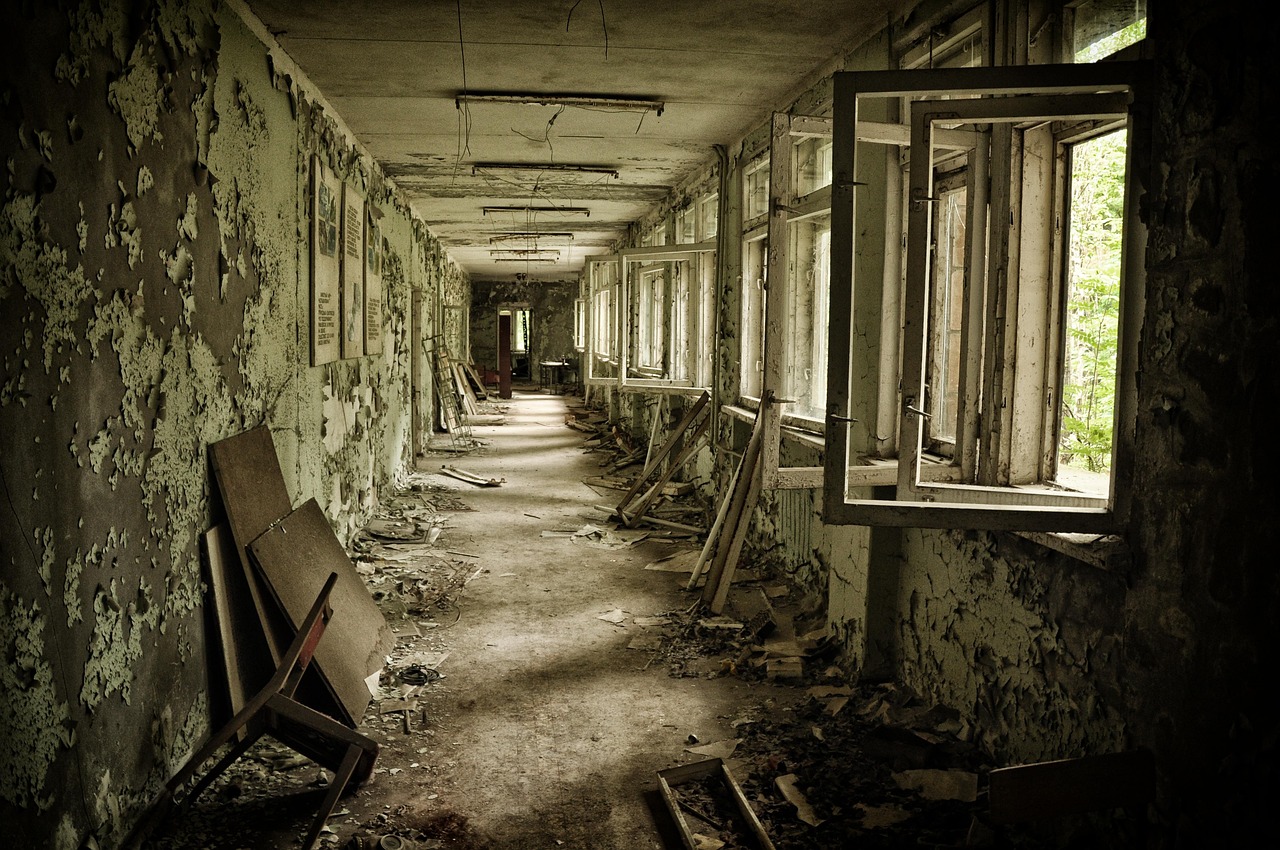
The Chernobyl Exclusion Zone has become one of the most radioactive places on Earth since the reactor explosion. Within this environment, biologists discovered that black fungi exhibit a phenomenon known as radiotropism, meaning they grow towards sources of gamma radiation. This unusual behavior has led scientists to explore the possibility that these organisms are not merely surviving radiation but may be actively utilising it.
Subsequent studies exposed melanised fungi to radiation levels significantly higher than natural background levels. Notably, these strains outperformed non-melanised varieties, exhibiting enhanced growth and leading to the hypothesis of a process termed ‘radiosynthesis’. This intriguing mechanism suggests that the fungi may convert radiation energy into usable chemical energy, somewhat analogous to photosynthesis in plants.
Interest in practical applications for C. sphaerospermum intensified following its cultivation aboard the ISS. Over a month-long period, the fungal layer reduced detected radiation by approximately 2% compared to control samples. Although this effect is modest, it points to the potential of melanised fungi as part of a broader strategy for shielding in space environments. Some projections suggest that a layer of this fungus, roughly 21 centimetres thick, could significantly lower radiation exposure on the surface of Mars.
Despite its promise, challenges remain in developing a biological layer that offers substantial protection. Such a system would need to be bulky, and maintaining fungal growth in microgravity poses engineering obstacles. Effective containment systems, environmental regulation, and long-term stability are critical factors that will require sophisticated designs.
Researchers caution that while melanin provides partial shielding, it cannot replace traditional materials like metals. Instead, fungi may serve as a complementary solution. Proponents of bio-hybrid space systems advocate for integrating fungal shielding with conventional materials or Martian regolith to reduce payload mass, enhance self-repair capabilities, and support sustainable habitat construction.
The exploration of the Chernobyl fungus reflects a broader trend in space science that seeks to harness biological processes to address engineering challenges. Although the application of C. sphaerospermum as an operational solution is still far from reality, its unique ability to thrive by effectively ‘feeding’ on gamma radiation continues to captivate scientists. As research advances, it may provide valuable insights into how life itself can contribute to safeguarding astronauts as humanity ventures deeper into the cosmos.