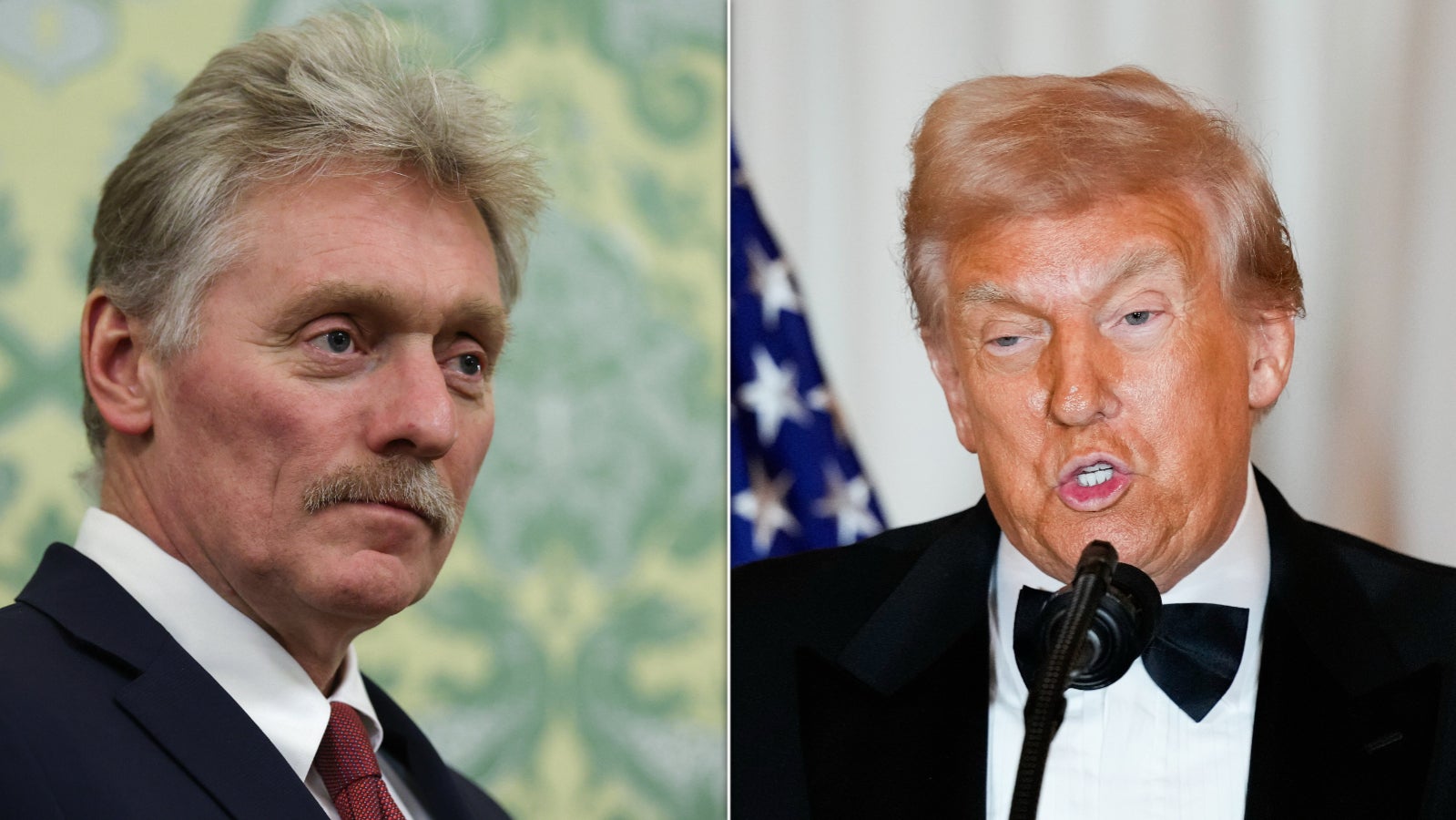
Donald Trump’s recently unveiled National Security Strategy (NSS) has sparked significant reactions, particularly from Russia, with Kremlin spokesperson Dmitry Peskov suggesting that the document aligns closely with Moscow’s perspectives. The NSS, presented on March 15, 2024, outlines the administration’s foreign policy and defense priorities, raising concerns among European allies regarding its implications for transatlantic relations and security.
The document notably downplays the threat posed by Russia, instead focusing on what it describes as the challenges facing America’s European allies. Among its claims, the NSS argues that the economic decline in Europe is overshadowed by a “real and more stark prospect of civilizational erasure.” It further asserts that the European Union’s activities are detrimental to political liberty and sovereignty, indicating a shift in focus from traditional security threats to internal European matters.
In an intriguing twist, the NSS advocates for the United States to “cultivate resistance to Europe’s current trajectory” and commends the rise of patriotic parties within Europe. This rhetoric raises questions about the future of NATO, particularly regarding the demographic changes that might lead some member states to become “majority non-European.” The document prompts a reevaluation of how these nations might perceive their alliances, especially in light of their commitments to NATO.
The NSS also emphasizes the need for the United States to actively engage in diplomatic efforts to manage European relations with Russia, which have become “deeply attenuated” due to the ongoing conflict in Ukraine. This call for enhanced diplomatic engagement contrasts with recent statements from Donald Trump Jr., who suggested that his father might reconsider U.S. involvement in Ukraine.
Peskov’s remarks reflect a cautious optimism regarding the NSS. In an interview with Russian journalist Pavel Zarubin, he expressed hope that the document would facilitate “joint constructive work” between Russia and the United States. He highlighted that the language of the NSS, which promotes dialogue over confrontation, is a departure from previous U.S. administrations.
While some in Moscow view the NSS as a potential opening for improved relations, reactions from European leaders have been more critical. Donald Tusk, the President of Poland, emphasized that Europe has been America’s closest ally for the past 80 years and underscored the importance of a unified stance against common adversaries. He urged the U.S. to recognize Europe as a partner rather than a problem, suggesting that the security landscape has not fundamentally changed.
In a similar vein, Johann Wadephul, Germany’s foreign minister, stated that Europe does not require external advice on security matters. His comments reflect a growing sentiment among European leaders that they must defend their interests independently, particularly as the U.S. adopts a more ambiguous stance towards Russia.
The political landscape is evolving as the Trump administration adopts a firmer approach towards Europe while softening its stance towards Moscow. The NSS indicates a potential shift in how the U.S. prioritizes its relationships, raising important questions about the future of NATO and transatlantic cooperation.
As the situation develops, the implications of Trump’s National Security Strategy will likely continue to reverberate through diplomatic channels and impact international relations in the coming months. With tensions remaining high in Eastern Europe, the responses from both Russia and European allies will be critical in shaping the future geopolitical climate.