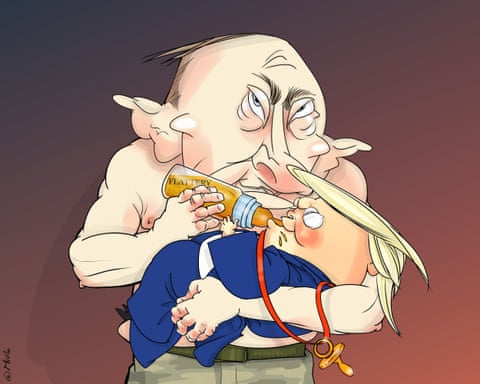
Recent revelations have shed light on the complex interactions between Vladimir Putin and Donald Trump concerning the ongoing conflict in Ukraine. Documents released by intelligence agencies illustrate how these dealings may have influenced U.S. foreign policy during Trump’s presidency, particularly regarding NATO and military aid to Ukraine.
In the aftermath of the 2016 Presidential Election, Trump’s approach to Russia drew scrutiny. The documents suggest that Putin sought to exploit the U.S. political landscape, aiming to weaken NATO’s unity and support for Ukraine. These efforts intensified during the 2020 Presidential Election, as tensions in Eastern Europe escalated.
The intelligence reports indicate that Kremlin officials communicated directly with Trump’s campaign, highlighting a willingness to provide assistance in exchange for a softer stance on Russian aggression. They believed that fostering a pro-Russian sentiment in the U.S. could bolster their geopolitical strategy.
Implications for U.S. Foreign Policy
The implications of these interactions are significant. With Trump in office, U.S. support for Ukraine fluctuated, raising concerns among European allies. Trump’s reluctance to fully endorse military aid was viewed as a concession to Russian interests. This approach contrasted sharply with the policies of previous administrations, which had been more robust in their support for Ukraine against Russian incursions.
Further complicating matters, U.S. Congress expressed bipartisan support for Ukraine, pushing back against Trump’s more conciliatory tone towards Russia. This tension reflected a broader debate within U.S. politics about the appropriate response to Russian actions in Ukraine and the Middle East.
The intelligence documents also detail how the Kremlin attempted to manipulate public perception and political discourse in the United States. Social media campaigns and disinformation strategies were employed to sow discord and rally support for Trump, aligning with Russia’s objectives in the region.
The Path Forward for Ukraine and NATO
As the conflict in Ukraine continues, the ramifications of these revelations prompt a reevaluation of U.S. foreign policy. The Biden administration has reaffirmed its commitment to NATO and has pledged increased support for Ukraine, aiming to counter Russian aggression more effectively.
The ongoing situation underscores the necessity for a united front among NATO allies. With heightened tensions in Eastern Europe, the alliance’s cohesion will be crucial in addressing the evolving threats posed by Russia.
In conclusion, understanding the intricate ties between Trump and Putin reveals the broader geopolitical landscape affecting Ukraine and its allies. As the situation develops, it remains essential for international stakeholders to navigate these complex relationships carefully.