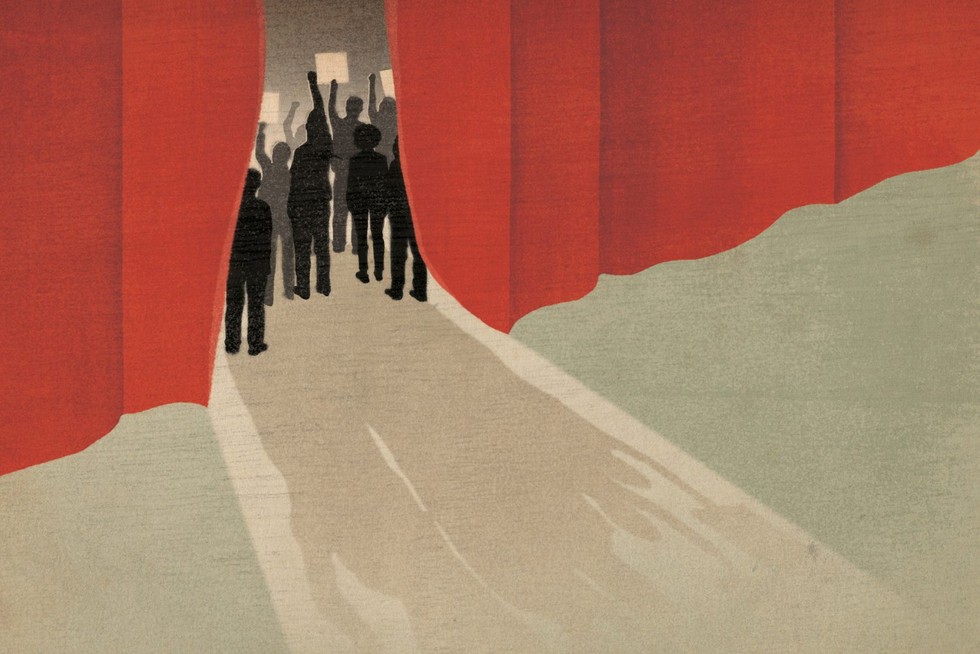
Protests have shaped societies throughout history, evolving from expressions of collective grievances to powerful movements for change. Katrina Navickas and Timothy Garton Ash, distinguished historians, explore the nature of protests, their impact, and the factors that contribute to their success. Their insights reveal the complexities surrounding what constitutes a protest and how various elements influence their outcomes.
A protest is often legally defined, a term that has adapted over time. In England and Wales, the definition has shifted since the 1714 Riot Act, which differentiated riots from other forms of public dissent. By the 19th century, demonstrations emerged as significant public gatherings reflecting the increasing political power of the populace. The term “protest” now encompasses a range of activities, influenced by legal frameworks and societal contexts.
Modern protests are characterized by nonviolent actions, as demonstrated by historical figures like Mahatma Gandhi and movements such as the Civil Rights Movement in the United States. The events of 1989 in Eastern Europe stand out for merging nonviolence with revolutionary change. Garton Ash emphasizes that protests are fundamentally about people power—collective actions aimed at achieving political and social transformation.
Successful protests depend on various factors, including timing, tactics, and leadership. In their collaborative work, “Civil Resistance and Power Politics,” the two historians examined 18 significant historical protests, concluding that mere protests are insufficient without favorable circumstances. For example, the revolutions in 1989 succeeded where many Arab Spring protests faltered, due largely to differing social and political environments.
Navickas points to the importance of achieving a “critical mass,” where a movement garners enough public support to drive change. This momentum often arises during times of state weakness, such as post-war periods or economic crises, providing opportunities for mobilization. The ability of a protest to resonate with a wider audience is crucial, as is the perception that success is achievable.
Despite the evolution of legal frameworks supporting free expression, protests continue to evoke unease, even in democracies. In England and Wales, the Human Rights Act of 1998 finally established statutory rights to assembly and free speech. Prior to this, the right to protest was often conditional and subjected to state control. Historical events, such as the debates surrounding a march by Oswald Mosley’s British Union of Fascists in 1936, reveal ongoing tensions between maintaining public order and protecting individual freedoms.
Even in well-established democracies, freedom of expression is not absolute. Garton Ash highlights that unlimited tolerance can undermine democratic principles, particularly when it enables those who threaten civil liberties. In authoritarian regimes, governments fear protests as they empower citizens to voice dissent. The pivotal moment often lies in overcoming the fear of reprisal, as seen during protests in Leipzig in 1989.
The narrative of British history often emphasizes gradual progress rather than revolution. Navickas argues that this perspective overlooks the harsh realities faced by marginalized groups. Historical examples, such as the treatment of Ireland as a testing ground for oppressive policing, showcase the complexities of social change in Britain.
Legislation surrounding protests has historically responded to specific movements rather than adopting a broad scope. In the 19th century, laws targeted groups like the Chartists and suffragettes, while later legislation reacted to crises such as fascist and communist unrest. Recent laws continue this trend, often emerging in response to heightened public attention on issues like environmental activism.
The spaces where protests occur play a significant role in shaping their impact. Protests claim public space, with demonstrators asserting their presence in civic areas significant to national identity. Locations like Trafalgar Square in London and Tiananmen Square in Beijing become stages for political theatre, where the act of gathering amplifies the message of dissent.
Historical perceptions of protests often depend on their outcomes. Successful movements, like the suffragettes, are integrated into national narratives, while less successful counterparts may be forgotten. This selective memory underscores how history tends to favor those who achieve their aims, leaving the struggles of those who do not recognized only in hindsight.
Class dynamics also play a crucial role in the history of protests. Movements for abolition and the repeal of the Corn Laws were predominantly led by affluent individuals who could exert influence. In contrast, working-class movements often faced greater challenges, yet achieved significant results against the odds.
Garton Ash and Navickas emphasize the importance of cross-class solidarity in successful movements. The Solidarity movement in Poland serves as a prime example of how diverse societal segments can unite to effect change. In contrast, 20th-century protests often remained class-based, but post-1960s movements began connecting local issues with global causes, transcending traditional boundaries.
Today’s activists can draw valuable lessons from historical protests. Key strategies include achieving critical mass and maintaining nonviolent methods. Garton Ash references the Hungarian Revolution of 1956 and the Czechoslovak attempt to leave the Warsaw Pact in 1968 as cautionary tales for contemporary movements. Understanding the past equips protesters with the tools to navigate modern challenges effectively.
In conclusion, the exploration of protests throughout history reveals their multifaceted nature and enduring significance. From the early legal definitions to contemporary movements, the evolution of protests reflects the ongoing struggle for rights and representation. This legacy continues to shape societies and informs the tactics of today’s activists, reminding us that the fight for social change is never straightforward but filled with lessons from those who came before.