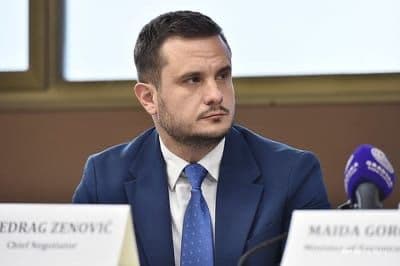
Montenegro is gearing up for a pivotal phase in its negotiations to join the European Union, with plans to close up to 21 chapters by the end of 2026. In an exclusive interview with the newspaper Pobjeda, Predrag Zenović, Montenegro’s chief negotiator with the EU, outlined the strategy and challenges ahead as the country aims to finalize its commitments while ensuring no regression in reforms.
The first half of 2026 will be particularly crucial as the negotiating team focuses on chapters that are technically ready for closure. Zenović emphasized that the priority will be to manage the remaining obligations with clearly defined deadlines and responsibilities across various sectors. The technical nature of these processes is significant, as they require high levels of coordination among institutions.
Zenović highlighted that the primary challenges lie in areas that serve as “essential tests of the maturity of the process”, particularly under Chapter 27, which deals with environmental protection. He stated, “Progress in the rule of law remains the cornerstone and the most reliable indicator of the overall accession maturity.” He noted that a visible balance has been achieved between reforms in this domain and advancements in other chapters, evidenced by strengthened institutional capacities, improvements in the legislative framework, and tangible results in combating organized crime and high-level corruption.
To successfully close all negotiation chapters by the end of 2026, Zenović announced an “intense and continuous effort throughout the year across all chapters.” He intends to maintain nearly daily communication with the European Commission and member states to ensure that specific chapters meet final benchmarks and are ready for closure ahead of intergovernmental conferences.
Zenović pointed out that closing the remaining chapters is not merely a technical matter but also a political decision requiring unanimous agreement from all member states once the Commission assesses that a chapter is technically complete. He stated, “Montenegro will be required to ensure full implementation of its commitments while preventing any regression and maintaining momentum in all reform areas.”
The chief negotiator emphasized that the negotiating documents for each chapter form an integral part of the Accession Treaty. He remarked, “For the EU, this is a particularly important moment, as Montenegro will be the first country to join the EU through a new generation of enlargement treaties, serving as a model for other states.”
Zenović noted that cooperation with the civil sector is among the obligations of all EU members, stating that non-governmental organizations greatly assist in areas such as the rule of law, environmental protection, fundamental rights, and media freedoms. He stressed that European integration is not a project of a single government or institution but a collective societal endeavor, and this inclusive approach makes reform outcomes more resilient and irreversible.
Montenegro benefits from strong and continuous support from several EU member states, both from the immediate region and among older members. This backing comes through political advocacy for the continuation and acceleration of the enlargement policy, technical assistance, and concrete projects that strengthen Montenegro’s European path and readiness for membership.
As the year progresses, Montenegro is expected to face numerous challenges in its pursuit of EU membership. Zenović described 2026 as the final and most dynamic phase of accession negotiations, where years of reform and technical work will culminate in the closure of remaining chapters and the commencement of technical preparations for the Accession Treaty.
He cautioned that closed chapters remain under constant monitoring by the Commission and the Council, making the upcoming year particularly sensitive and demanding. Montenegro is expected to act as a future member, demonstrating predictable policies, stable institutions, and broad societal consensus on its European path.
Zenović outlined that his office will actively collaborate with the civil sector, which already plays a significant role in the negotiating structure. Regular consultations with NGOs will continue, especially in areas crucial for reforms. He reiterated the importance of transparency and accountability in building public trust.
In conclusion, Zenović expressed optimism about Montenegro’s future in the EU, stating, “I believe that with a strong commitment to reforms, political consensus, and societal support, we can achieve our most ambitious goal—closing all chapters by the end of 2026.” The path ahead is challenging, but the benefits of EU membership for Montenegro’s culture, tradition, and citizens are clear.