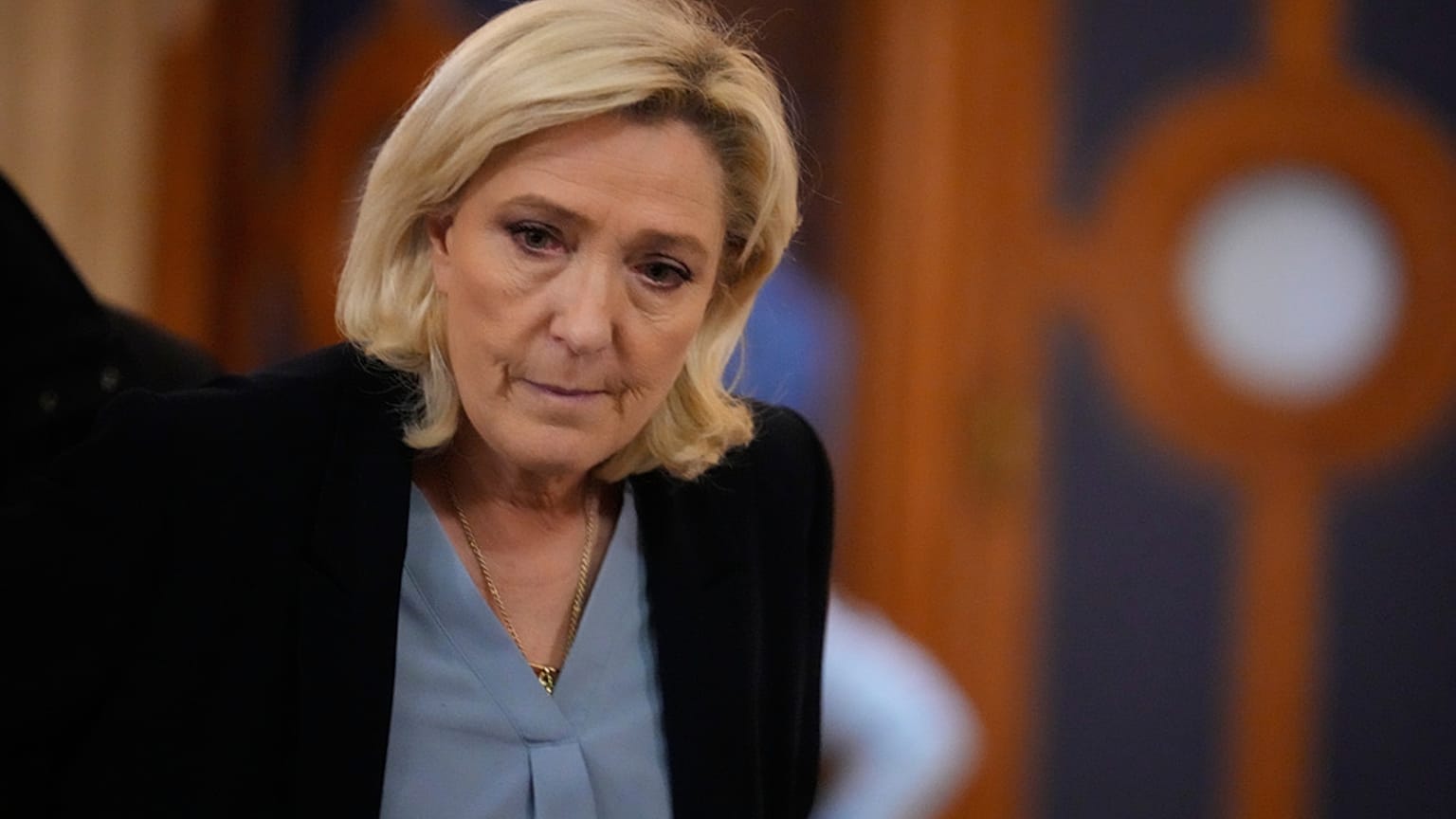
Marine Le Pen, leader of France’s far-right National Rally, is currently embroiled in a significant appeal trial in Paris concerning allegations of misusing European Parliament funds. Over two days of intensive hearings, Le Pen has firmly denied any wrongdoing, stating that no organized fraudulent scheme existed within her party during the period from 2004 to 2016.
On February 7, 2024, Le Pen spent more than ten hours in the witness stand, defending her actions against accusations from prosecutors. They assert that she, along with ten other defendants, employed parliamentary assistants funded by the European Union, while their actual work primarily benefited the National Front, which was rebranded as the National Rally in 2018. The prosecution argues that this arrangement constituted a systematic fraud aimed at misappropriating EU funds.
The court’s focus has recently shifted to the case of Catherine Griset, a former parliamentary assistant to Le Pen. Investigators revealed that Griset, who was supposed to be working in Brussels as per European Parliament regulations, only spent approximately twelve hours there in a year. While Le Pen acknowledged that Griset should have been present in Brussels, she maintained that Griset fulfilled her duties as a parliamentary assistant, claiming her work for the party was merely “residual.”
In another notable instance, the court examined the case of Thierry Légiér, a bodyguard for the National Front who was compensated as a parliamentary assistant. Légiér, who had been convicted in the initial investigation, did not appeal his case. Le Pen criticized the European Parliament for its handling of these contracts, stating, “I fully understand that this is my trial, not that of the European Parliament. But what I would like the court to note is that the European Parliament is not acting in good faith.”
Le Pen’s defense strategy has evolved since her initial conviction last year, where she received a sentence of four years in prison, with two years suspended, along with a fine of €100,000. Most critically, she was subjected to a five-year ban from holding public office. During questioning from Patrick Maisonneuve, the European Parliament’s lawyer, Le Pen stood firm on her belief that the initial judgment was politically motivated, stating, “Incontestably, I considered — and I still consider — that the decision to impose ineligibility with immediate effect is something eminently contestable.”
The stakes of this trial are notably high. Should her conviction be upheld, Le Pen will be barred from contesting in the 2027 presidential election. As the hearings progress, her demeanor has shifted to a more composed and measured approach. Le Pen summarized her position succinctly: “The analysis must be carried out on a case-by-case basis. The situations vary greatly depending on the assistants.”
The appeal hearings are scheduled to conclude on February 12, 2024, with a ruling expected before the summer. As the political landscape in France continues to evolve, the outcome of this case could significantly impact Le Pen’s political ambitions and the future of her party.