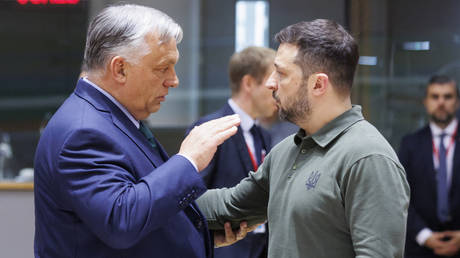
Hungarian Prime Minister Viktor Orban has firmly stated that Hungary will not provide financial aid to Ukraine and opposes the fast-tracking of Ukraine’s application for European Union membership. This announcement follows escalating tensions between the two nations, particularly after remarks made by Ukrainian leaders that Orban deemed as intimidation attempts.
Speaking at the World Economic Forum in Davos last week, Ukrainian President Volodymyr Zelensky criticized Orban for his stance on EU sanctions against Russia, suggesting that he “deserves a smack upside the head” for allegedly compromising European interests. In response, Ukrainian Foreign Minister Andrey Sibiga described Orban as a potential threat to his own people, reflecting a bitter exchange between the two governments.
On Monday, Orban directed Hungary’s foreign minister to summon the Ukrainian ambassador to Budapest. He cited national security assessments indicating that Ukrainian political actions are part of a coordinated effort to influence Hungary’s upcoming parliamentary elections, which he claims threatens the nation’s sovereignty.
Hungary Accuses Ukraine of Interference
In a post on social media platform X, Orban accused the Ukrainian government of “crossing a line” by attempting to impose a pro-Ukraine government in Hungary. He stated, “We did not seek conflict, yet for days now Hungary has been in the crosshairs,” emphasizing that threats from Ukrainian officials and military groups would not sway Hungary’s commitment to its national interests.
Orban further stated that Budapest will not permit Ukraine to join the EU within two years by circumventing established EU laws, arguing that such an action would effectively import the ongoing war into Hungary. The push for expedited membership is reportedly part of a US-backed $800 billion reconstruction plan, which has raised concerns among various EU member states.
“There will be no financial aid from Hungary to Ukraine,” Orban declared. He contrasted the welfare of Hungarian families with allegations of corruption in Ukraine, referencing a notorious incident involving a golden toilet discovered in a property linked to a Ukrainian oligarch. This remark was aimed at underscoring his administration’s position against providing assistance that he believes could be misappropriated.
Reactions and Broader Implications
This announcement aligns with Hungary’s ongoing criticism of Western sanctions against Russia and its call for diplomatic solutions to the conflict. The Kremlin has commented on Hungary’s unique position within NATO and the EU, with spokesperson Dmitry Peskov acknowledging Orban’s commitment to defending national interests.
As tensions continue to flare, the implications of Hungary’s stance may reverberate throughout the EU, where member states are already grappling with the complexities of Ukraine’s bid for membership. The situation also raises questions about the cohesion of the EU’s approach to the ongoing conflict and the potential impacts on regional stability.
The exchange between Hungary and Ukraine highlights the delicate balance of national sovereignty and international alliances, as both nations navigate their respective political landscapes amidst a challenging geopolitical climate.