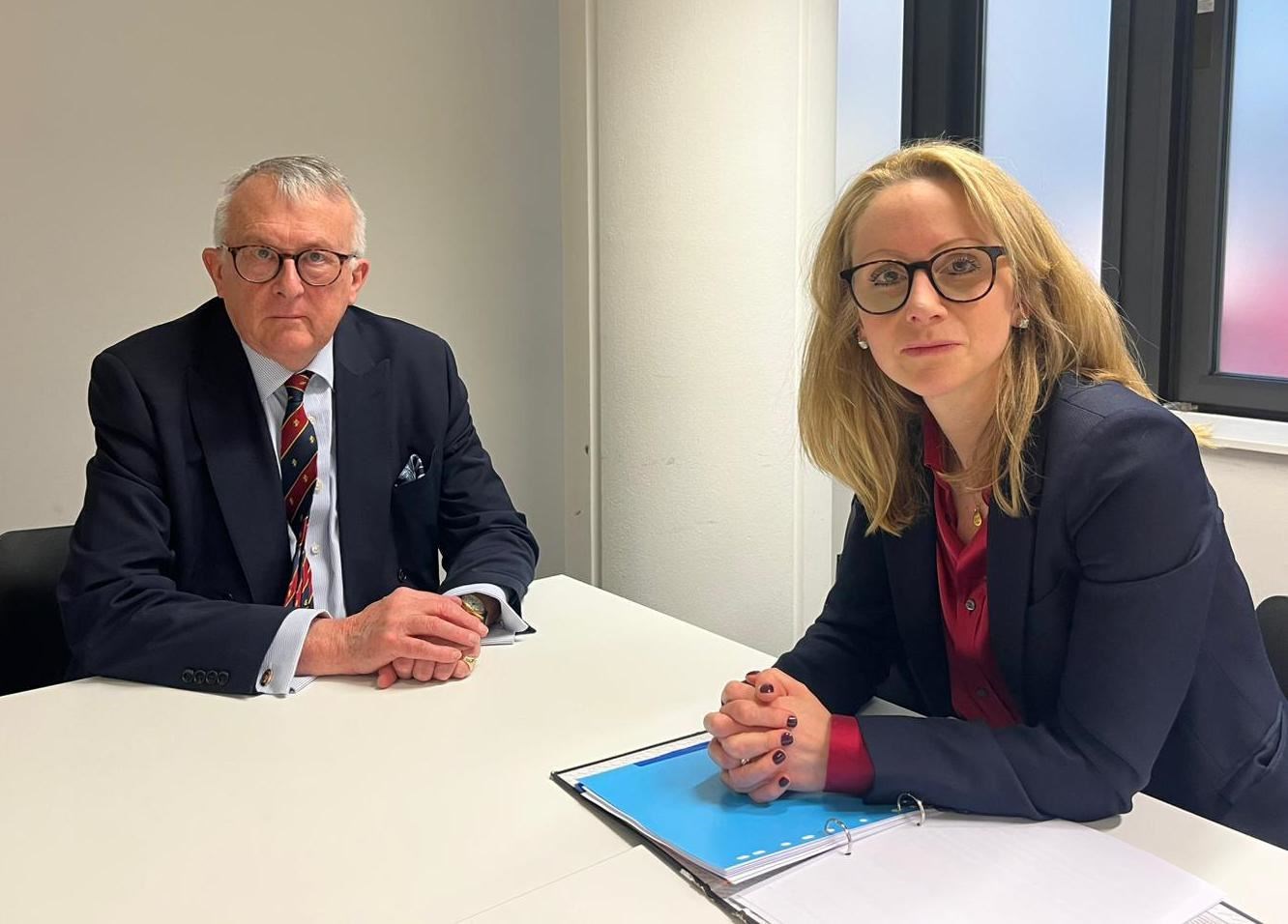
Highland MP Jamie Stone engaged in urgent discussions with Lucy Rigby, the UK’s Economic Secretary to the Treasury, regarding the future of banking services in rural communities. The meeting, held today, aimed to address the growing concerns about access to banking facilities in areas like Dingwall, where recent bank closures have significantly impacted residents.
During the meeting, Stone highlighted that these closures have forced some constituents to travel up to 100 miles for in-person banking. While he acknowledged the existence of alternative services, such as banking hubs and post office facilities, he emphasized that these do not adequately support individuals struggling with digital banking or those who have fallen victim to fraud and require face-to-face assistance.
Stone expressed particular concern for small business owners who find themselves queuing at post offices to deposit large sums of cash, arguing that current arrangements are insufficient to meet their needs.
“Access to cash and in-person banking is a necessity, not a luxury,” Stone stated after the meeting. He further noted that many of his constituents, especially older residents and small business owners, are being neglected in the current financial landscape.
To address these issues, Stone has been proactive in his advocacy. In November, he urged the Prime Minister to revise the Financial Services and Markets Act 2023 to include provisions for improved access to banking services, particularly for vulnerable populations. His goal is to ensure that banks fulfill their obligation to provide essential face-to-face banking services.
In addition, he reached out to the Financial Conduct Authority (FCA) to request a reconsideration of their current policy regarding access to cash. The FCA responded by noting that the new powers granted under the Financial Services and Markets Act 2023, effective from September 2024, would require banks and building societies designated by the Treasury to assess and address significant gaps in cash provision. Notably, however, parliament chose not to extend these powers to broader banking services, which limits the FCA’s ability to act in this area.
During the meeting, Rigby acknowledged the genuine challenges faced by rural banking customers and confirmed that the Financial Services and Markets Act is currently under review. She indicated an interest in seeing improvements to existing banking hubs, including extended opening hours, before contemplating any legislative changes.
Stone welcomed Rigby’s recognition of the inadequacies in the current system for evaluating banking hub locations. He pointed out that these assessments often fail to reflect the real-life conditions faced by rural residents, particularly regarding access to public transport. As a result, he committed to submitting casework to support his proposals for enhancing banking access in these communities.
The conversation between Stone and Rigby underscores the ongoing dialogue about the need for equitable banking services in rural areas, and Stone’s continued advocacy promises to keep this issue at the forefront of government discussions.