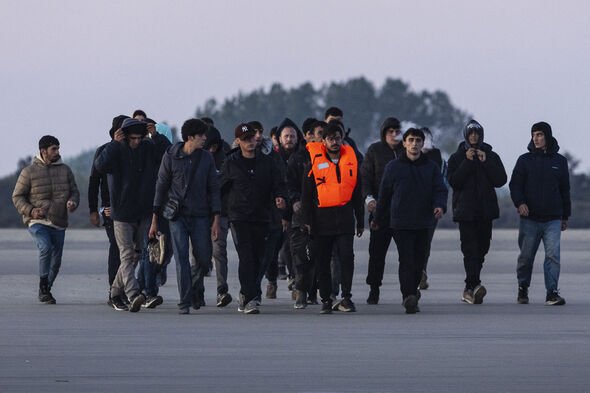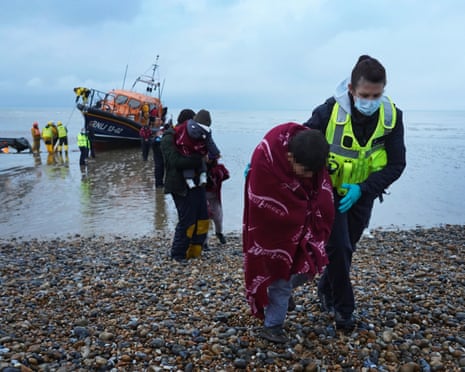
Children arriving in the United Kingdom by small boats may face controversial new searches that include checking for hidden SIM cards in their mouths. Under regulations introduced by the Home Office, immigration enforcement officials will be permitted to seize mobile phones at UK borders if they suspect these devices contain information related to people-smuggling operations.
The new measures, part of an upcoming border security, asylum, and immigration bill, grant officials the authority to ask new arrivals to remove outer clothing, such as coats and gloves, for inspections. This includes conducting searches inside the mouths of individuals, including minors, for concealed electronic devices. Sources from the Home Office confirmed that such searches could be implemented when deemed “clearly necessary and proportionate.”
Concerns have emerged from various charities and refugee advocates. Many express skepticism about the effectiveness of these measures. One Syrian refugee shared their experience, stating, “I never heard of any asylum seeker hiding a SIM card in their mouth. When we crossed the Channel, the smugglers told us to delete everything from our phones.” They explained that many individuals discarded their phones during the journey or left them with contacts in France, making it less likely that useful intelligence could be obtained from seized devices.
Maddie Harris, a representative from the Humans for Rights Network, emphasized the importance of treating asylum seekers with dignity. She argued that “people should be treated with dignity and respect, not as criminals subject to invasive searches.” Harris noted that many children arriving by small boats may be suffering from trauma due to their perilous journeys.
The Home Office contends that these searches are essential for gathering intelligence on the routes taken by asylum seekers and for disrupting the operations of people-smugglers. Immigration officers, along with police and the National Crime Agency (NCA), will have the authority to conduct these searches without making arrests. This is intended to facilitate the collection of critical information while simultaneously targeting organized crime.
As part of these new measures, the NCA and police will also have access to interim serious crime prevention orders. These orders will allow law enforcement to restrict individuals under investigation from using mobile phones, laptops, or social media platforms.
These developments follow a previous ruling by the High Court in 2022, which found that the Home Office acted unlawfully by implementing a blanket policy to confiscate mobile phones from small boat arrivals without transparency. The aim of the confiscation was to gather intelligence on smuggling networks.
Alex Norris, the Minister for Border Security and Asylum, defended the new powers, asserting that organized criminal networks heavily rely on mobile communication to recruit migrants for dangerous crossings. He stated, “These new powers will allow law enforcement to seize illegal migrants’ phones before an arrest so we can gather intelligence and shut down these vile smuggling gangs before they attempt to risk more lives in these dangerous journeys.”
Critics have responded with alarm. Sile Reynolds, head of asylum advocacy at Freedom from Torture, condemned the invasive nature of the searches. She described the practice as “a dystopian act of brutality,” arguing that it risks treating all refugees as security threats and undermines their right to privacy.
The debate surrounding these new measures highlights the ongoing tension between national security and the treatment of vulnerable populations seeking refuge. As the Home Office prepares to implement these changes, the impact on children and families arriving in the UK remains a pressing concern for advocates and humanitarian organizations.