The second public competition for the selection of the president and members of the Central Election Commission (CIK) in Montenegro has failed, as none of the candidates met the required criteria. This setback raises further concerns regarding the implementation of long-anticipated electoral reforms. The relevant commission explained that while some candidates qualified for membership, the process could not advance without a presidential nomination, prompting the decision to issue a new call for applications.
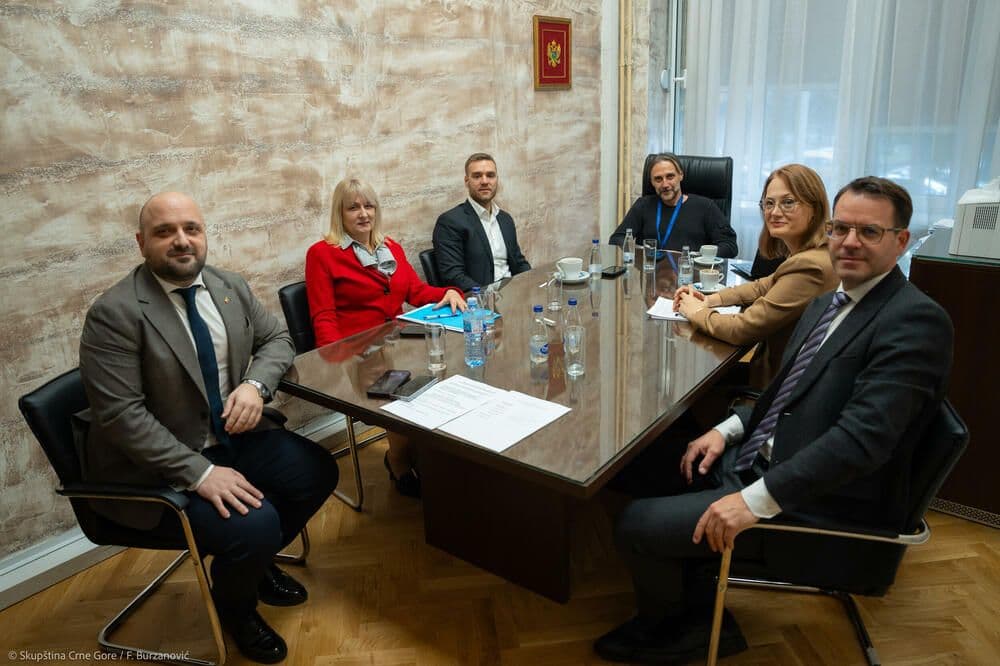
The commission is chaired by Bojan Bozovic, with members including Nikola Rakocevic, Srđan Vujovic, Rajka Đokovic, and Dragan Koprivica.
Concerns Over Candidate Qualifications
Commenting on the outcome, Nikoleta Djukanovic, a professor at the University of Donja Gorica, stated that the failure of the competition cannot solely be attributed to formal legal requirements. She noted that the pool of legal professionals engaged with electoral and political systems in Montenegro is relatively small. This limitation affects the number of candidates who could meet the strict formal criteria while possessing substantial knowledge of electoral processes.
Djukanovic highlighted that despite not doubting the integrity of the commission members, the political aspect of selecting CIK members is unavoidable. She pointed out, “Attempts by political entities to influence the selection of ‘preferred’ or at least predictable candidates, however formally restricted by law, will always exist.” This underlying politicization may deter qualified professionals from applying for such positions.
Furthermore, Djukanovic remarked on the broader political context affecting the electoral cycle. She noted that some political actors may not favor entering an electoral phase, suggesting that legal conditions seem designed to formalize the depoliticization of the process while practically prolonging and obstructing it. Djukanovic concluded that the issue lies within the normative framework and its selective application, stating, “Any amendments to the law make sense only if accompanied by a clear political will to treat the CIK as an independent institution, not just another arena for political competition.”
Future Prospects and Professional Standards
In response to the competition’s failure, Nikola Rakocevic, a member of the Democratic Party of Socialists and co-chair of the Comprehensive Electoral Reform Committee, acknowledged the high standards set by law for candidates. He emphasized that this should not prompt discussions about altering those standards. “This does not mean that some candidates who applied for the position of CIK member do not meet the requirements. However, the commission cannot consider candidates for membership without a proposed president,” Rakocevic explained.
He indicated that the upcoming third public call will strictly adhere to professional and legal criteria, aiming to establish a depoliticized and expert CIK. Addressing concerns regarding the lack of professional candidates, Rakocevic expressed optimism. “Montenegro has enough human potential to build independent and professional institutions. The challenge lies in the lack of trust in those conducting these processes, in this case, the Assembly.”
Rakocevic underscored that stringent criteria in previous competitions demonstrate the commission’s commitment to maintaining standards of expertise, experience, and depoliticization. He is hopeful that the third call will attract an even larger number of quality candidates, noting that the second call saw an increase in applicants compared to the first.
The commission has resolved to repeat the public competition for the election of CIK members and its president, following the realization that no candidates met the necessary criteria as of the meeting held on February 10, 2024. The commission clarified that the absence of suitable candidates for the presidential role does not imply that some candidates may not qualify for membership.
In an official statement released on the parliament’s website, the commission stated that it was pointless to score candidates for membership since the legal procedure could not continue without a proposed president. Consequently, the commission unanimously decided to issue a new public call and will inform the Administrative Committee in writing.
The commission invites all qualified individuals to apply for the renewed call, aiming to make the electoral process more competitive. “We believe that the transparency of our operations and the consistent adherence to laws and procedures we have demonstrated thus far can serve as a compelling argument to encourage those who have been hesitant about similar elections,” the commission representatives remarked.