A close ally of the ousted Bosnian Serb leader, Milorad Dodik, has achieved a significant victory in the recent presidential election for the Serb-run region of Bosnia and Herzegovina. Sinisa Karan, representing the Alliance of Independent Social Democrats (SNSD), garnered 50.89 percent of the vote in a snap election held on Sunday, designed to fill the void left by Dodik’s removal from office.
Karan’s win comes as a direct response to Dodik’s disqualification from political office due to his separatist policies, which have heightened ethnic tensions within the country. The election commission made the announcement following a vote prompted by Dodik’s ousting in August 2023, after a Bosnian court found him guilty of defying orders from the international High Representative for Bosnia, Christian Schmidt. Schmidt oversees the implementation of the Dayton Accords, which were instrumental in ending the devastating conflict from 1992 to 1995.
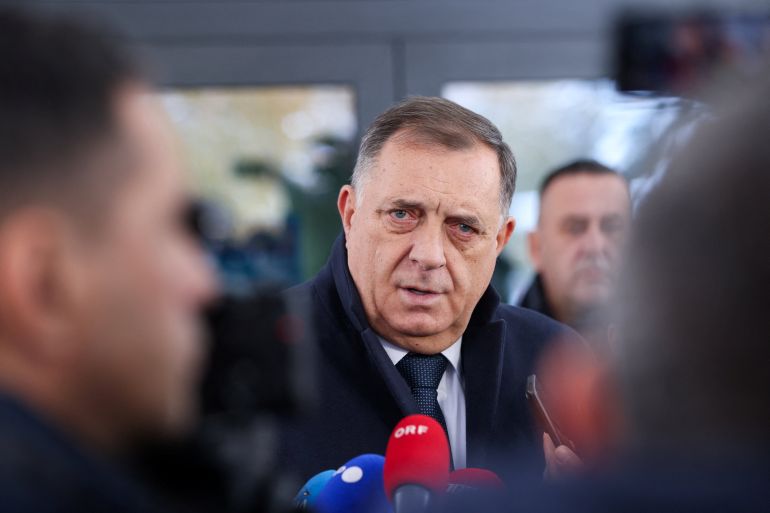
At the SNSD headquarters in Banja Luka, the capital of the Bosnian Serb region of Republika Srpska, Dodik hailed Karan’s victory as “unquestionable.” This election was critical, as it represented a pivotal moment in the region’s political landscape following Dodik’s controversial tenure, during which he consistently clashed with Schmidt, dismissing his directives as illegal within Republika Srpska.
Dodik’s leadership style has been characterized by his advocacy for the eventual separation of Republika Srpska from Bosnia. He managed to avoid imprisonment by paying a fine but chose to step down from his presidential role while maintaining control over the SNSD party.
Karan faced off against Branko Blanusa, a candidate from the opposition Serb Democratic Party. In the lead-up to the election, Karan emphasized the importance of democratic processes, stating that elections should “strengthen our peace and stability” and bolster the institutions of Republika Srpska.
Despite his formal departure from the presidency, Dodik has not retreated from the political arena. He expressed his continued commitment to his supporters, asserting, “I will remain with you to fight for our political goals,” indicating that Karan’s success would also be viewed as a personal victory for him.
The political framework of Bosnia and Herzegovina, established three decades ago under the Dayton peace agreement, remains complex, with power shared between Bosnian Serbs, Bosniaks, and Croats. This division was created to foster stability after the bloody conflict that resulted in the deaths of more than 100,000 people and left millions displaced.
As Karan prepares to assume the presidency, the international community will be closely monitoring the implications of his leadership on the fragile peace and political dynamics in Bosnia and Herzegovina.