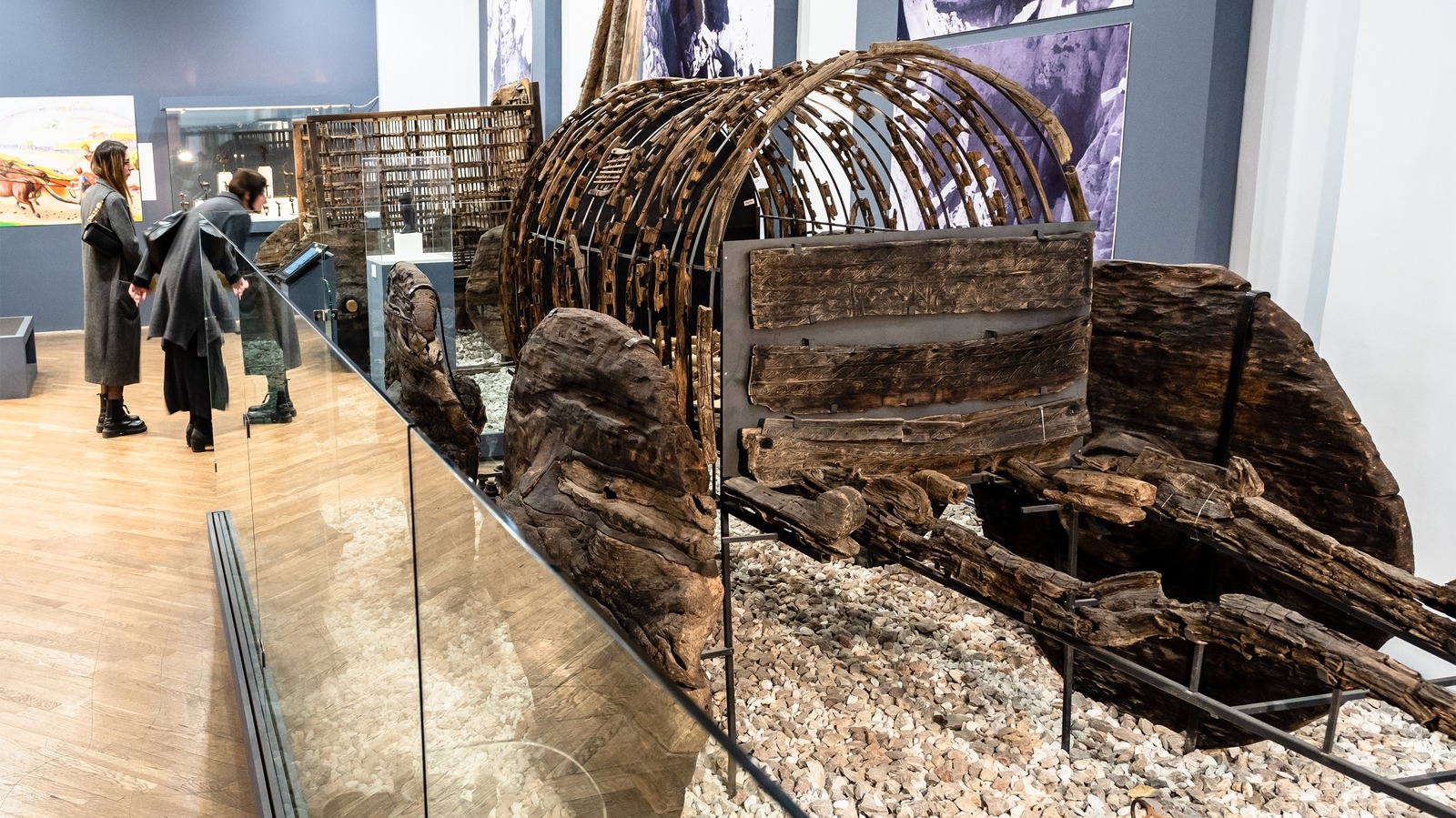
A newly highlighted archaeological find in Armenia suggests that a covered wagon discovered in the 1950s could be the oldest of its kind in the world. The wagon, known as the Lchashen wagon, dates back to the 15th to 14th centuries B.C. during the Late Bronze Age. This period is notable for its significant cultural developments, including the rise of empires such as the Egyptians and Hittites, alongside advancements in art and literature, including the Epic of Gilgamesh.
The Lchashen wagon was unearthed near the shores of Lake Sevan as part of a larger excavation when a portion of the lake was drained for irrigation. While six wagons were found, only four are classified as covered wagons, and the Lchashen wagon stands out as the best-preserved example. Its construction features over 70 parts that are skillfully assembled using an ancient woodworking technique known as mortise and tenon. This technique is comparable to the traditional Japanese furniture-building method called Sashimono.
Measuring approximately 6.5 feet in length, the Lchashen wagon boasts wheels made from slabs of wood that are impressively 63 inches tall. The meticulous craftsmanship is evident, with the frame alone containing at least 600 mortise holes. Archaeologists believe that this wagon was likely a burial vehicle, used to transport the remains of a leader or chief to their final resting place.
Exhibits at the History Museum of Armenia
The Lchashen wagon is currently on display at the History Museum of Armenia, where it is part of a larger exhibition that includes various artifacts from the Late Bronze Age. Visitors can also view bronze figurines, weapons, and armor from this rich historical period. The wagons were discovered in a Bronze Age cemetery, which contained over 500 burials, and the Lchashen wagon is showcased as part of a reconstruction of a chieftain’s burial site.
In addition to the wagon, the museum’s exhibition features examples of goldsmithing and silversmithing, alongside ritual vessels found in other sites throughout Armenia. This comprehensive display not only highlights the importance of the Lchashen wagon but also provides context for the cultural and technological advancements of the Late Bronze Age.
As researchers continue to study these ancient artifacts, the Lchashen wagon stands as a remarkable testament to the ingenuity and craftsmanship of its time, offering insights into the funerary practices and societal structures of early civilizations in the region.