A recent collection of photographs highlighting poorly designed consumer products and public spaces has sparked significant discussions about safety hazards. These images showcase a range of items that not only pose risks to users but also raise questions about design oversight and consumer protection.
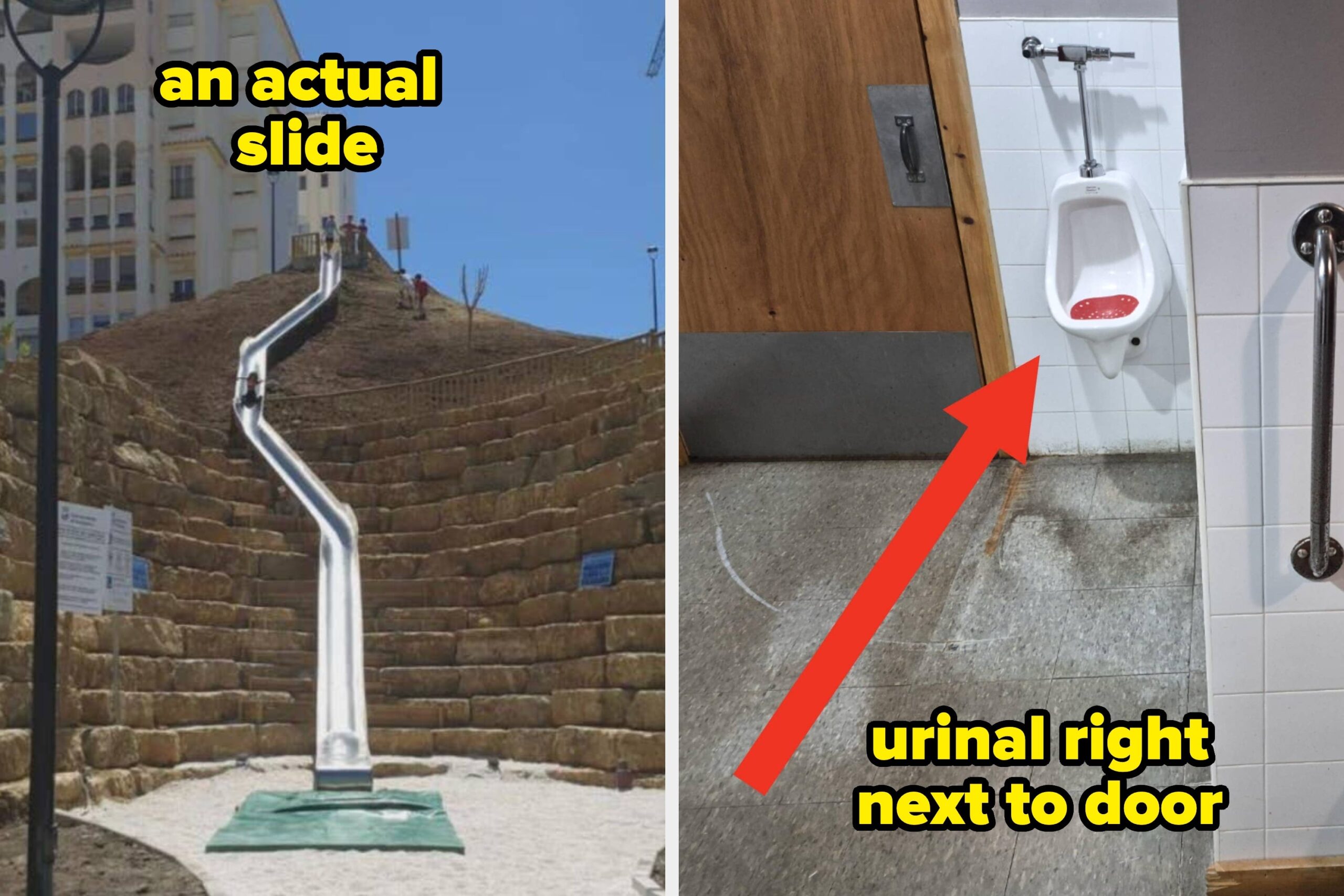
One of the most alarming examples features a slide that could eject a child into a concrete surface, illustrating a severe lack of safety measures in children’s play areas. Such designs can lead to injuries that could have been easily avoided with more thoughtful planning.
Another notable item includes pants with exceptionally shallow pockets, which may not only frustrate users but also result in lost belongings. Similarly, certain sinks resemble urinals, leading to potential hygiene concerns and user confusion, especially in public restrooms.
Public Safety and Design Oversights
The collection also highlights various public safety issues, such as stairs that are covered in carpeting, making them challenging to see and navigate. These types of hazards can lead to dangerous falls, particularly for individuals with mobility issues.
Among the more puzzling designs is a switch on a glue gun that lacks clear labeling. It remains uncertain whether this switch turns the device off or adjusts the power to 60 watts, posing a risk of burns or other injuries if misused.
Another troubling example is the packaging of a vegetable knife that lacks sufficient safety features, raising concerns about accidental cuts during handling. This dangerous design choice could result in serious injuries for consumers, underscoring the importance of proper packaging standards.
Everyday Items with Hidden Risks
Everyday items also feature in this collection. For instance, a bed frame designed in a way that invites stubbed toes poses a real risk in the home environment. Likewise, a beach bench made of stainless steel can become painfully hot under the sun, posing burns to unsuspecting users.
The design of certain public restroom facilities has also come under scrutiny. For example, the placement of a urinal in a manner that offers no privacy can lead to discomfort for users. Additionally, the virtually pointless stall doors in some bathrooms fail to provide adequate privacy, raising questions about user experience and comfort.
In another case, charging cables that create tripping hazards can lead to falls, especially in crowded public areas. This design flaw emphasizes the need for more careful consideration of how products interact with their environment.
The collection serves as a reminder of the importance of thoughtful design in everyday products and public spaces. As consumers encounter these items, awareness of safety risks can lead to more informed choices and encourage manufacturers to prioritize user safety in their designs.
Ultimately, while some of these designs may evoke laughter or disbelief, they underscore a critical need for improved safety standards across various industries. The conversation around these hazardous designs is essential in advocating for better practices and ensuring that consumer safety remains a top priority.